
The complete guide
Window Catio Buyer's Guide, Choosing A Safe Outdoor Space For An Indoor Cat
The problem with keeping a cat entirely indoors
Indoor cats live longer. That part is well established, and it is why so many owners keep their cats in. Roads, dogs, other cats, parasites and theft all stack the odds against a cat that roams freely.
But the trade-off is real. A cat that never gets outside misses out on the things that occupy a cat's brain: moving air carrying scent, birds at a distance, sun on fur, grass to sniff. Bored cats find other outlets. They overgroom, they pester, they yowl at doors at four in the morning, they pick fights with the other cat in the house.
A window catio sits in the middle of those two positions. Your cat gets the sensory side of outdoors with none of the traffic. You stop feeling guilty every time you shut a door.
How this enclosure works
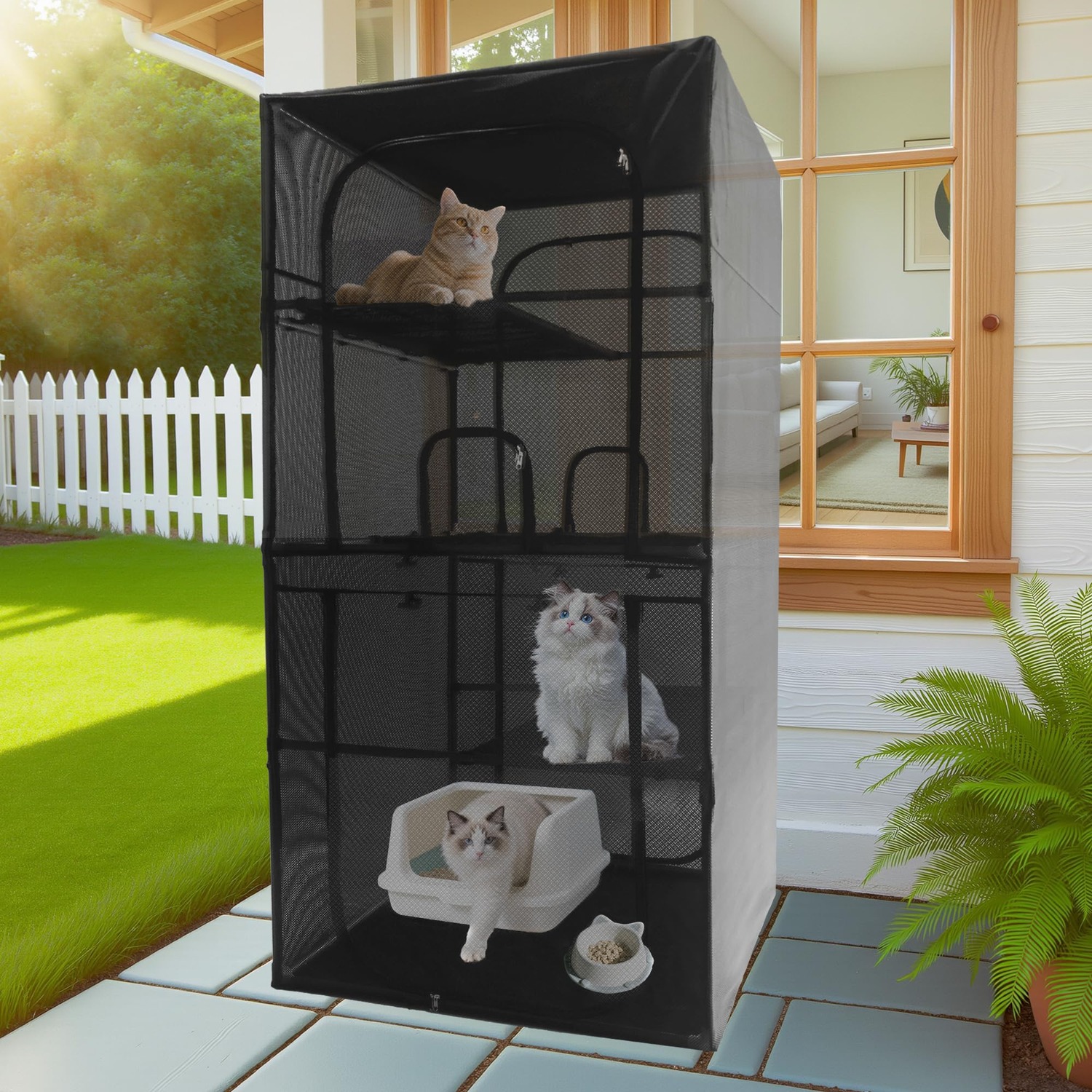
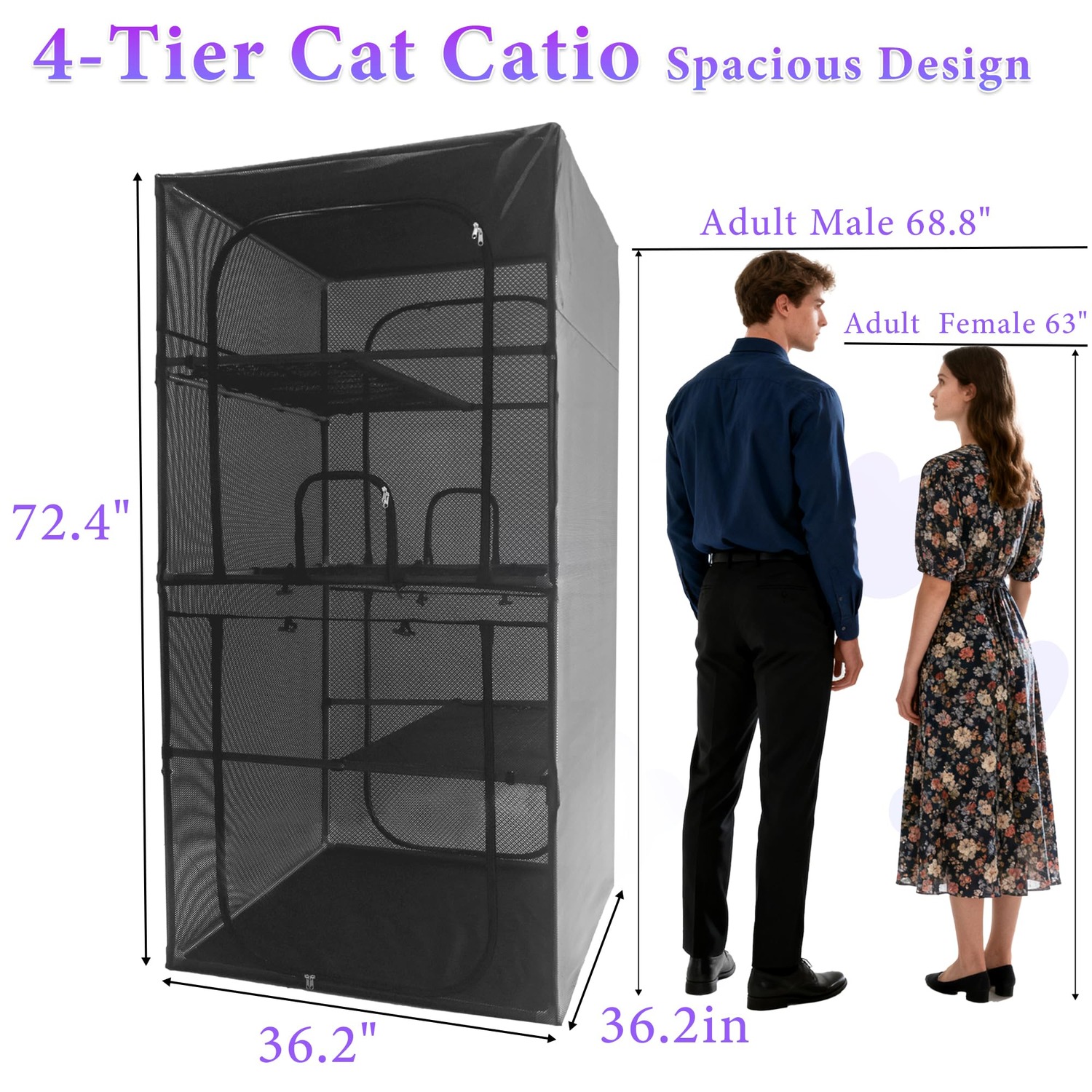
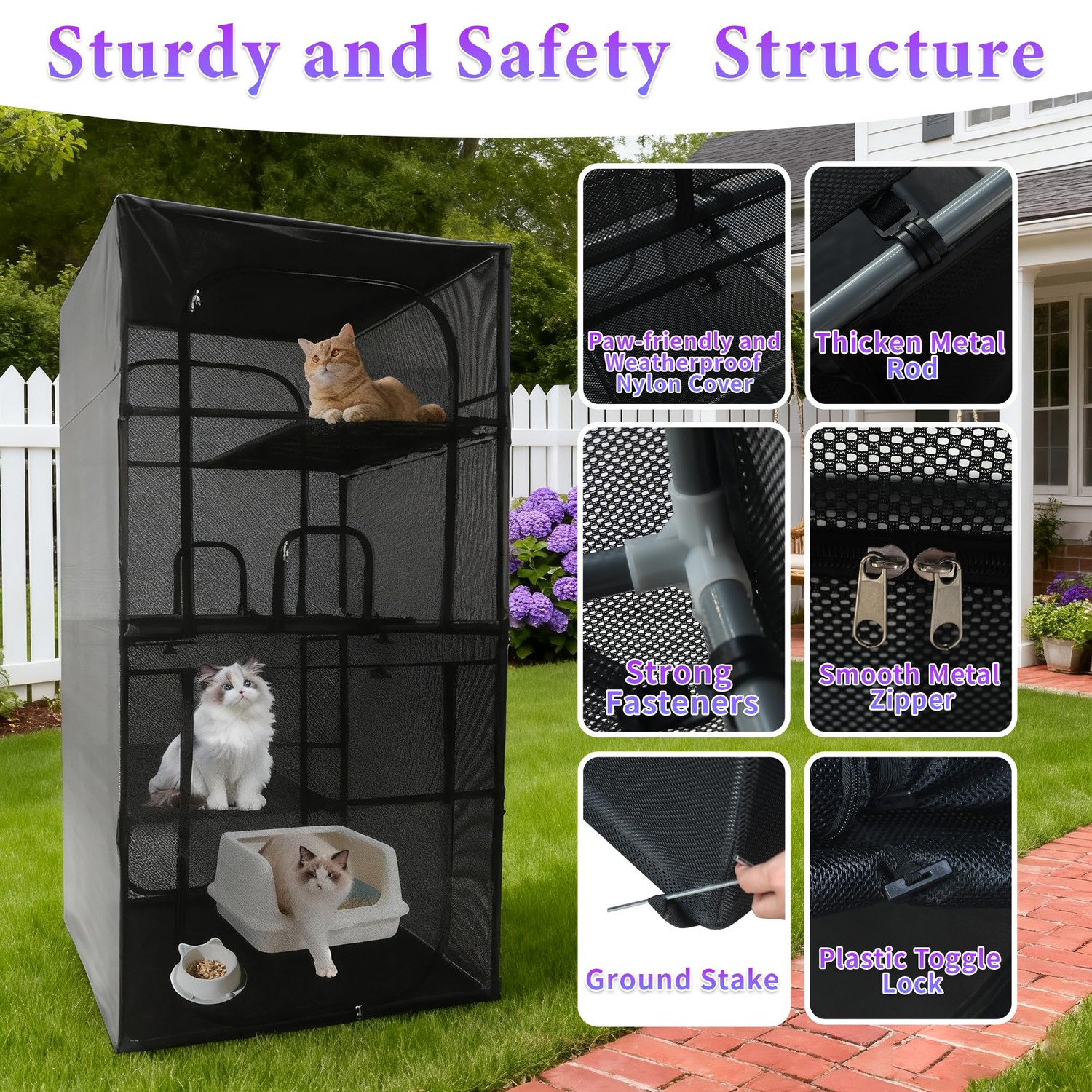
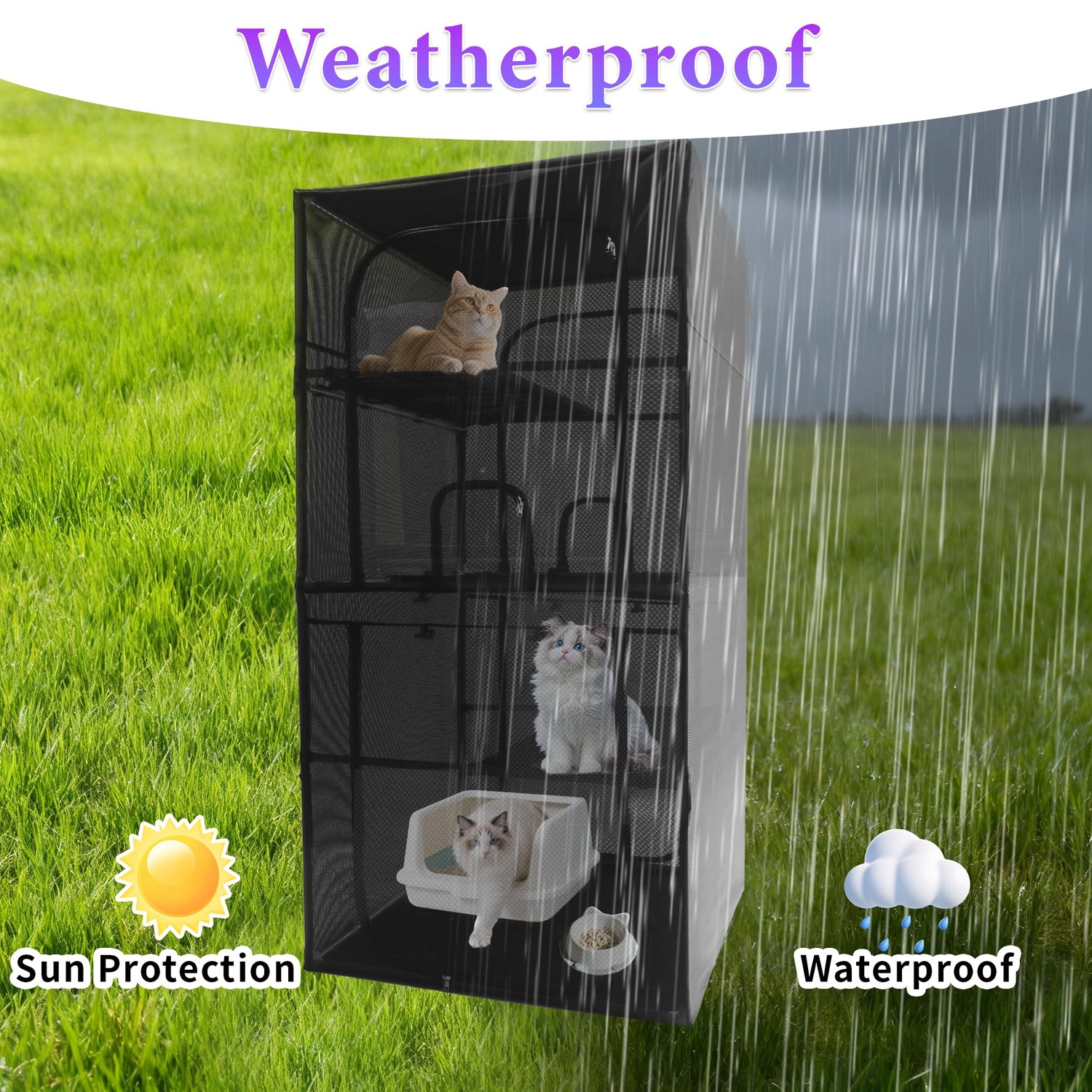
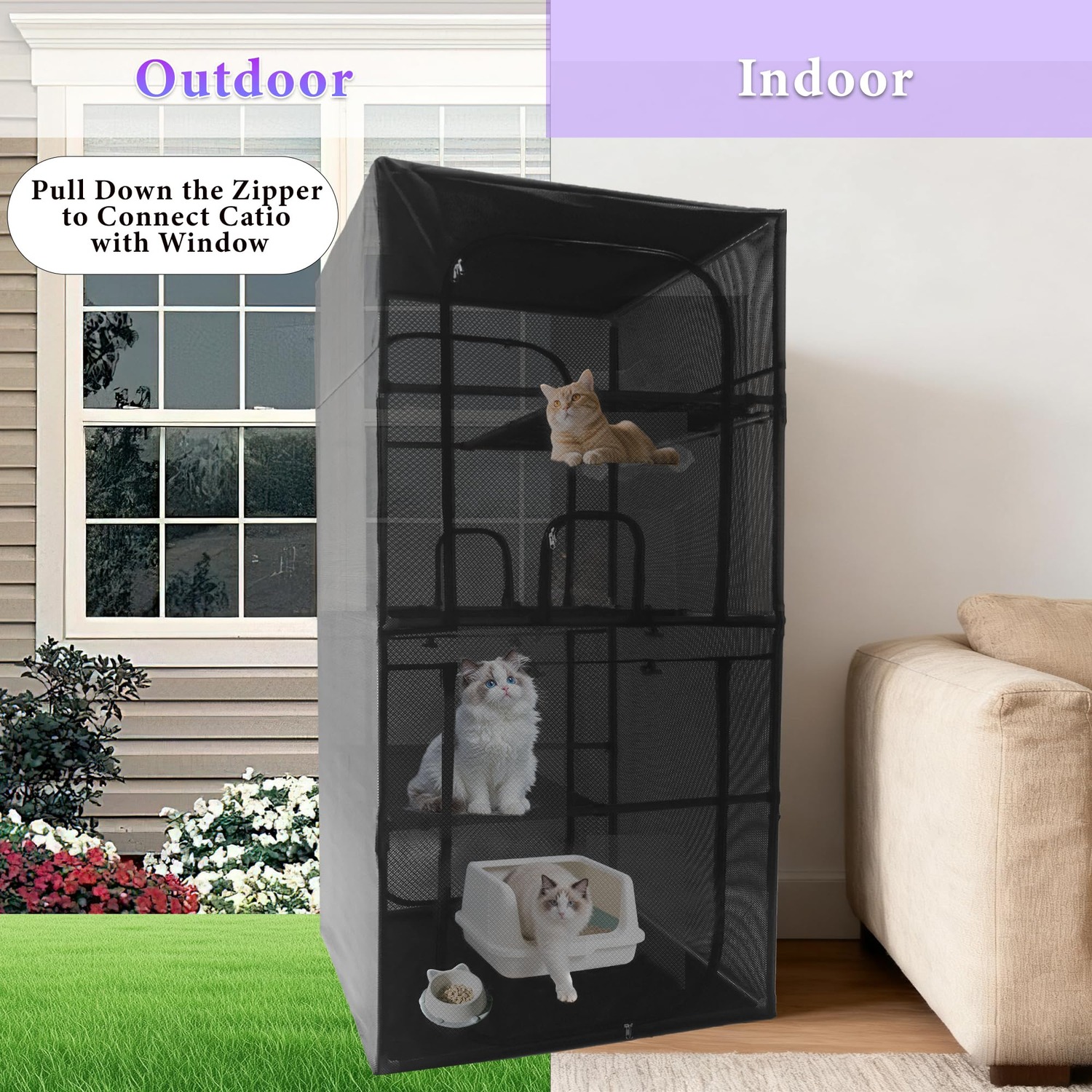
The structure here is simple on purpose. Metal rods form a rectangular frame roughly a metre square at the base, standing 183.9 cm tall. Nylon mesh stretches over that frame to form the walls and the upper panels. A cover goes over the roof.
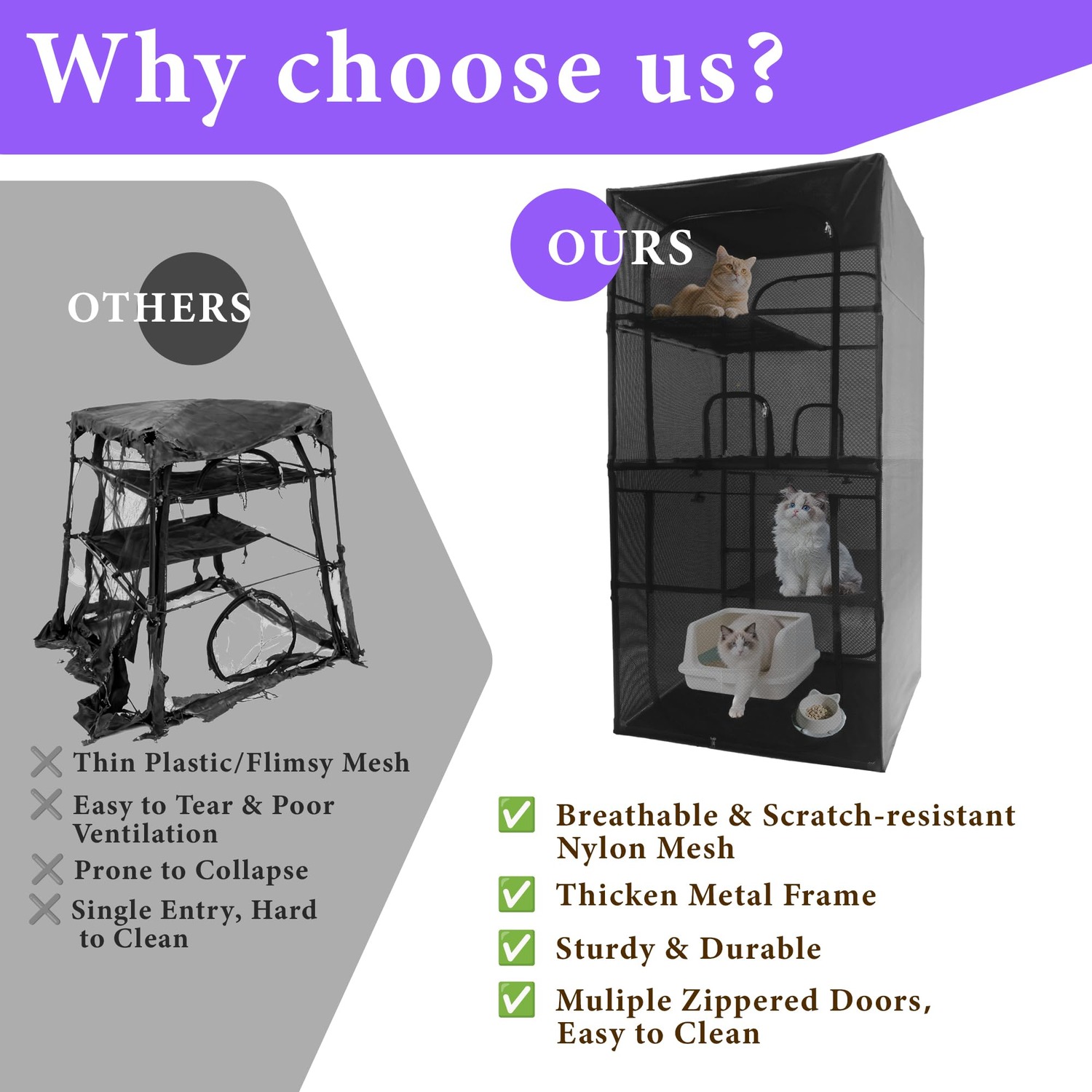
The mesh does the heavy lifting. It is see-through from both sides, so your cat gets a panoramic view and you can check on them from the kitchen window. Air moves straight through it, which matters a lot on a warm day. A solid-walled enclosure in sun becomes an oven. Mesh does not.
Inside, the space is split into four tiers. That vertical layout is the single most important design choice in the whole thing. Cats do not experience a room the way we do. They read height as safety and as territory. Give a cat a flat run and they use maybe half of it. Give them stacked platforms and they use the whole volume, climbing up for a nap, dropping down for a stretch, parking on the top shelf to supervise the garden.
The roof cover adds two things. It shades the top level, which is usually the most popular spot and also the most exposed. And it blocks light rain, so a sudden shower does not end the session. As a side benefit, cats like a ceiling. A covered perch feels defendable to them in a way an open one does not.
Five zippered doors handle everything else. Three large and two small. The big ones at the bottom exist so a person can climb in. That sounds like a small detail until the first time you need to scoop a litter tray out of a corner or chase down a toy mouse. Being able to open a full panel and reach in turns a ten minute chore into a two minute one.
A ground stake comes with it to anchor the base. Worth using. A tall, light frame can rock when a nine kilo cat lands on an upper shelf, and a steady base makes cats far more willing to jump confidently.
Who this suits
Apartment owners get the most obvious benefit. If you have a balcony and no safe way to let a cat on it, a balcony cat cage solves that in an afternoon. The one metre square footprint fits most balconies without taking the whole thing over.
Renters do well with it too. Nothing is drilled, nothing is permanent, and the whole unit comes apart for a move. A fixed timber catio bolted to a wall is a lovely thing, but you are not taking it with you.
It also works for specific short-term situations. Introducing a new cat to a resident cat goes more smoothly when they can see and smell each other through mesh before they share floor space. A cat recovering from surgery can be kept in a contained area with room to move. A cat who is a known escape artist can get outdoor time under control.
If you have a single very large cat who mostly sleeps, the four tiers are less useful but the fresh air still is. If you have five cats and want them all out at once, think about rotating them in shifts rather than packing the space.
Choosing between enclosure types
There are broadly three paths when you want outdoor cat space.
The first is a window box, a small shelf unit that bolts to a window frame. These are cheap and take up no floor space, but they are tiny. A cat can sit in one. They cannot really play in one.
The second is a built catio, a timber-and-wire structure attached to the house. These are the gold standard for permanence and size, and also the most expensive, the most work, and the hardest to remove.
The third is a free-standing mesh enclosure like this one. It costs a fraction of a built catio, needs no construction skill, and can be repositioned or packed away. The trade-off is that mesh is less durable than welded wire over many years, and it is not something you would leave out through every storm of a decade.
When you are comparing a multi tier cat cage against a wide, low one, go vertical almost every time. Vertical space is the kind cats actually use.
Practical setup notes
Pick your spot before you build. Level ground, out of the hottest afternoon sun, and ideally where the cat can see something interesting. A catio facing a blank fence is less enriching than one facing a garden bed where birds land.
Set it up with the doors open and let your cat investigate on their own terms. Put a familiar blanket or bed on the bottom tier. Do not pick the cat up and post them inside. That poisons the whole thing for a cautious animal, and you may spend weeks undoing it.
Keep the first sessions short and supervised. Build up from there. Most cats are using the upper tiers within a week.
Check the zippers every time before you walk away. This is the single habit that matters most. Everything else about the enclosure is passive, but a zipper left at half mast is the one thing that will let a cat out.
Care and longevity
Nylon mesh and a metal frame need almost nothing, but the small amount they do need matters.
Wipe the frame down with a damp cloth and dry it off. Water sitting in a joint is what eventually causes trouble. Spot clean the mesh with mild soapy water and a soft brush, rinse lightly, and let it dry completely in open air before you pack it down. Fur lifts out most easily when the mesh is dry and you use a rubber brush.
Check the pole connections and the stake every few weeks. Things work loose with use, particularly in a cat enclosure with window access where animals are climbing in and out daily.
If you are storing it over winter, store it dry and keep all the small parts in one bag. Damp storage is harder on fabric than any amount of outdoor use.
The short version
This is a 91.9 cm square, 183.9 cm tall enclosure in black, built from metal rods and nylon mesh, with four interior levels, five zip doors, a roof cover and a ground stake. It assembles without tools and comes apart for storage.
It suits an indoor cat who wants outside air, an apartment with a balcony, a renter who cannot build, or anyone needing a temporary contained space for a new or recovering cat.
Measure your floor space and your height clearance first. Then put it somewhere with a view worth watching, open the doors, and let the cat decide when to walk in.