


The complete guide
How to Choose a Cat Tent and Tunnel for Safe Outdoor Time
The problem with a window-shaped life
Indoor cats live longer. That is the research, and it is why most of us keep them in. The trade-off is boredom. A cat who spends years looking at the garden through glass is getting none of the smells, sounds or texture that their brain is wired for. You see it in the pacing, the 3am zoomies, the over-grooming, the sudden interest in your pot plants.
Letting them roam solves the boredom and creates a dozen new problems: traffic, dogs, other cats, snakes, ticks, and the chance they simply do not come home. So most owners sit in the middle, feeling a bit guilty.
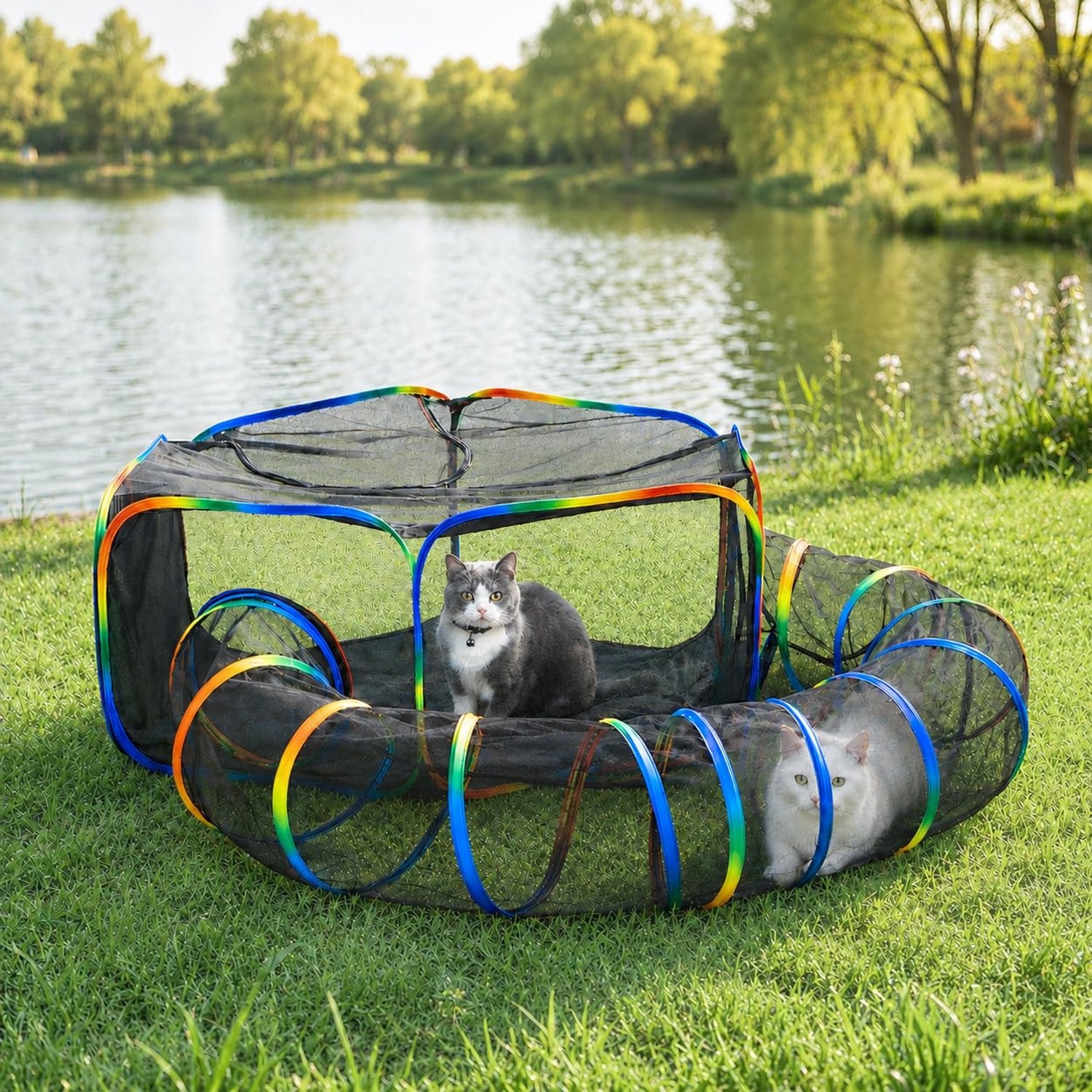
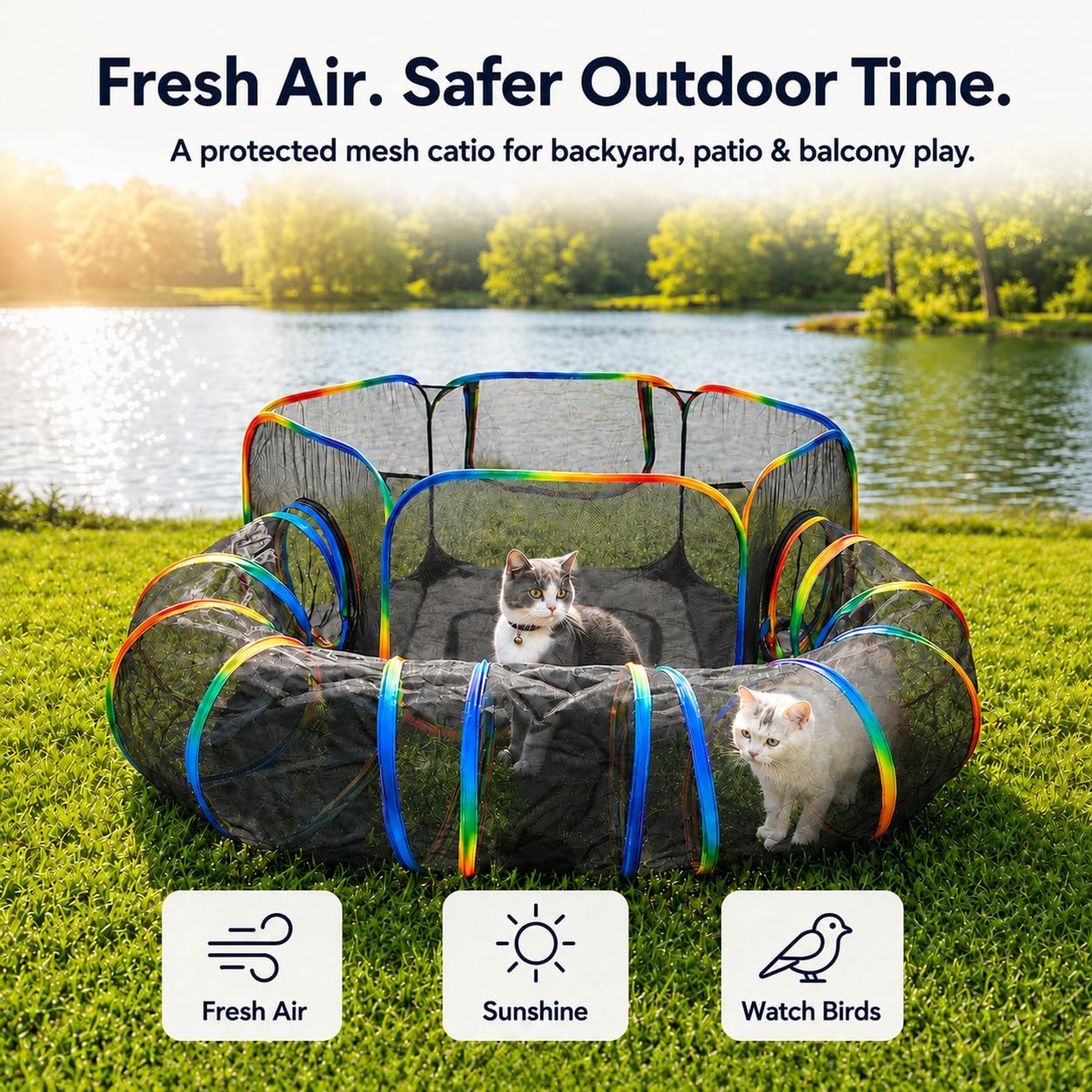
A cat tent and tunnel is the practical compromise. It is a soft, portable enclosure you put down on grass, a deck, a patio or a balcony. Your cat gets real outdoor time with wind and birdsong and sun-warmed ground. You keep them contained and in sight. It takes minutes to set up and folds back into a bag when you are done.
How a pop-up catio actually works
Think of it as a tent for a cat, because that is close to what it is. This set has two parts.
The tent is the main room. It has mesh walls so air moves through and your cat can see out in every direction, and it has two large zippered doors. Two doors matters more than you would guess. One is for getting your cat in. The other is for everything else: passing in a water bowl, retrieving a toy, reaching a cat who has decided the far corner is now their home.
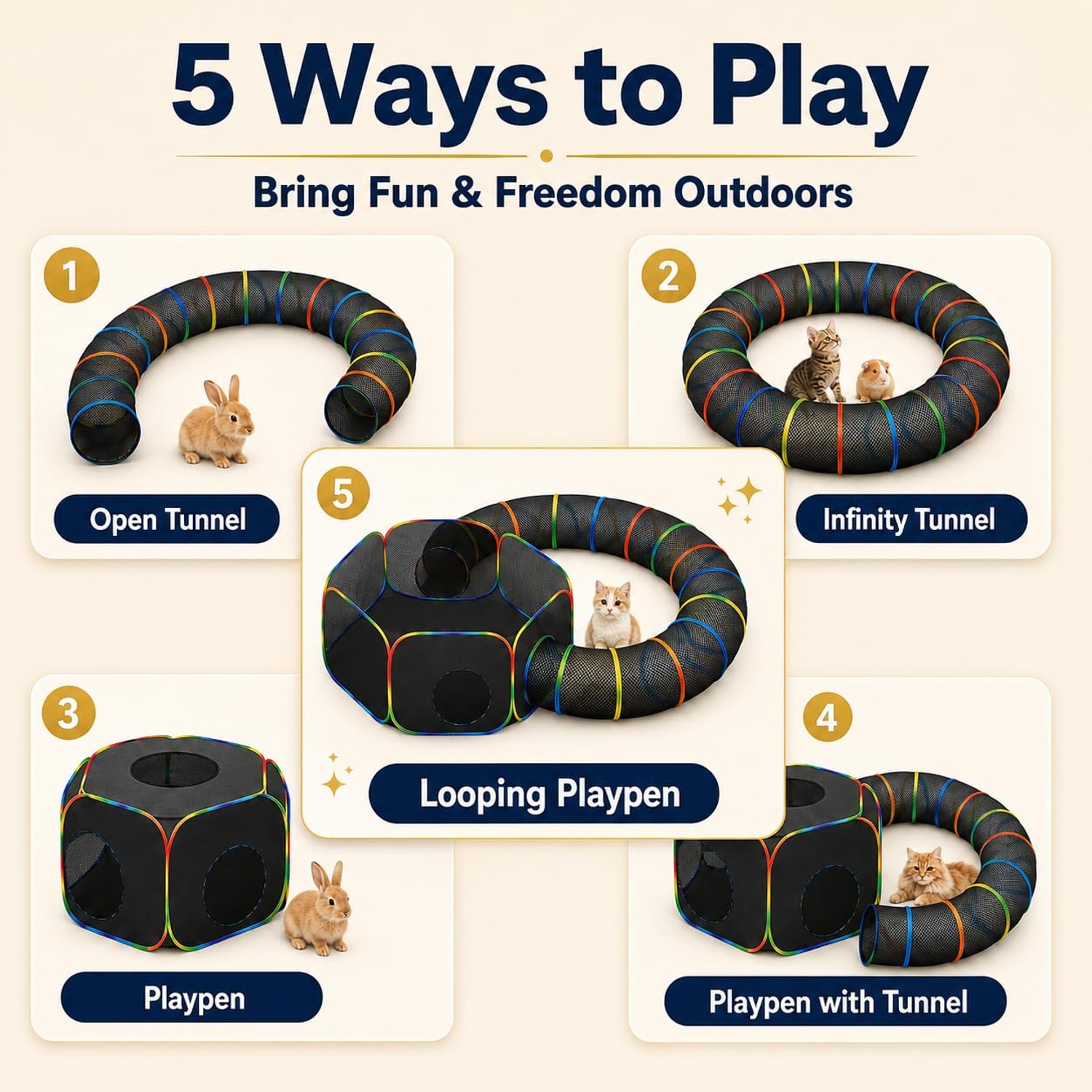
The tunnel is a long tube that zips onto the tent. That turns a single square of space into a run, which is a different kind of play. Cats like corridors. They like entrances and exits, blind corners, and the ability to vanish and reappear. A cat tunnel tent gives them that in a way a plain box never does.
The materials are mesh plus waterproof Oxford fabric, both polyester. The mesh handles airflow and visibility. The Oxford handles the ground, the damp, and the cleaning. It wipes down with a cloth and shakes out easily, which is the whole reason it keeps getting used instead of living in a cupboard.
Who this suits
Apartment cats. If you have a balcony you have never been able to use safely, a balcony catio is probably the single biggest quality-of-life upgrade you can give your cat. Set it well back from the railing and supervise.
Nervous rescues. Cats coming out of a shelter or a rough start often cannot cope with a walking lead. An outdoor cat playpen lets them experience outside without anything attached to their body, and with four walls they can retreat to.
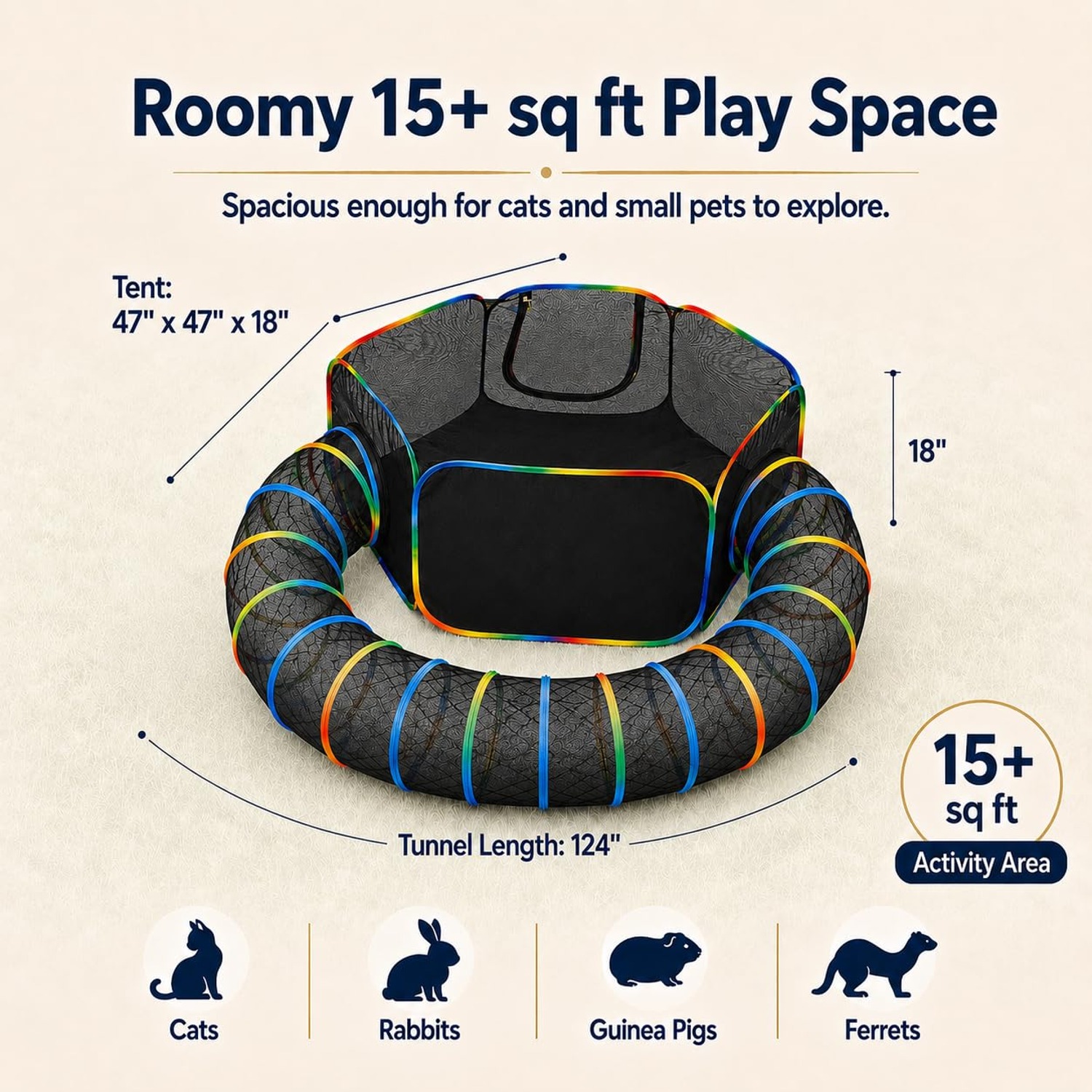
Multi-cat homes. The supplier describes this as large enough for several small pets. In practice it depends on your cats. Try one at a time first.
Travellers and campers. This is where a portable cat run earns its keep. It packs into a bag and gives your cat a safe base at a campsite, a caravan park or a holiday rental, rather than a carrier and a closed bathroom.
Owners of other small pets. Rabbits, guinea pigs and ferrets are all listed as suitable. Same rules apply, and chewers need closer watching.
Choosing well: what to actually think about
Measure the space first. This is the step people skip. Before you buy any mesh cat enclosure, walk outside with a tape measure and mark out where it will actually sit. Full assembled dimensions are not specified in this product record, so if you have a tight balcony, measure your available floor and leave clearance on all sides.
Decide between portable and permanent. A pop up catio folds away. A built enclosure does not. If you want all-day unsupervised access, you want timber and wire bolted to the house. If you want supervised sessions that you can pack up and take to the park, a foldable cat tent is the right tool.
Check how it packs. Everything collapses into the included storage bag. The first fold is fiddly, the same way a pop up beach shelter is. By the third time it is muscle memory. If it does not pack easily, it stops leaving the house.
Think about doors and access. Two zippered doors is the sensible minimum. One door means you are always reaching across the whole enclosure.
Be honest about your cat. Some cats are gentle tenants. Others treat mesh as a personal challenge. If yours is a chewer or a serious climber, start with short supervised sessions and inspect panels afterward.
Setting it up for the first time
Do not take a brand-new enclosure straight outside and put your cat in it. That is a lot of new at once.
Set it up indoors instead, with both doors unzipped and open. Drop in a blanket that smells like your cat, scatter a few treats, and then ignore it. Most cats investigate within an hour. The tunnel usually goes first, because tunnels are irresistible.
Once your cat walks in and out happily, do a short closed session indoors. Five minutes. Then ten. Only after that does the whole thing go outside.
For the first outdoor session, pick a quiet morning, no wind, somewhere shaded, and stay beside the enclosure. Fifteen minutes is plenty. Build from there.
Keeping your cat comfortable and safe
Shade is non-negotiable. Mesh lets air through but it does not block sun, and a tent in full afternoon sun gets hot fast. Place it under a tree, an awning or an umbrella, and move it as the shadows shift.
Water goes in every time, in a bowl low and wide enough not to tip.
Wind is the thing most people underestimate. A lightweight cat enclosure outdoor setup can be pushed by a decent gust. Use it on calm days, choose a sheltered spot, and weight the base with something safe if you need to. On a balcony, keep real distance from any edge.
Zippers get checked before every session. Both doors fully closed, the tunnel join fully closed. Cats find the gap you missed.
And supervise. Always. This is a product for time spent together, not a place to leave a cat while you run errands.
Cleaning and storage
Shake it out after each use. Fur, grass, dirt and litter come away easily.
For anything stuck on, spot clean with a damp cloth and a little mild soap, then rinse the cloth and go over it again. Let it dry completely in the open air. Skip the washing machine: the structure and mesh will not enjoy a drum.
The one rule that matters most is to never fold it away damp. Mildew in a cat tent and tunnel is miserable to get out and worse to smell. Give it a full dry, then pack it into the storage bag and keep it indoors away from direct sun.
Before each outing, run your eyes over the seams, the mesh and the zip teeth. Small damage is easy to catch early and annoying to catch late.
The short version
An indoor cat who never gets outside is safe and a bit under-stimulated. A cat tent and tunnel set fixes the second part without breaking the first.
You get a mesh tent with two zip doors, a tunnel that zips on to extend the run, breathable mesh with waterproof Oxford fabric, and a storage bag so the whole thing travels. Assembly is tool free. Cleaning is a damp cloth and a shake.
Measure your space, introduce it indoors first, pick a shaded and sheltered spot, check the zips, and stay with your cat. Do that and you have given an indoor cat something they have been staring at through glass their whole life.