
The complete guide
The Outdoor Cat Tunnel Buyer's Guide
The problem with a cat who wants outside
Cats are not subtle about this. They sit at the glass door. They shoulder past your leg when you take the bins out. They sleep in the one square of sun that moves across the carpet all afternoon, and then they look at you.
The outdoor cat argument never really gets settled because both sides are right. Cats with outdoor access are measurably happier and more active. Cats with outdoor access also meet cars, dogs, other cats, snail bait and the neighbour who does not like cats in his vegetable patch. If you live anywhere near a road, free roaming is a gamble you lose eventually.
An outdoor cat tunnel is the compromise that actually works. Your cat gets grass under their feet, wind in their whiskers and the smell of whatever died under the shed. You get to know exactly where they are. Nobody has to be heroic about it.
How a ground tunnel actually works
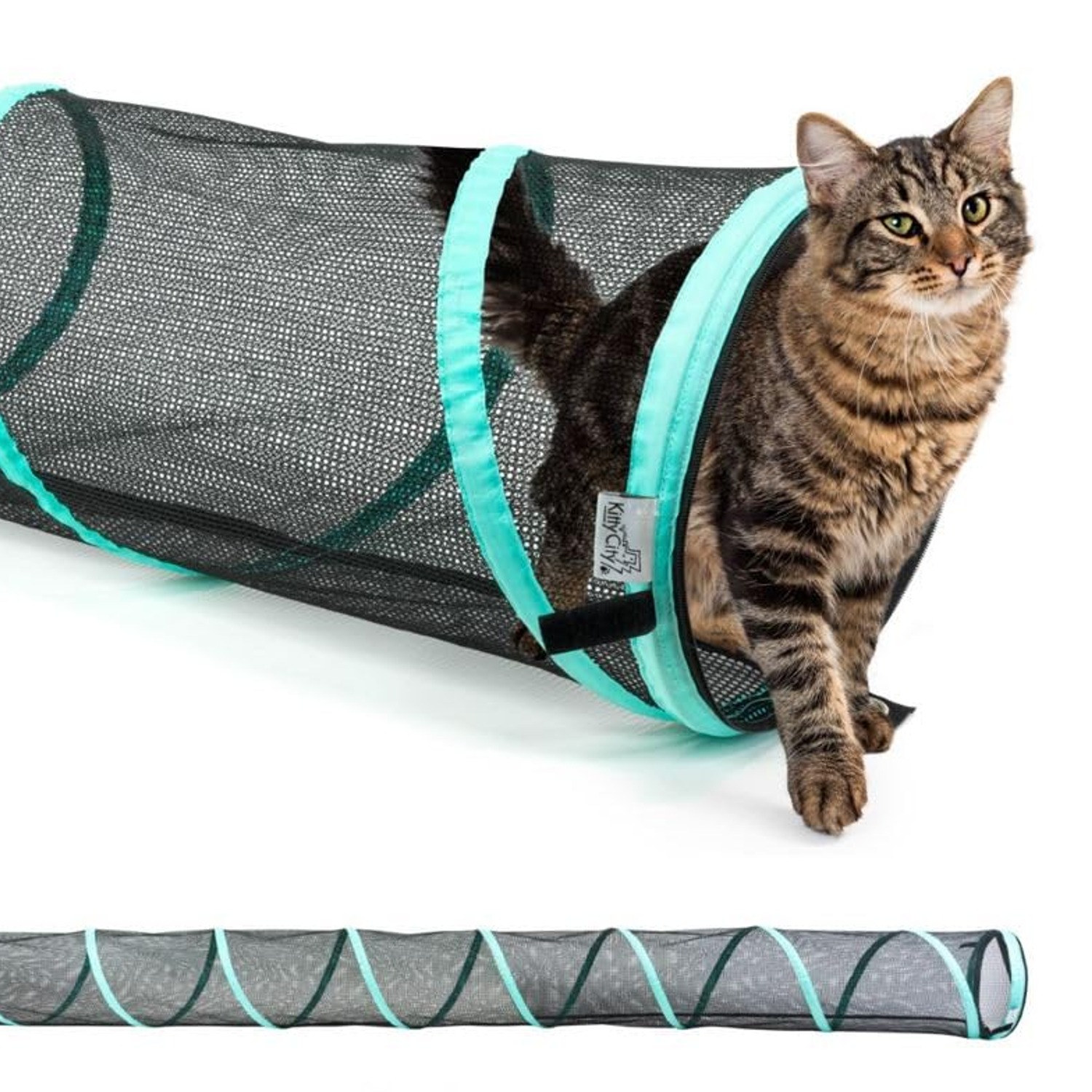
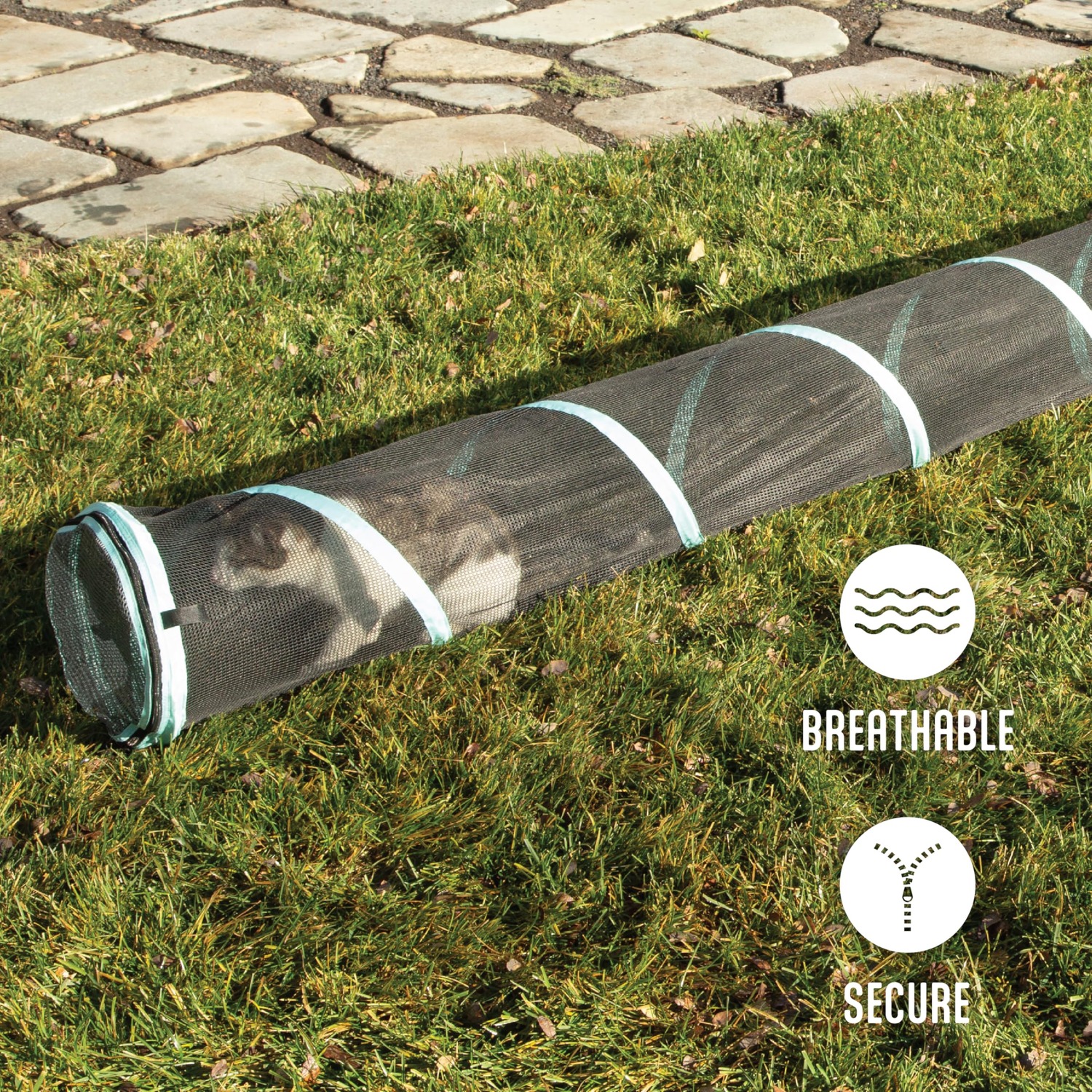
The idea is simple. A long fabric tube sits on the lawn. It holds its round shape with internal hoops, stakes down at intervals so it cannot roll or collapse, and the ends close with zips. Your cat goes in one end and comes out the other, or does not come out at all because the zips are shut and this is now a three metre fabric hallway they live in.
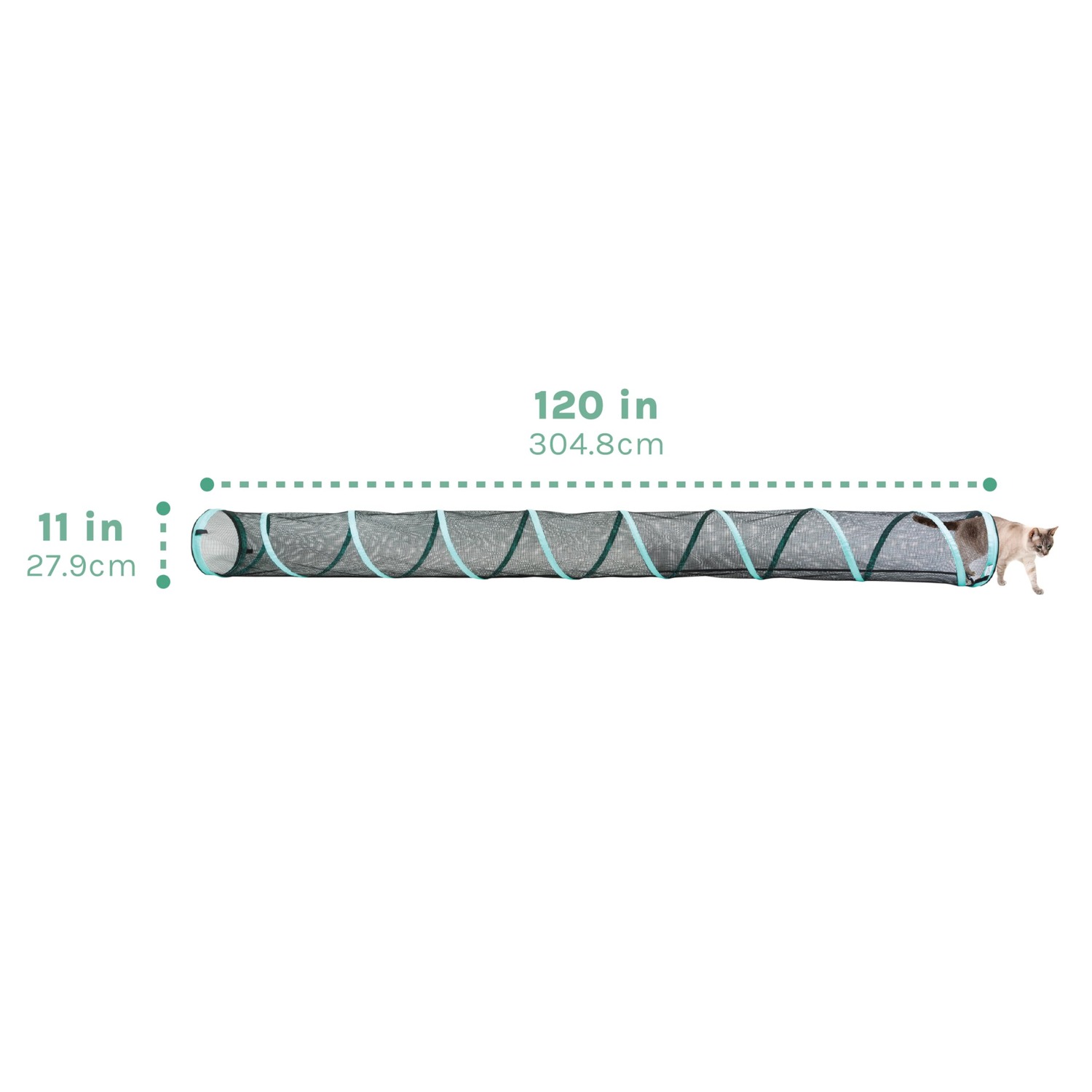
The 3.05 metre length matters more than people expect. A short tunnel is a novelty. A long cat tunnel is a route. Cats move differently through three metres, they build speed, they stop halfway and flop, they ambush things at the far end. It stops feeling like a toy and starts feeling like territory.
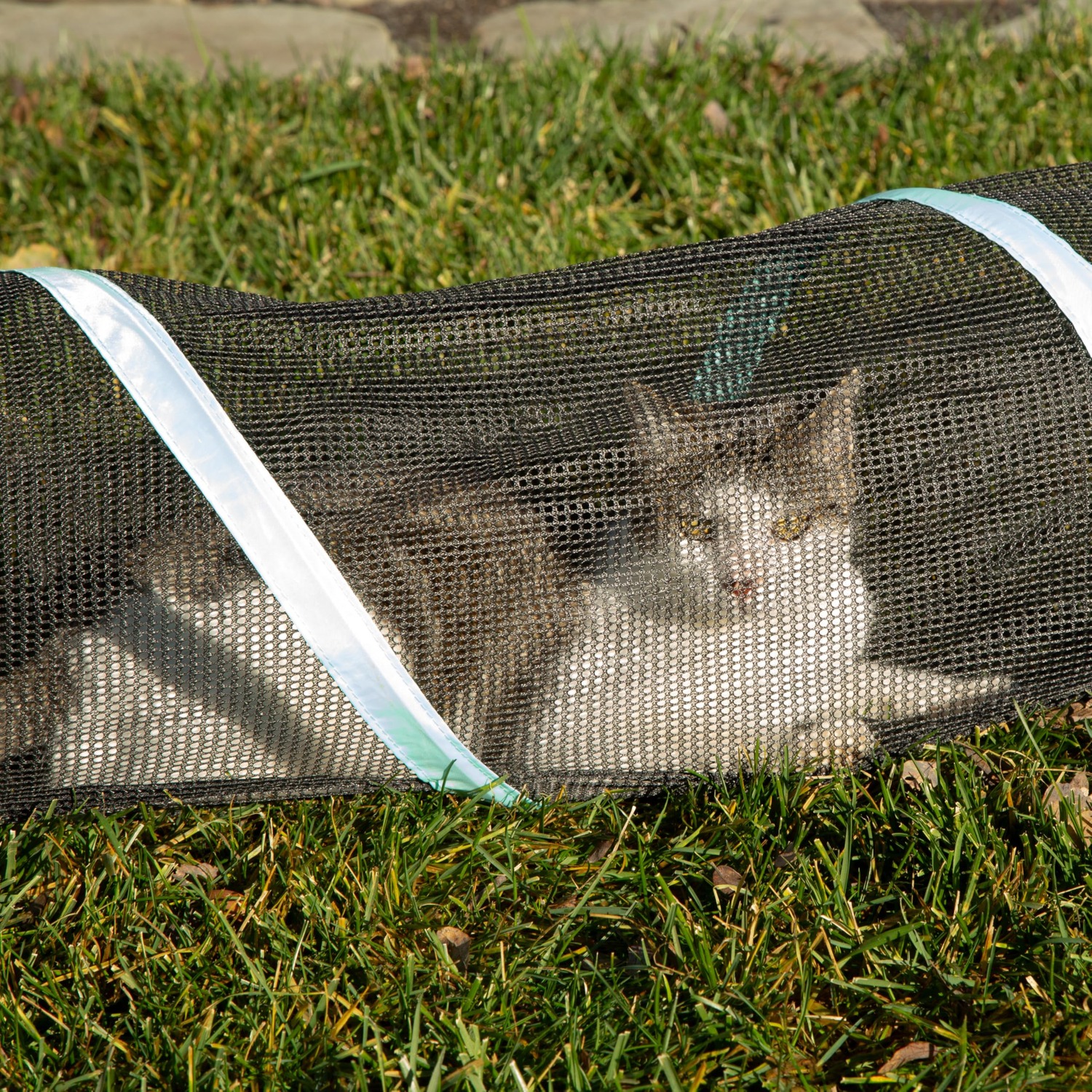
The 28 centimetre diameter is the other half of it. That is wide enough for a normal adult cat to walk through with their tail up and still have room to turn around, but narrow enough that it feels enclosed and safe rather than exposed. Nervous cats take to tunnels fast for exactly that reason. Cover is comfort.
Why zips change everything
A tunnel without closable ends is just a play tube. The zips are the feature that makes this a containment product rather than an accessory.
Zip both ends and you have a defined, closed space. Your cat is outside, in the air, on the grass, and they are not going anywhere. That is the whole proposition. For a lot of indoor cats, twenty supervised minutes a day in a zipped run is the difference between a bored cat and a satisfied one.
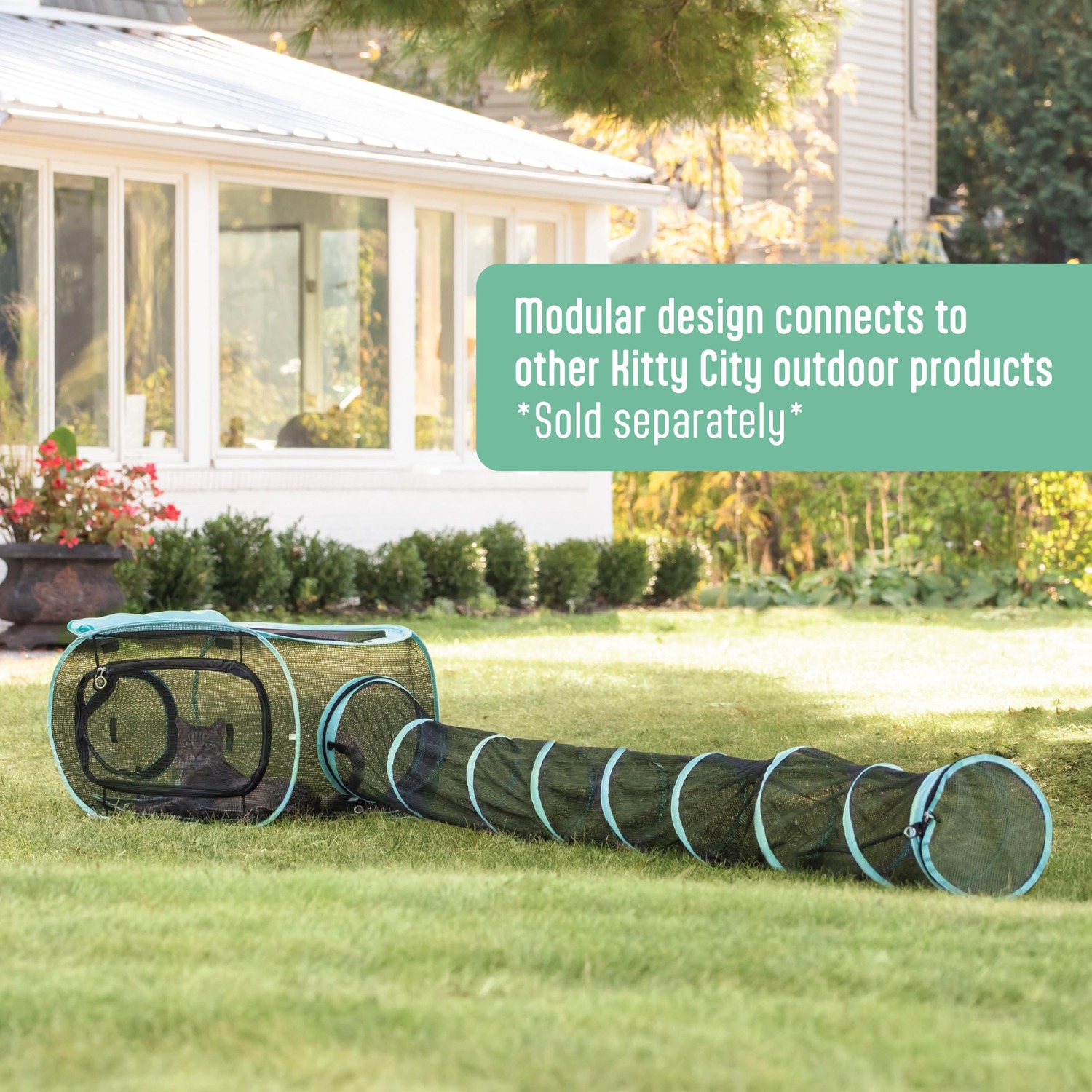
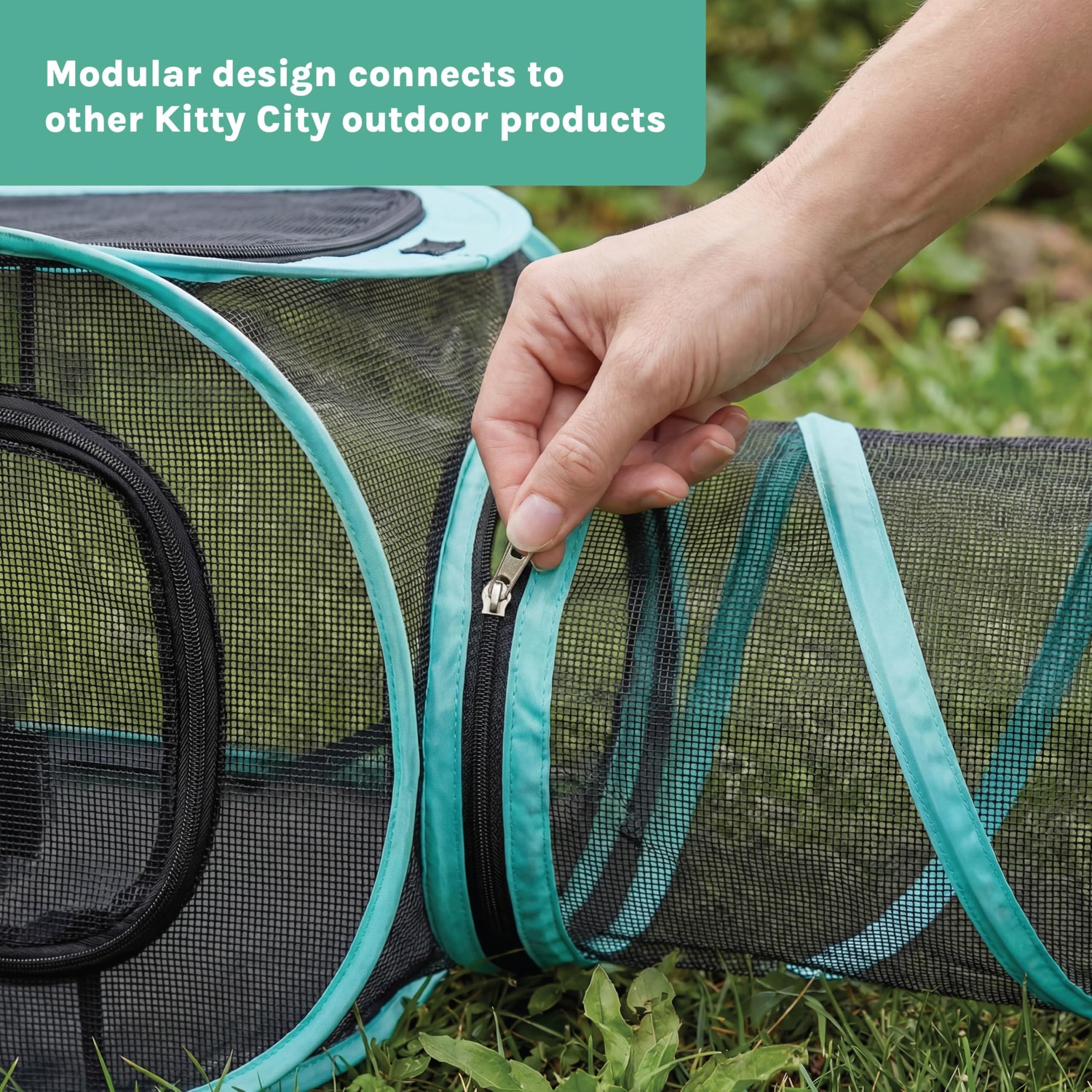
Open the zips and the same product becomes a connector. That is where the catio tunnel use case comes in. If you have an enclosure on the deck and a mesh run by the fence, a cat run tunnel joins them. Being part of the Kitty City outdoor modular range, this piece is designed to link up with other components including the Outdoor Mega Kit, so you are not buying a dead end.
Who this suits
This is a good fit if you have an indoor cat who clearly wants more. It is also good for cats who used to go out and now cannot, after a move to a busier street or a vet recommendation. Those cats often struggle, and a contained outdoor cat tunnel gives back some of what they lost.
It suits renters particularly well. You cannot build a permanent catio into a property you do not own, but you can stake a tunnel into the lawn on Saturday and pull it up when you move. Same for anyone whose yard is small, oddly shaped, or shared.
Size wise, the breed recommendation on this model is small breeds and the age range is all ages. Average adult cats, kittens and older cats all do fine. If you have a particularly large cat, measure them across the shoulders and compare against the 28 centimetre width before you buy.
Where it is less ideal: if you have three boisterous cats who all want to chase each other at once, a single three metre run gets crowded. Two tunnels or a wider enclosure will serve you better.
Choosing the right setup for your yard
Think about ground first. Stakes need something to bite into. Lawn, garden bed, soft dirt, all fine. Pavers, decking and concrete, not fine, and you will need to weigh the tunnel down with plant pots, pavers or sandbags at the ends and midpoints instead. Plan that before the box arrives rather than after.
Then think about shade. A fabric tunnel in full afternoon sun gets warm. Run it along a fence line, under a tree or beside the house so part of it is always shaded. Put a water bowl at one end. Cats self regulate well if they have options, but they need to be given options.
Then think about layout. A straight line down the lawn is the easiest start. A gentle curve works too and often reads as more interesting to a cat. If you are planning a full cat tunnel system later, leave room at each end for whatever you will add, and set it up so the tunnel is reachable from the door you use.
One last thought: put the tunnel somewhere you can see it from inside. Supervision is much easier when you can glance up from the kitchen bench.
Getting your cat to actually use it
Do not push them in. It never works and it sets back the whole project.
Open both ends and let the tunnel sit in the room or the yard for a day. Cats investigate novel objects on their own schedule and they do it faster when nobody is watching hopefully. Drop a few treats just inside the opening. Run a wand toy through and let the string disappear at the far end, which is close to irresistible for most cats.
Start indoors if your cat is cautious. A pop up cat tunnel on the hallway floor with both ends open feels low risk because there is always an exit. Once they are running through it happily, move the whole thing outside, keep the ends open for the first few sessions, then start zipping.
Most cats are sprinting through within a week. A few take longer. Almost none take never.
Looking after it
The care is straightforward. Wipe the fabric with a damp cloth and a little mild soap for day to day marks, or machine wash on a gentle cycle when it needs a proper clean. Air dry it fully. Do not put it in the dryer, because heat is hard on the structure that holds the tube shape.
After each outdoor session, give it a shake to clear leaves, grass clippings and fur. Check the zips for grit, since a bit of garden sand in the teeth is the most common cause of a zip that stops running smoothly. Pull the stakes and check the stake points occasionally for wear.
Store it flat, dry and out of direct sun. At 816 grams it takes up almost no room in a shed or cupboard, and a collapsible cat tunnel that lives dry will last a lot longer than one left out through winter.
The short version
A 3.05 metre polyester tunnel that stakes into the lawn, zips closed at both ends and weighs under a kilo. It gives an indoor cat genuine outdoor time without the risks of free roaming, and it folds flat when you are done.
It works on its own, it works as a cat tunnel enclosure connector, and it works as part of the wider Kitty City outdoor modular range if you want to build something bigger later.
Set it on soft ground, keep part of it shaded, supervise the sessions, and let your cat decide how fast to take to it. Most of them take to it quickly.