

The complete guide
How to Choose a Portable Catio That Your Cat Will Actually Use
The problem with indoor cats and the outdoors
Indoor cats live longer. That is settled. They avoid cars, fights, ticks, and the long list of things that go wrong when a cat roams. The trade-off is boredom, and bored cats find ways to tell you about it. They shred the couch arm. They sprint down the hallway at 4am. They sit in the window making a noise that sounds like complaining because it is.
What they want is not necessarily freedom. It is stimulation. Moving air, rustling grass, insects, the smell of next door's garden. A portable catio gives them that in a measured dose. Your cat gets the sensory part of outside without the parts that put them at risk.
The other thing people underestimate is how much this helps the human. You stop feeling guilty. You can sit on the back step with a cup of tea and your cat is right there, flopped out in a sunny patch, instead of pacing behind a closed door.
How a pop-up enclosure actually works
The idea is simple. A frame made of flexible rods is sewn into the fabric panels. When the enclosure is folded, those rods are held under tension in a flat circle. Release the tension and the whole structure springs into shape on its own. That is why the listing says no assembly required, and why setup takes about a minute once you have done it twice.
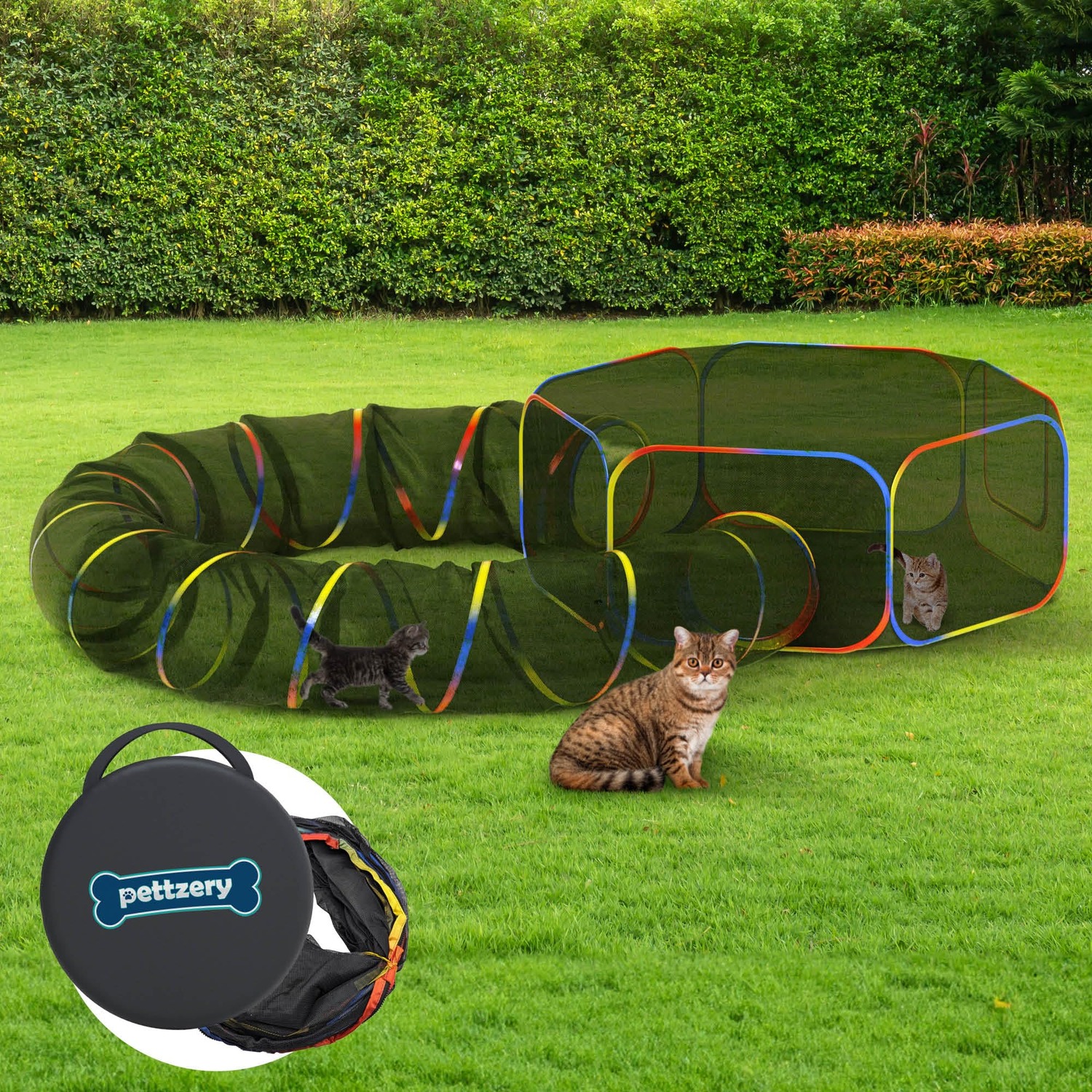
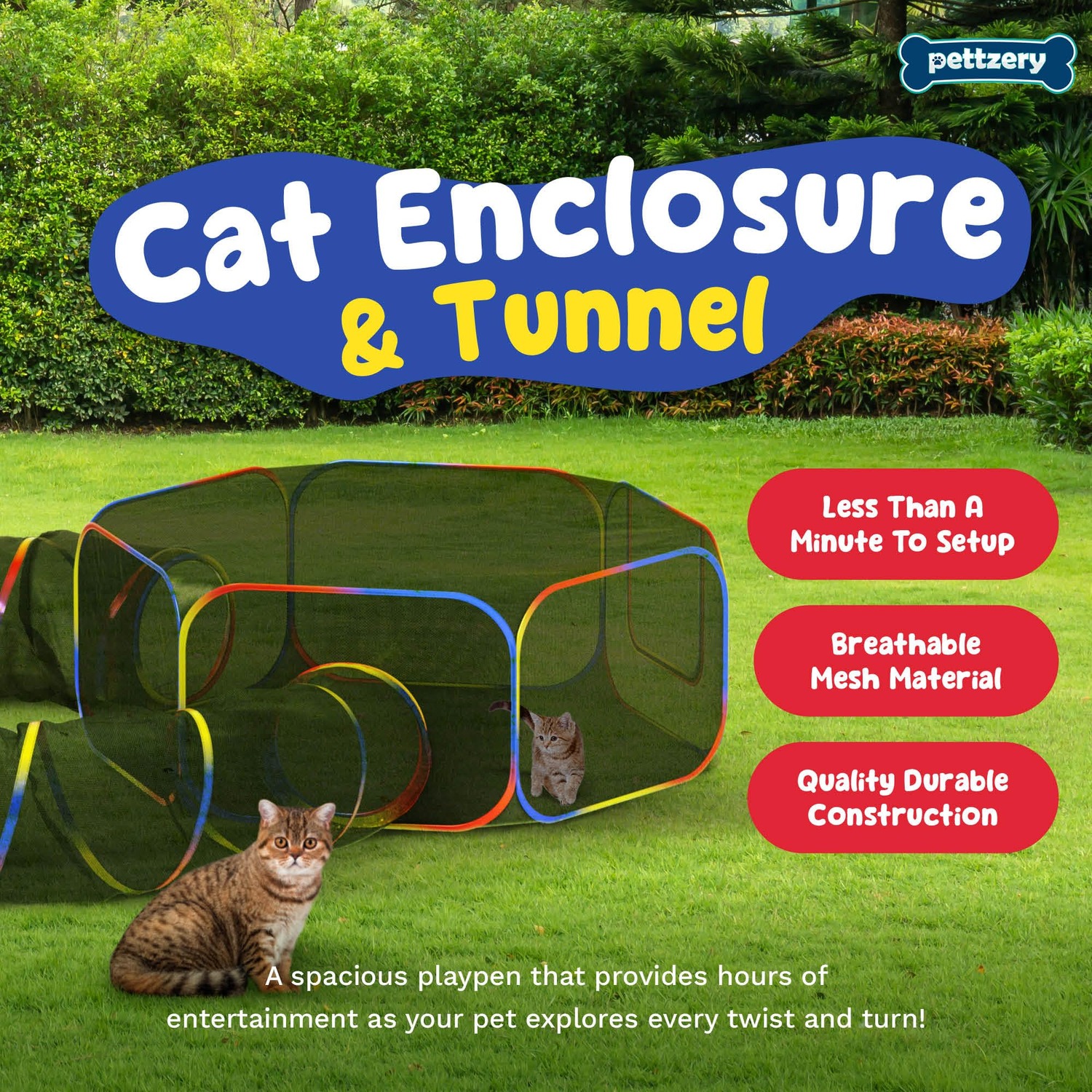
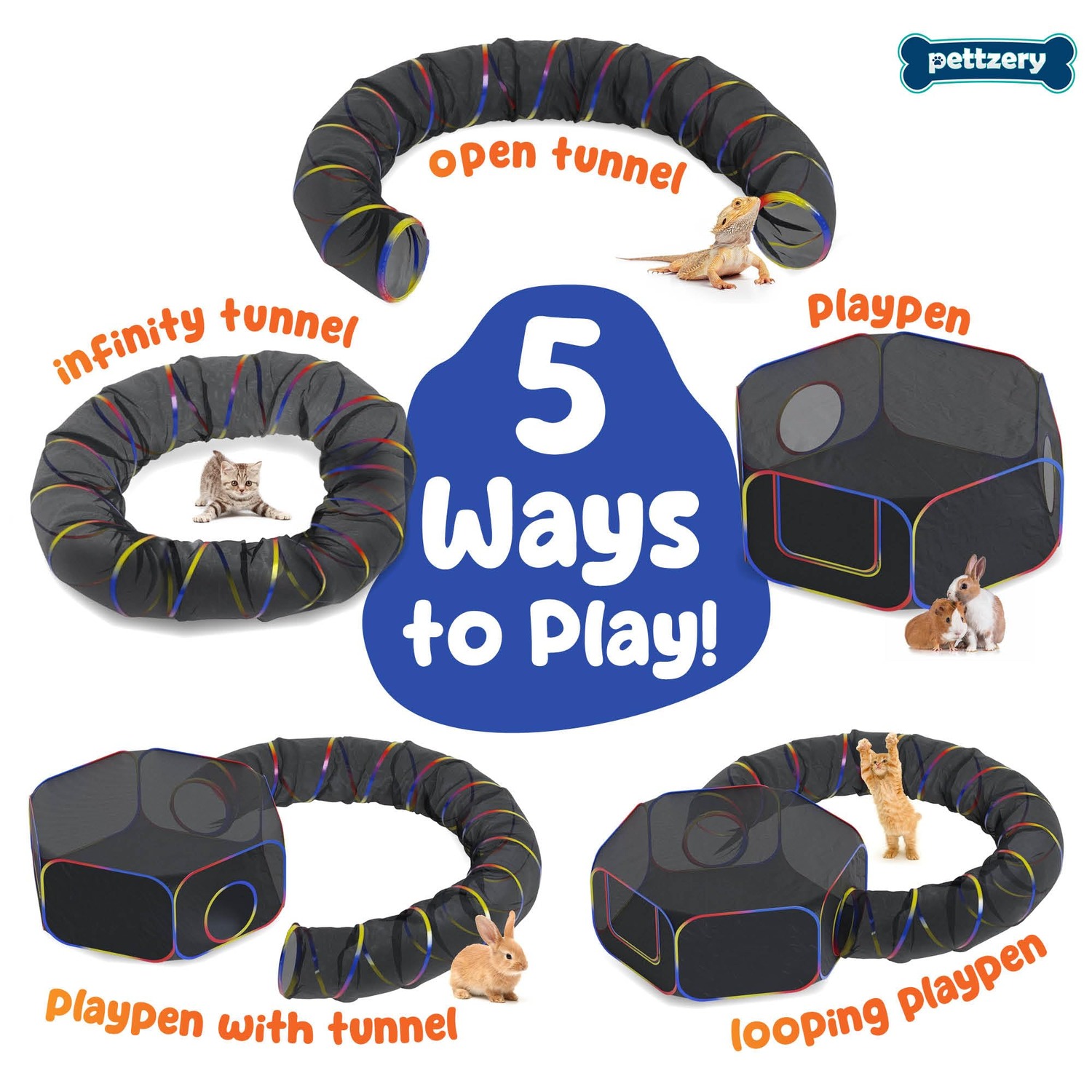
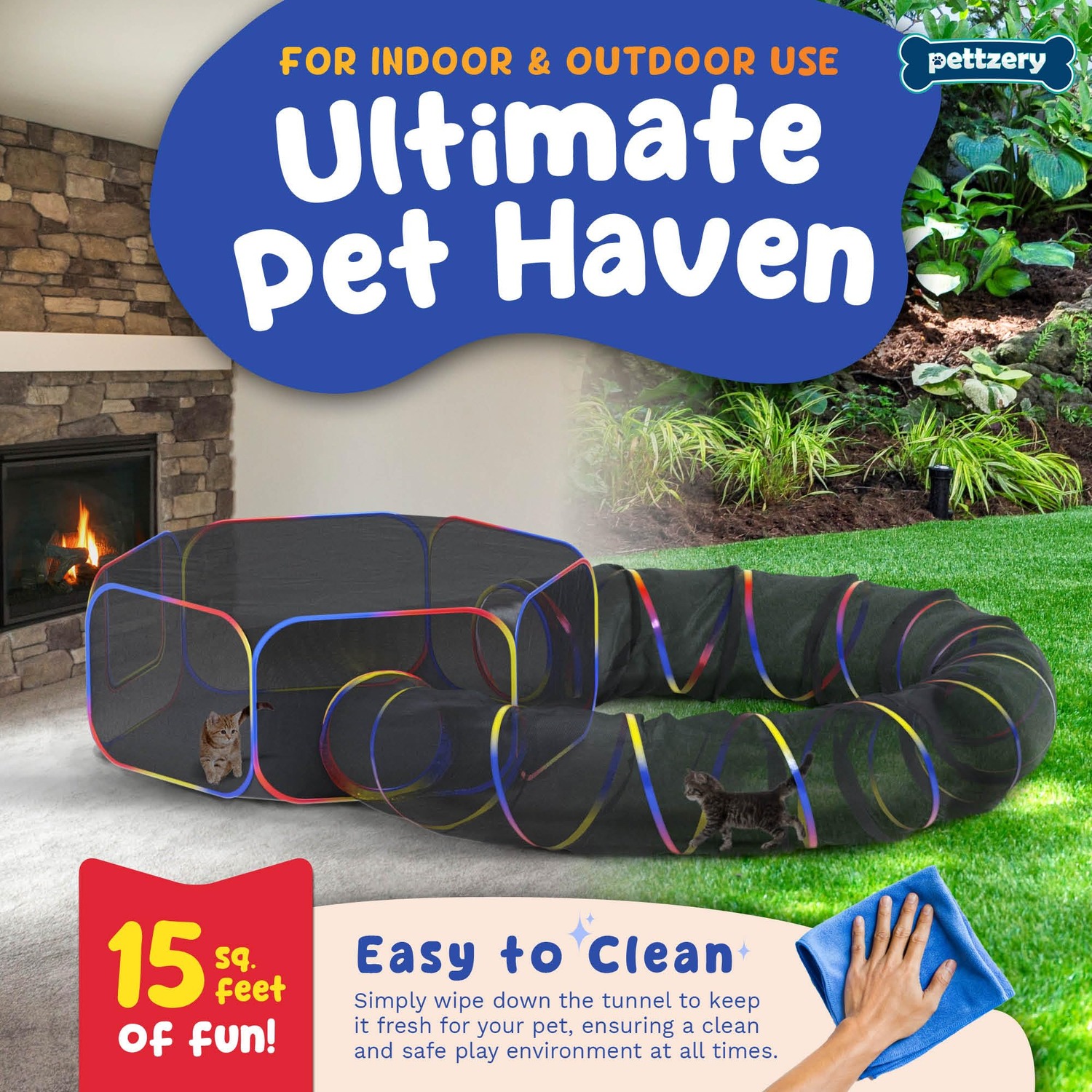
This particular set is a square tent measuring 119.4 cm on each side and 45.7 cm tall, paired with a play tunnel that zips onto the body. The tent alone is a decent space for one cat. Add the tunnel and you get a run, which changes the behaviour you see. Cats that just sit in a plain pen will often start patrolling once there is a passage to move through.
The fabric is Oxford cloth with mesh panels. Oxford cloth is a woven material you have probably handled without knowing the name, since it turns up in backpacks, tool bags and outdoor furniture covers. It is chosen for enclosures like this because it folds repeatedly without creasing into weak spots. The mesh does the real work, though. It moves air, it lets your cat see out, and it lets you see in from across the yard without having to walk over and unzip anything.
Closures are zips. That matters more than it sounds. A zip is the difference between an enclosure and a fabric box, and it is also the part that wears first if you let dirt build up in the teeth.
Who this suits
Apartment and unit dwellers get the most out of it. If you have a balcony and no garden, a cat enclosure for apartment living is often the only way to give your cat outside time at all. The tent on its own takes a space a little over a metre square, which many balconies can manage even if the tunnel has to stay in the bag.
Renters are the second group. You cannot bolt a permanent structure to a wall you do not own. A foldable catio sidesteps the whole conversation with the landlord because nothing is fixed to anything.
Then there are travellers. If you take your cat to a holiday house, a caravan park or a campsite, an outdoor cat tent that packs into a bag gives them a familiar space in unfamiliar surroundings. Cats cope with travel far better when something in the new place smells like the old one.
Finally, mixed-pet households. The target species list covers cats, ferrets, guinea pigs and rabbits, so one enclosure can serve several animals at different times. Just do not put them in together and expect it to go well.
Working out the right size
Measure before you order. It sounds obvious and people skip it constantly.
Start with the space, not the cat. Find the flat area you plan to use and mark out 120 cm by 120 cm with a tape measure or a couple of books on the ground. If that fits with room to walk around it, the tent will work. Then decide separately whether you have the extra length for the tunnel, because that is an optional add-on rather than a fixed part of the footprint.
Next, the cat. The height here is 45.7 cm. A medium cat sitting upright will have room. A very tall cat that likes to stretch up on its back legs will touch the roof. Sit your cat down, get the tape measure out and check from floor to the top of their head when they are alert and upright. Add a few centimetres.
If you have two cats, do not assume double the cats means double the space is needed. Cats that genuinely like each other will pile into a space the size of a shoebox. Cats that merely tolerate each other need separation, and no enclosure provides that. Watch the first couple of sessions before you leave them in together.
Getting your cat to use it
Almost every return of a product like this comes down to one thing. The cat would not go in.
The fix is patience. Set the enclosure up indoors first, with all the zips open, and leave it there for a few days. Do not put your cat in it. Do not pick them up and post them through the door. Let them walk in on their own, which they will, because it is a new box-shaped thing in their house and that is irresistible.
Help it along by putting their usual bed or a blanket they already sleep on inside. Scatter a few treats near the entrance and then further in. If you have a cat tunnel tent setup, roll a toy through the tunnel while they watch. Most cats will chase it without thinking.
Once they go in willingly indoors, move the whole thing outside and repeat. Keep the first outdoor sessions short, ten or fifteen minutes, and stay right there. Build up from that.
Care, storage and making it last
The single most important habit is drying it properly. Fabric folded away damp will smell within a week and will grow mould within a month. After each use, shake out the grass and fur, then leave it open somewhere airy until it is completely dry before it goes in the bag.
For cleaning, warm water and a mild pet-safe soap on a cloth handles most of it. Spot clean rather than soaking. Do not put it in the washing machine and do not put it anywhere near a tumble dryer, because heat and agitation will damage the frame rods and the mesh.
Keep the zips clean. A soft brush along the teeth after a session on grass takes ten seconds and prevents the grinding that eventually ruins a zip. Trim your cat's claws on a normal schedule too, since snagged mesh is the other common wear point.
Store it in the bag, out of direct sunlight. UV is hard on both fabric and mesh over time, so a cupboard or a shelf in the shed beats leaving it on the back deck between uses.
A few safety habits worth building
Never leave a cat in a mesh enclosure unattended. That is not a product limitation so much as a fact about light fabric. It will not stop a dog that is determined, and it will not stop a large bird in areas where that is a concern.
Watch the sun. Shade moves. A spot that was comfortable at 11am can be full sun by 1pm. Set up under a tree, an umbrella or the shaded side of the house, and always put water inside.
Check the zips are fully closed before you walk away even for a minute. And avoid using it on windy days. Pop-up enclosures are light by design, and a gust will move one with a cat inside.
The short version
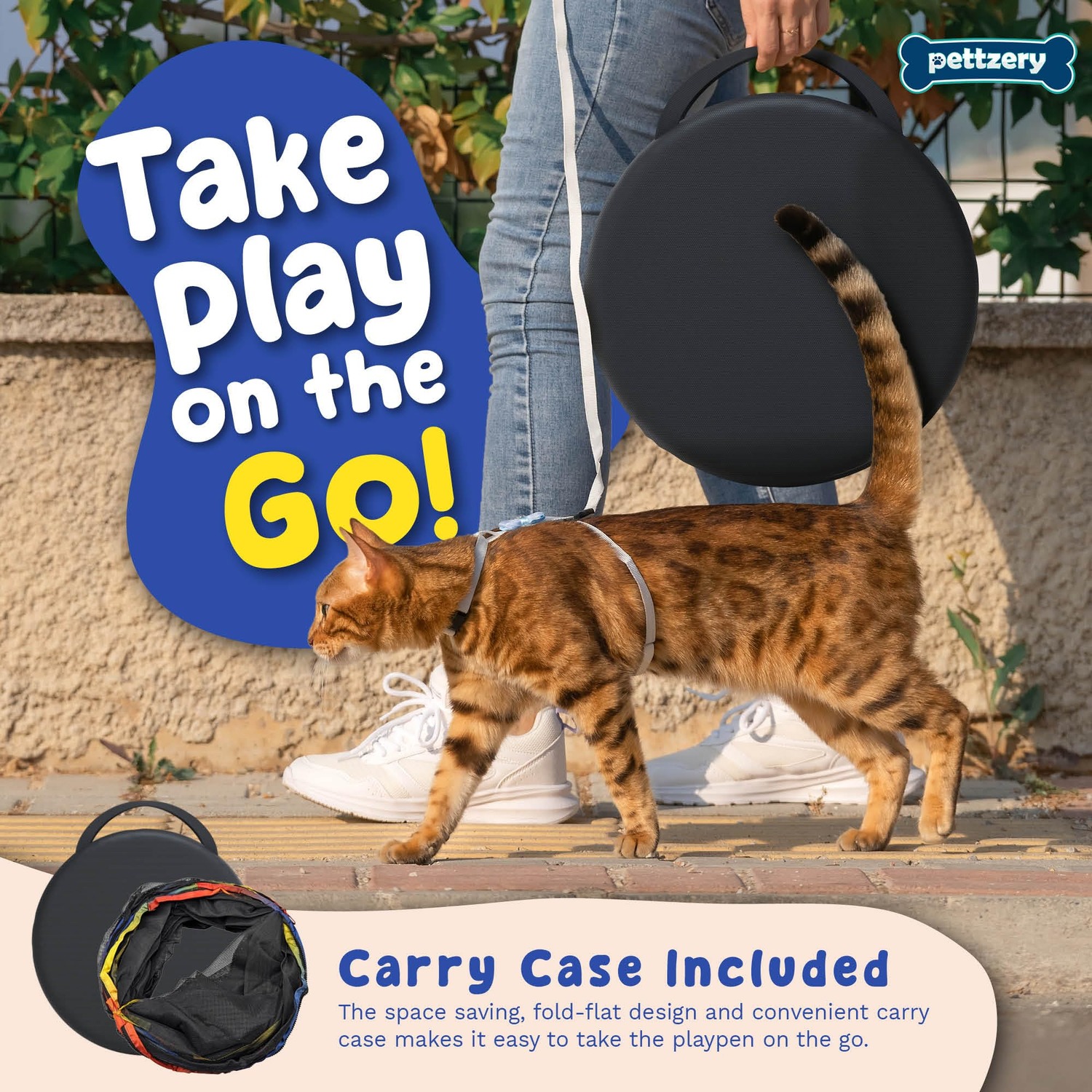
This is a two-piece set, a square 119.4 cm pop-up tent plus a zip-on play tunnel, built from Oxford cloth and mesh, with zip closures and no assembly needed. It folds into a carry bag, so it works on a lawn, a balcony, at a campsite or in a holiday rental.
Measure your space first. Introduce it indoors before you take it outside. Dry it before you fold it. Stay nearby while your cat is in it.
Do those four things and you have a cat that gets real outdoor time, and a house with fewer shredded couch arms.