
The complete guide
How to Choose a Foldable Cat Enclosure That Your Cat Will Actually Use
The problem with a window-only view
Indoor cats live longer. That is settled, and it is why so many of us keep ours inside. The cost is boredom. A cat that spends twelve years looking at the garden through glass gets plenty of visual stimulation and almost no scent, texture or airflow. You see it in the behaviour: the 10pm sprint down the hallway, the chewed houseplant, the staring contest with the front door.
A foldable cat enclosure sits between the two extremes. The cat gets real outdoor time, you keep the safety of indoor living, and nothing has to be built, drilled or approved by a landlord. You unfold it, you zip it together, the cat goes in. Half an hour of grass and sunlight does more for a bored cat than another toy mouse.
How this one works
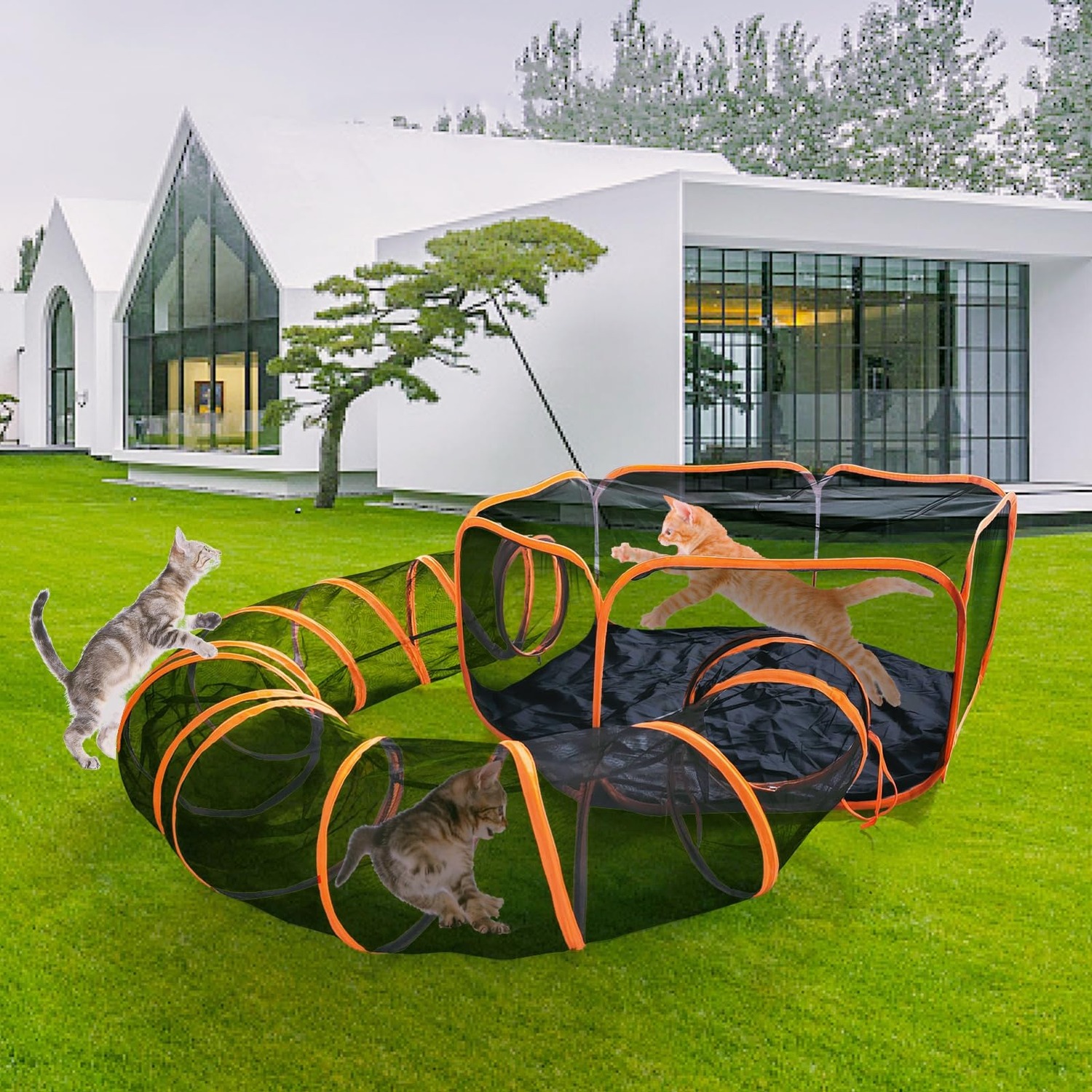
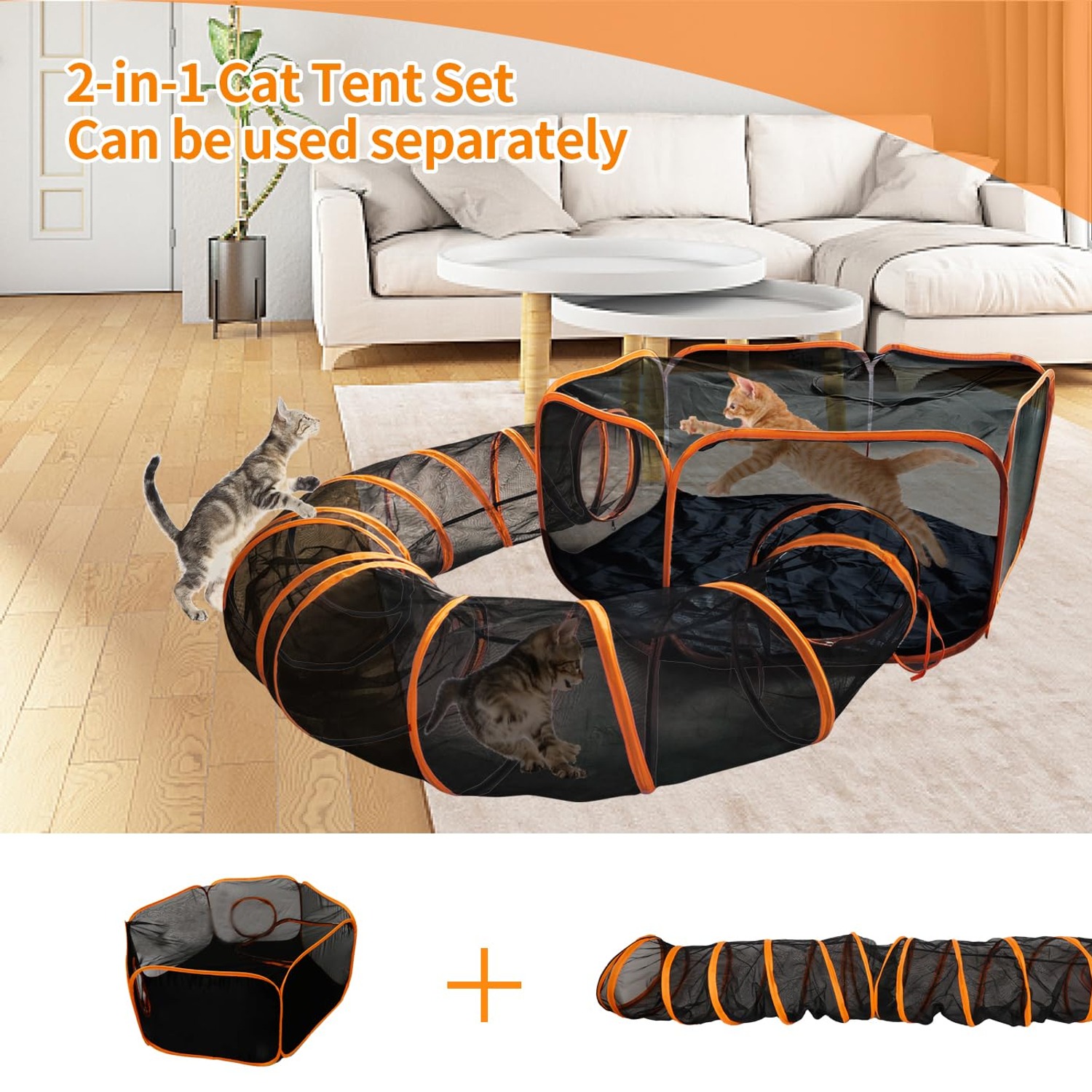
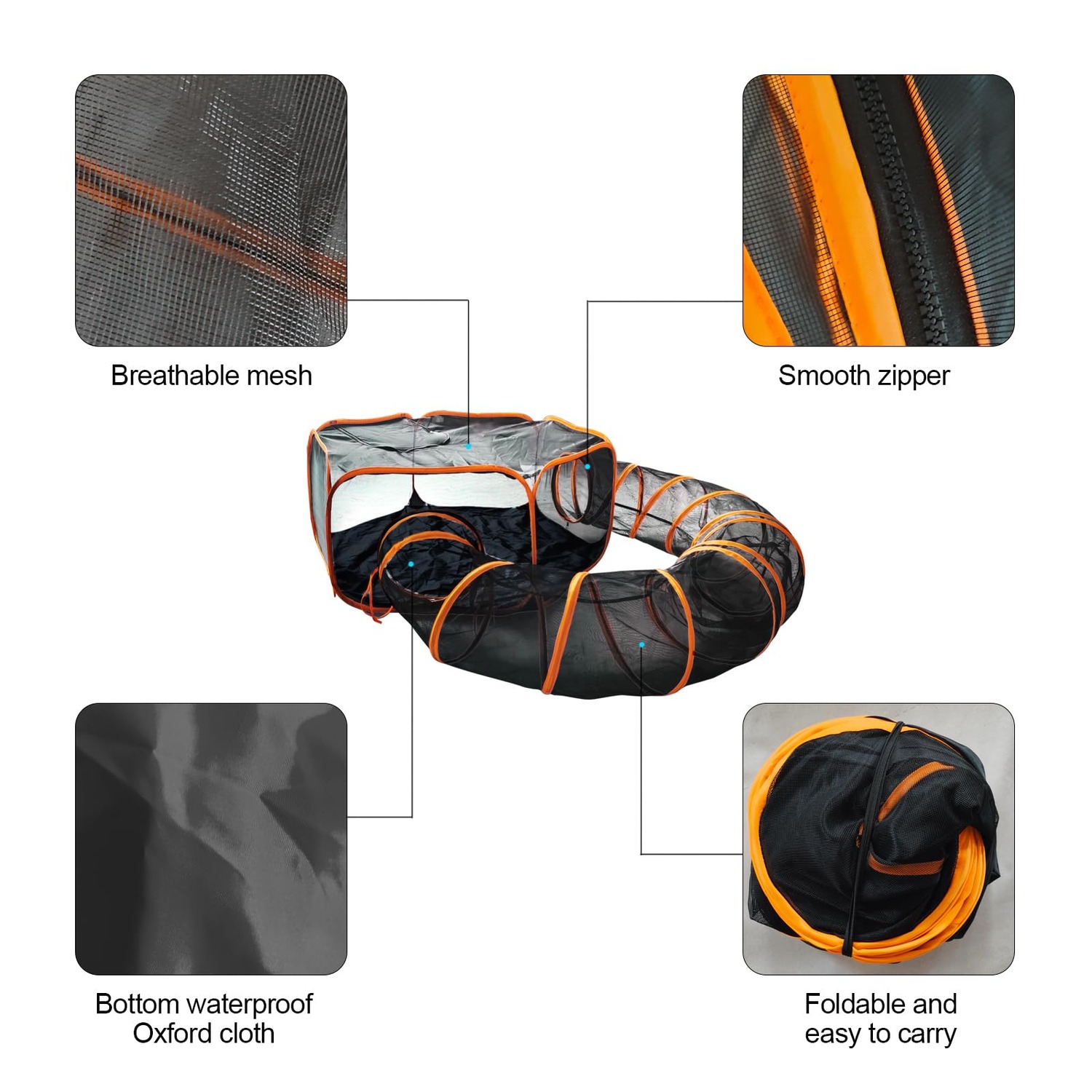
The design is simple on purpose. There is a square mesh tent, 120 cm by 120 cm and 45 cm high, sitting on a waterproof Oxford fabric floor. The frame is alloy steel, which is what keeps the walls upright when a cat shoulders into them. Two large zipper doors let you in and out.
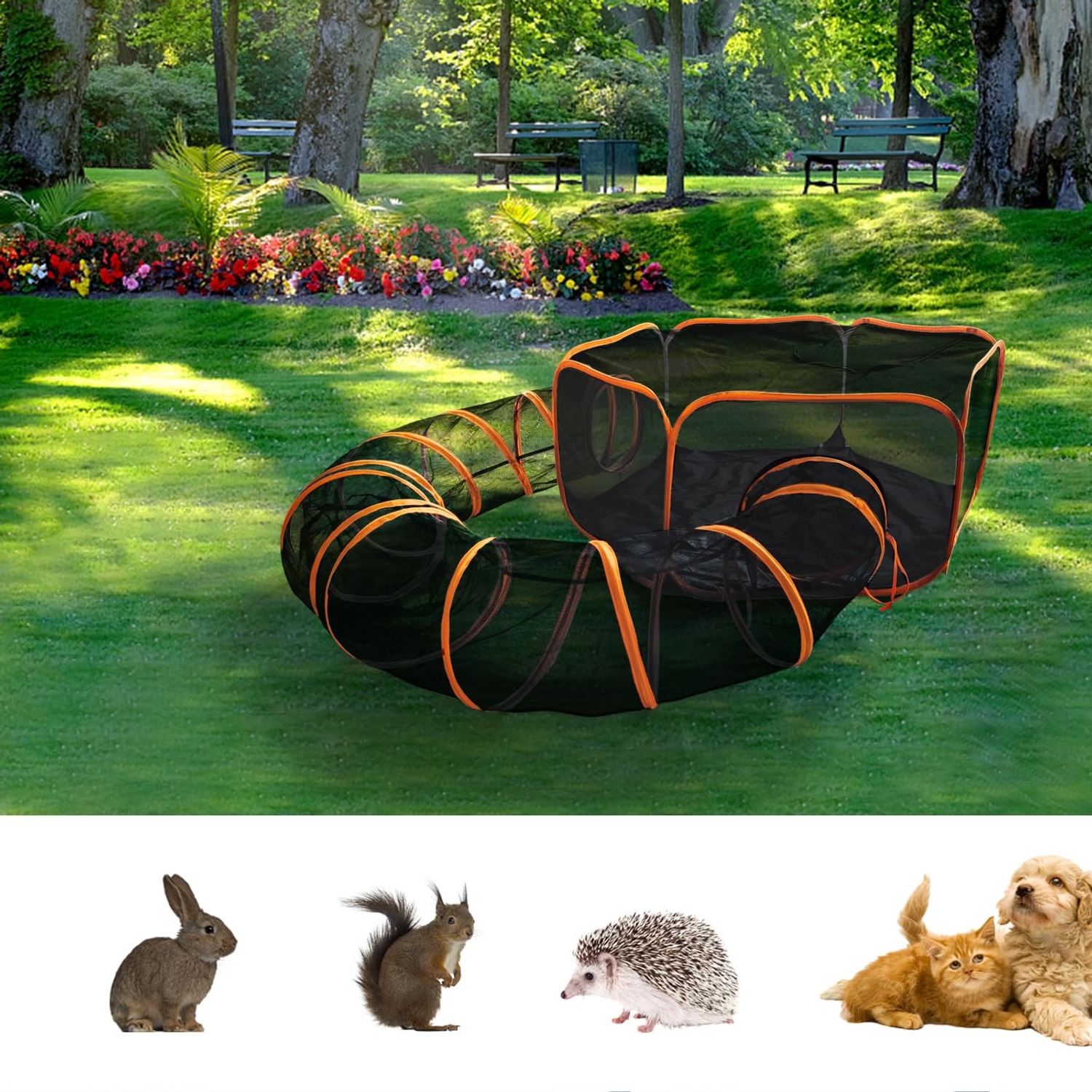
Then there is the tunnel. It zips onto one of the tent doors and creates a closed loop, so the cat can move from the open tent into the covered run and back again. That matters more than the extra square metres. Cats are ambush animals. A space with a hiding tube in it reads as safe, and a cat that feels safe will explore. A plain open box, by comparison, often ends with the cat flattened in one corner refusing to move.
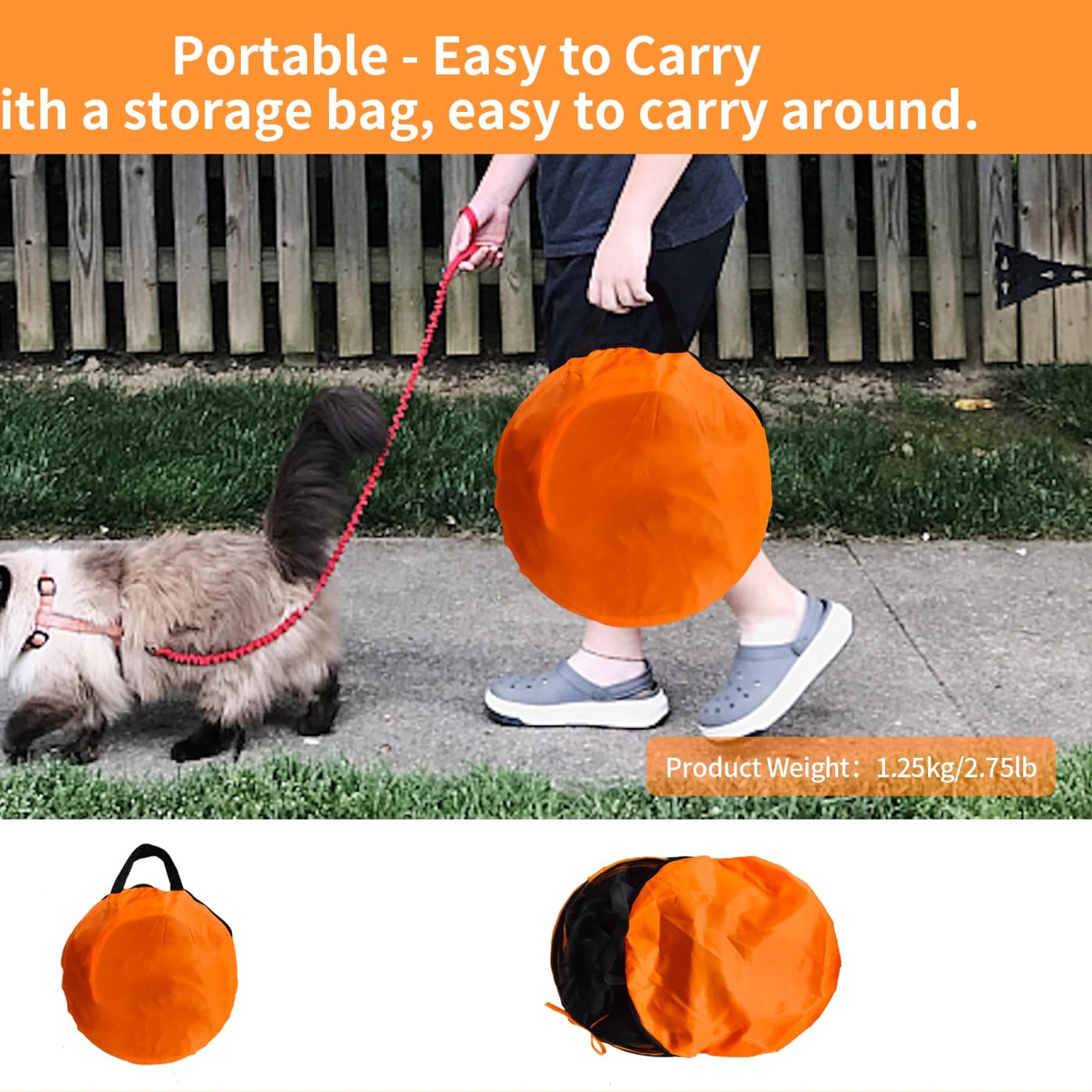
The whole thing folds down into a carry bag. That is the feature that decides whether a product like this gets used weekly or used once. If it lives in a cupboard and goes up in a minute, it comes out often.
Who it suits
Indoor cats with a backyard they never touch. This is the main case. Set it up on the lawn, bring a book, and let your cat have twenty minutes of dirt and bugs.
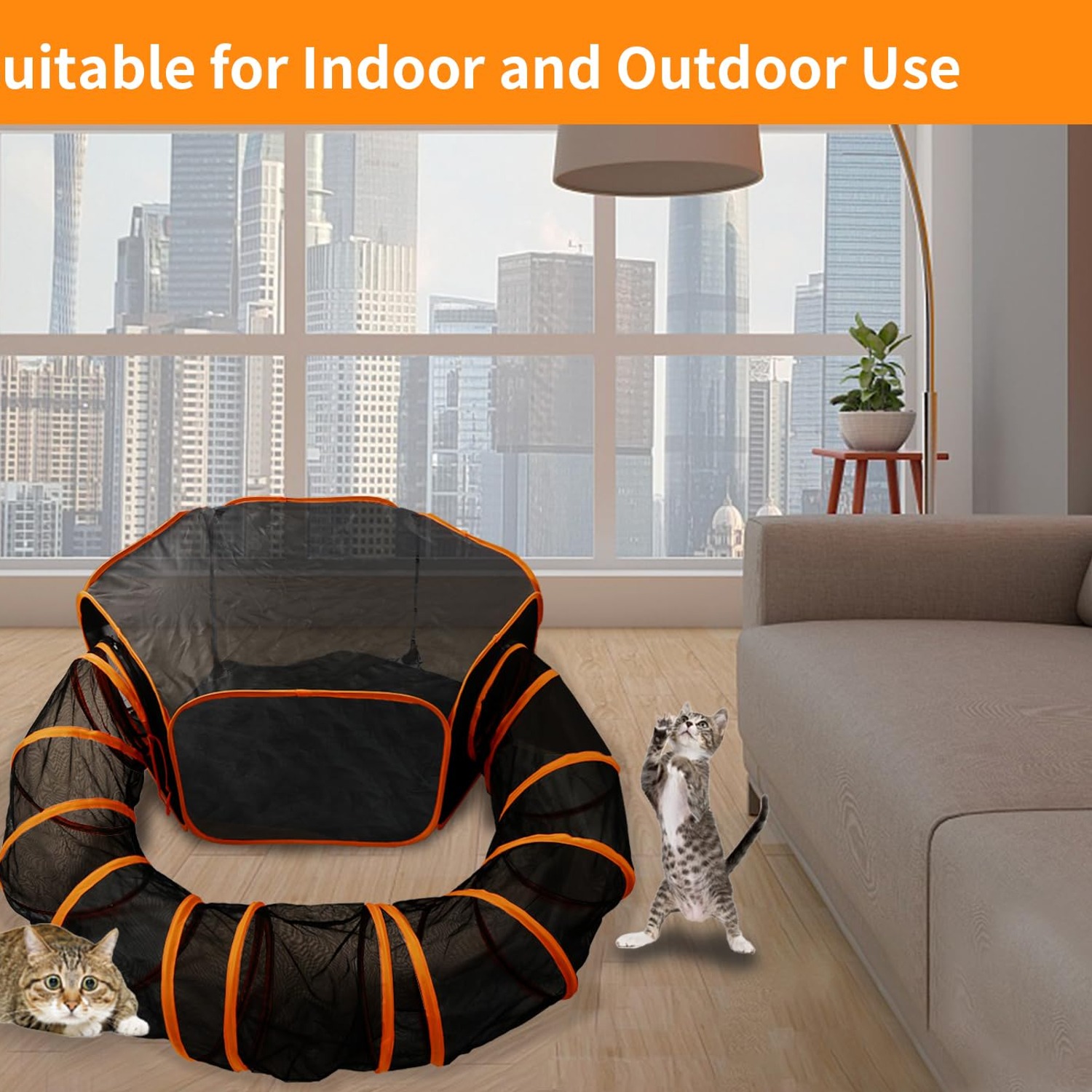
Renters and apartment dwellers. A permanent catio needs a wall, a landlord and usually a tradesperson. A travel catio needs a flat bit of balcony or courtyard. Keep it clear of railings and never leave a cat unsupervised on an upper floor.
Campers and caravanners. A camping cat enclosure solves the problem of a cat stuck inside a hot van all day. Pitch it in the shade next to your site, supervise, and pack it away with the chairs.
Multi-pet households. The listing names rabbits as a target species too, and the enclosure works indoors as a quiet, visible space for a new arrival or a recovering animal. Mesh walls mean the household can still see each other, which usually speeds up introductions.
It is less suitable for very large cats who need more headroom than 45 cm, for unsupervised all-day use, or for anyone wanting a permanent weatherproof structure.
How to choose between enclosure types
There are roughly four options when you want your cat outside safely.
A hard-built catio attached to the house is the gold standard. It is weatherproof, it can be left open to a cat flap, and it costs the most in money and effort. If you own your home and want the cat outside on demand, build one.
A wire panel pen is sturdy and holds its shape, but it is heavy, awkward to move and tends to live in one spot forever. It is a middle option that loses the portability argument.
A pop up cat tent like this one trades absolute strength for weight and packability. The mesh will not stop a determined cat forever, and you should never treat it as unsupervised containment. What it gives you instead is a setup you will actually bother with on a Tuesday afternoon.
A lead and walking jacket gives the most freedom but needs training, patience and a cat with the right temperament. Plenty of people use a walking lead for walks and an outdoor cat pen for lazy sun sessions.
If portability is on your list at all, the foldable option wins. If it is not, spend the money on something permanent.
Getting your cat to use it
Do not start outside. A new object plus a new environment plus unfamiliar noise is too much at once for most cats, and a bad first session can put them off the thing entirely.
Set the tent up indoors with the doors open. Put a blanket that already smells like your cat inside, scatter a few treats, and ignore it. Most cats will investigate within an hour. Let them come and go freely for a couple of days.
Next, zip a door shut for five minutes while you sit next to it. Then ten. Once your cat is relaxed being enclosed indoors, move the whole setup to a quiet corner of the garden, ideally somewhere shaded with a fence or wall on one side. Cats hate being exposed on all four sides in an unfamiliar place.
Keep the first outdoor session short. Ten minutes of calm is a better result than forty minutes of a cat pressed against the mesh. Build from there.
Practical setup tips
Put it on grass or decking rather than rough concrete, or slide a mat underneath to protect the base. Check the ground for prickles, broken glass and ant nests before you unfold.
Shade is not optional in summer. Mesh lets air through but does very little against direct sun, and a cat in a sunny tent overheats faster than you would think. Morning and late afternoon are the safe windows in warm weather.
Weigh it down if there is any breeze. A light frame plus a breeze equals a tent that shifts, and a shifting tent frightens cats. Something heavy inside, like a ceramic water bowl, usually does the job on a still-ish day. Skip it entirely in real wind.
Bring water. Add a litter tray for anything over about half an hour. There is room for both plus toys inside the floor area, and a cat that can drink and toilet will stay settled much longer.
Supervise. Always. Other cats, dogs off lead, magpies in spring and curious kids all turn up unannounced, and the enclosure is a boundary, not a fortress.
Looking after it
Shake out fur, grass and litter before you fold anything. Grit that gets packed into the bag works its way into the zips, and stiff zips are the most common reason a tent like this stops getting used.
Wipe the Oxford base and the mesh with a damp cloth and a little mild soap. Rinse the cloth and go over it again so you are not leaving soap residue where paws land. Let it dry completely in the open air. Folding a damp tent into a bag is how you end up with a musty smell and mildew spots on the mesh.
Check the steel frame as you fold. Look for bends at the joints and any fabric sleeve starting to fray. Catching a small tear early and stitching it beats discovering a cat-sized hole later.
Store it dry, out of direct sun. UV is what eventually makes mesh brittle, and a tent that lives in a cupboard between uses will outlast one that sits in the yard.
The short version
This is a mesh tent and tunnel on a steel frame that folds into a bag. The tent runs 120 x 120 x 45 cm, the tunnel zips to a door to make one connected space, and the floor is wipe-clean fabric so dirt is not a problem. It suits indoor cats who need stimulation, renters who cannot build anything permanent, and anyone who travels with a pet.
It is supervised play equipment, not unattended housing. Use it in shade, weigh it down on breezy days, keep an eye on your cat, and introduce it slowly indoors first. Do that and a cat who has only ever watched the garden gets to sit in it, and the difference in their mood afterwards is obvious.