
The complete guide
The Practical Guide to Choosing a Modular Catio
The problem with letting cats outside
Cats want out. They sit at the window making that chattering noise at birds, they bolt for an open door, and they sulk when the world stays on the other side of the glass. Keeping a cat indoors full time is safer, but it is not what the cat wants, and it shows in the behaviour. Boredom turns into scratched furniture, midnight sprints down the hallway and food obsession.
Letting them roam solves the boredom and creates a longer list of problems. Roads, other cats, dogs, snakes, ticks, and in plenty of regions, serious damage to local wildlife. In some council areas, free roaming is not even legal anymore. Plenty of owners are stuck in the middle, feeling guilty either way.
A catio is the practical answer. It gives your cat outdoor air, sunlight, sounds and smells inside a boundary you control. A modular catio takes that idea further, because the space is not fixed. You can start with one enclosure and add to it over time.
How this kit works
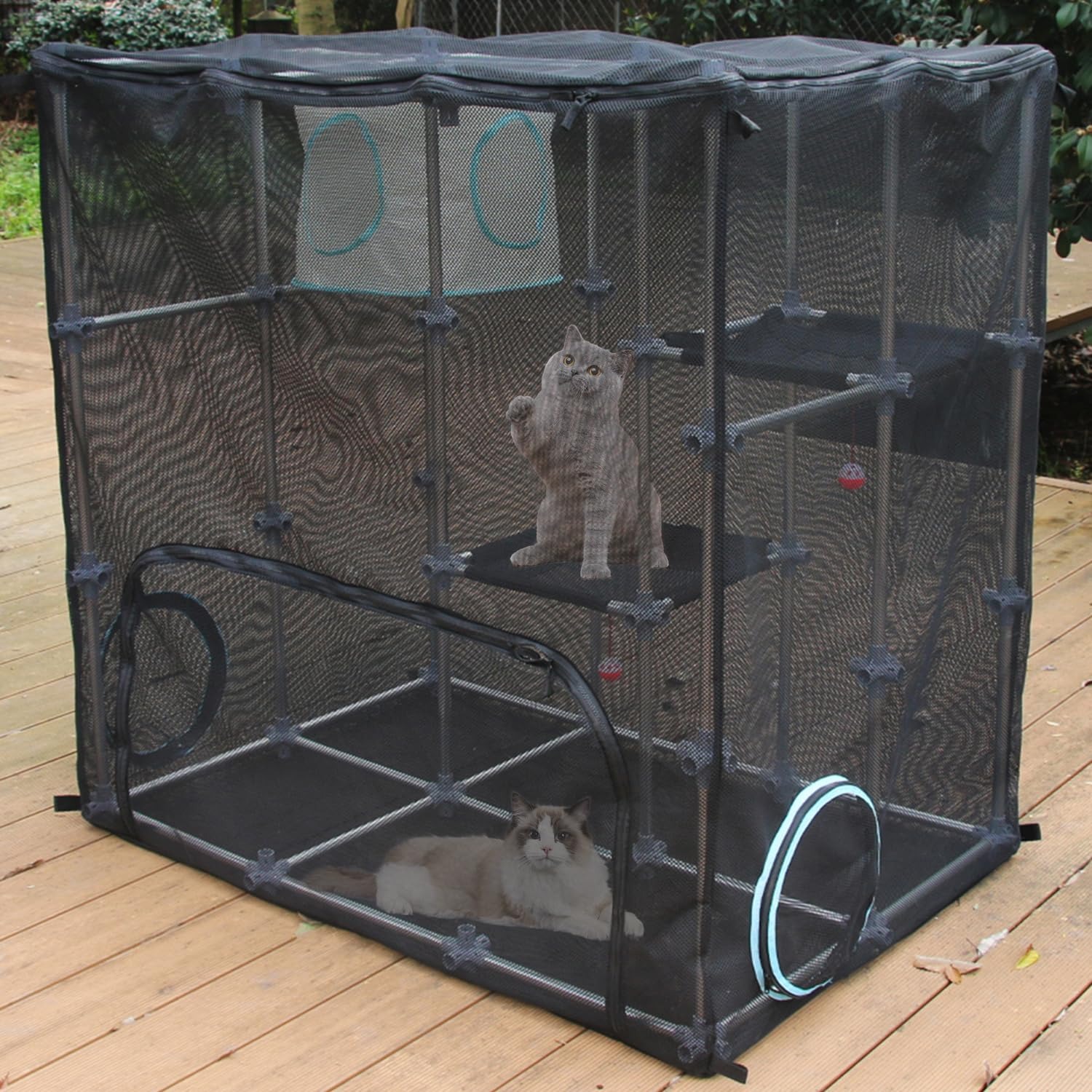
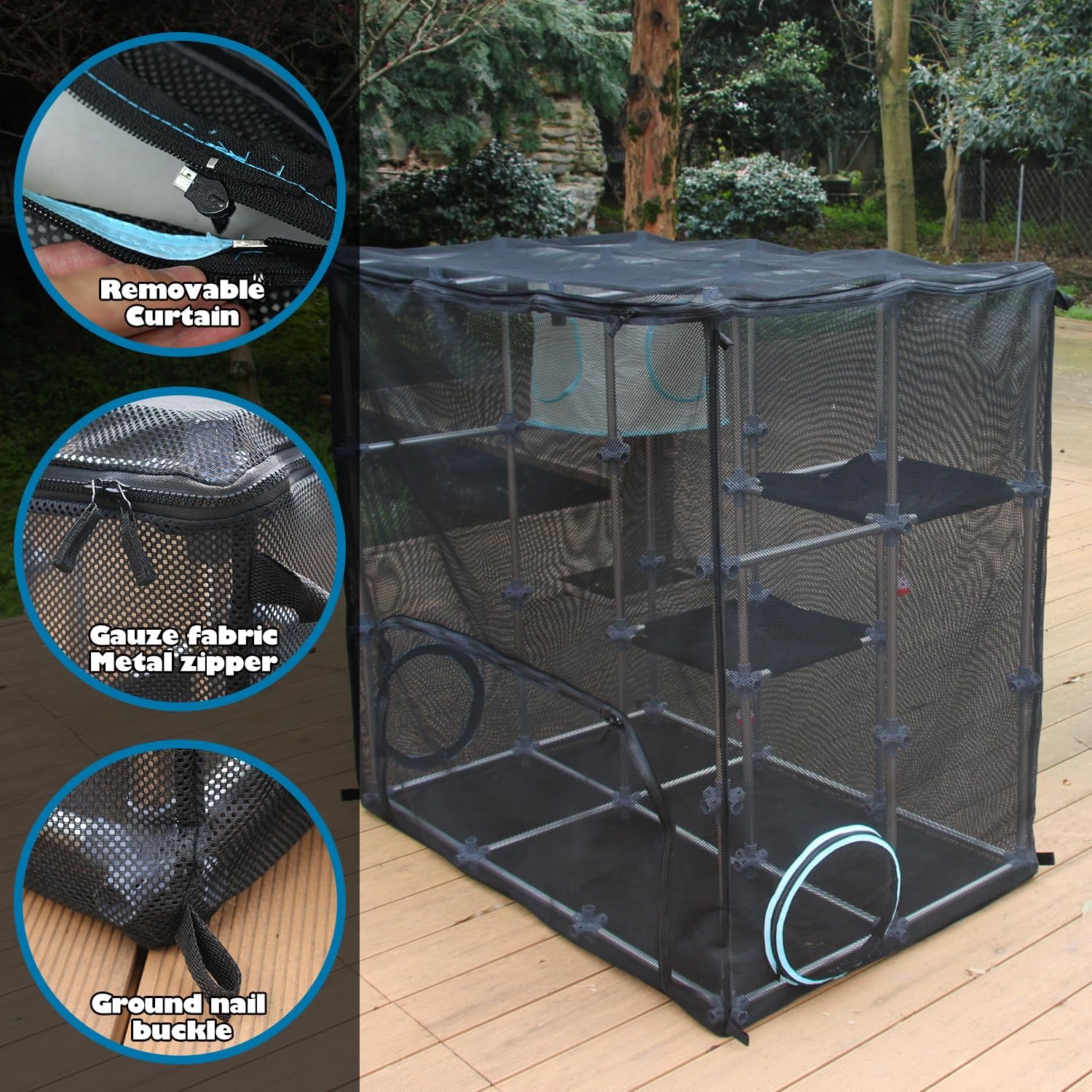
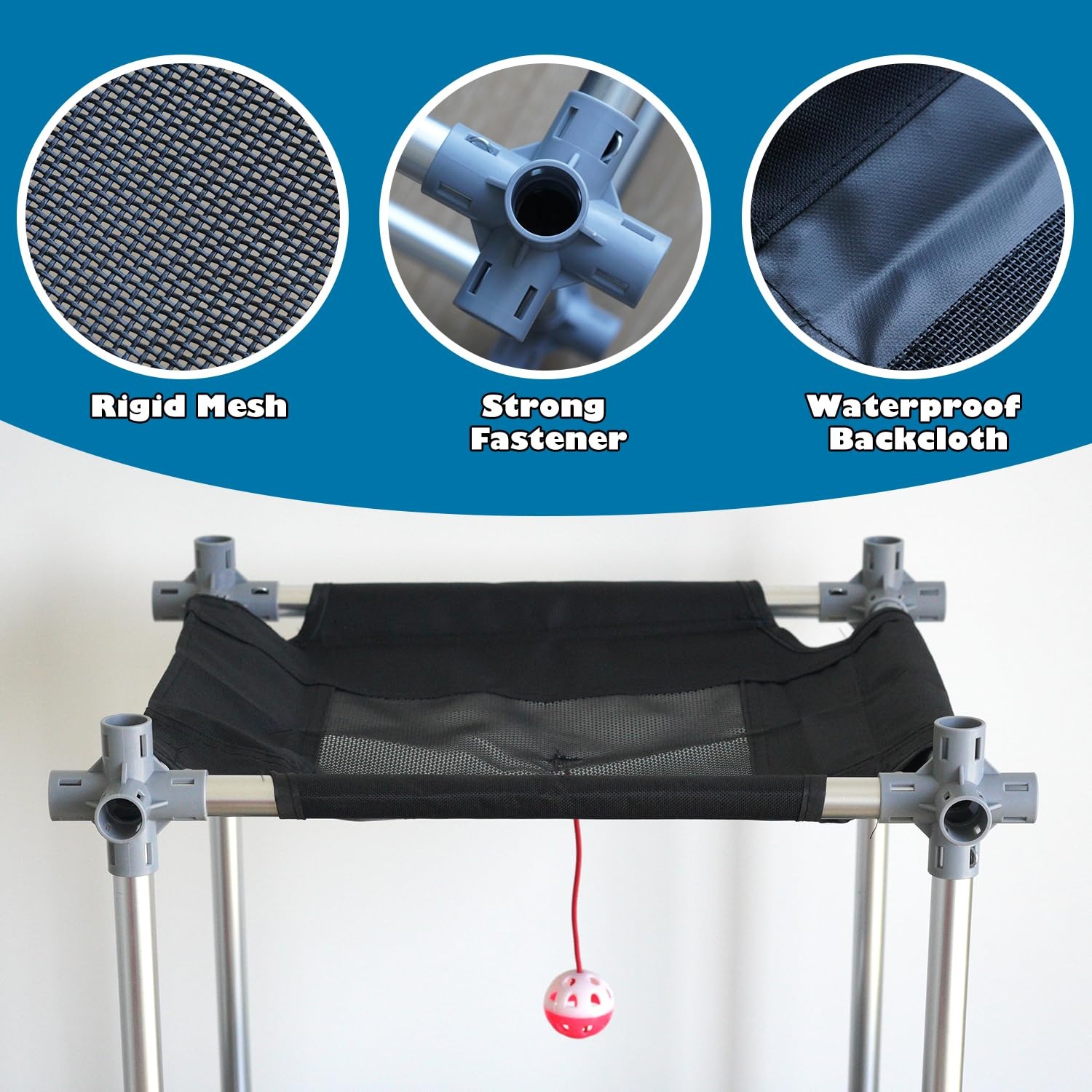
The structure is built from aluminium bars and nylon mesh. The aluminium frame gives the shape and holds the tension. Aluminium matters here for two reasons. It does not rust the way untreated steel does, and it is light enough that moving the whole enclosure across the lawn is a one person job. The locking mechanisms on this version are the improved type, which is the part doing the real work when a cat launches off an internal hammock and the wall takes the load.
The mesh is nylon, chosen for airflow and visibility. Breathability is not a marketing word when you are talking about a cat sitting in a sealed box in the afternoon sun. Mesh walls keep air moving through the enclosure. They also let you glance out the kitchen window and see exactly what your cat is doing, which is worth more than most people expect.
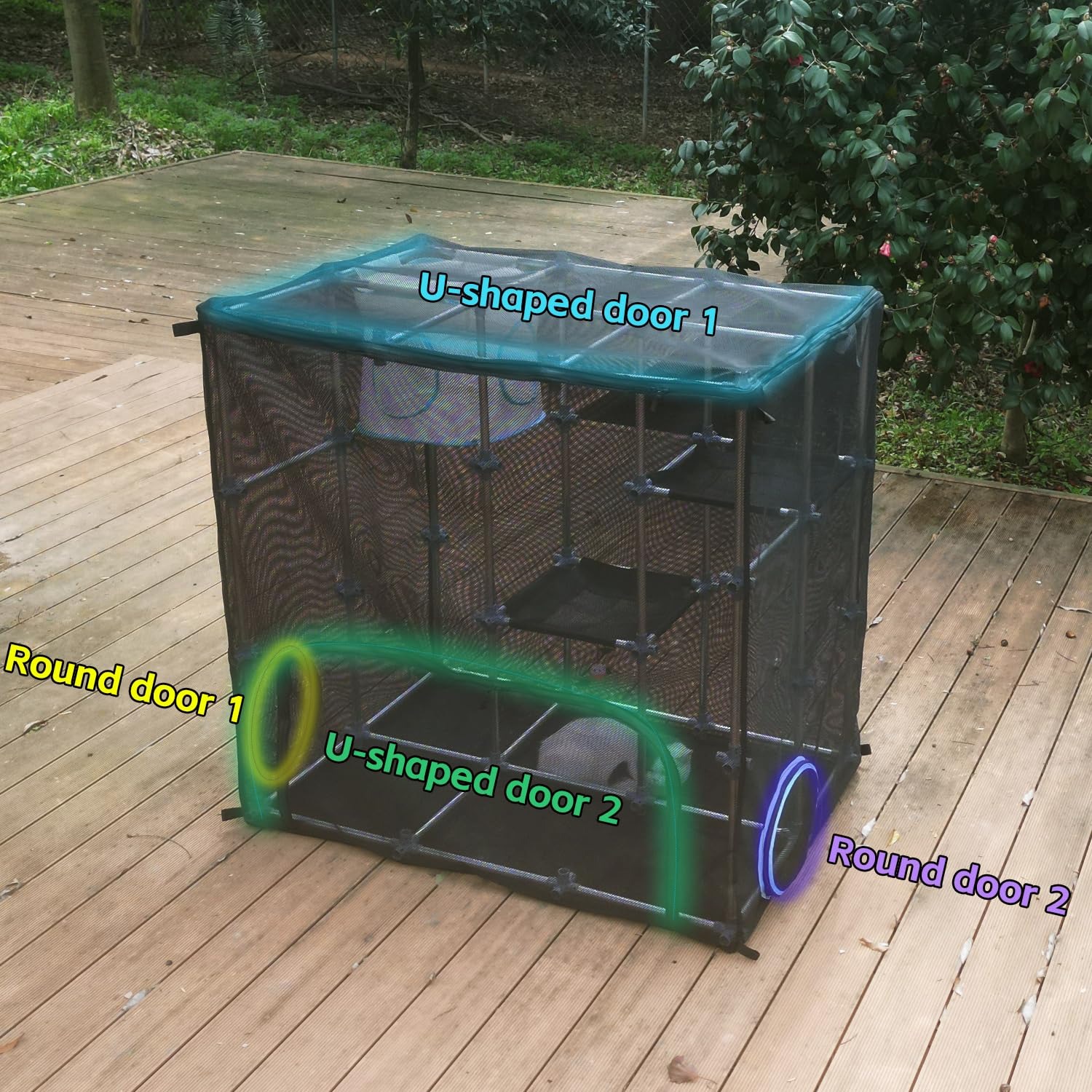
Openings use zips. There are double zip doors on both sides. Use them as a normal entry, or unzip one and join another INTURN piece on the other side. That is the whole idea behind an expandable cat enclosure. One doorway becomes a junction.
The assembled size is 119.4 cm long by 119.4 cm wide by 78.7 cm high. Picture a square roughly the size of a small rug, with enough headroom for a cat to sit up tall and stretch. Assembly is required, which takes a little time the first go and much less after that.
Who it suits
Apartment dwellers get a lot out of this design. If you have a balcony and no yard, a catio for apartments turns dead space into the best part of your cat's day. Check your balcony depth before ordering, since 1.2 m by 1.2 m is not small.
Renters benefit too. Nothing here gets drilled into a wall or screwed to a fence. The whole thing packs down and comes with you to the next place, which makes a portable catio far easier to justify than a built-in timber structure.
Owners of former strays and rescue cats often land here as well. A cat who has lived outside does not settle happily into full indoor life straight away. A mesh catio in the yard gives that cat a halfway point that is safe for the cat and for the birds.
Multi-cat homes should think about expansion from the start. Two cats in one square space works if they already share a couch. If they do not, plan for a second section connected by a tunnel so each has somewhere of its own.
Choosing the right spot
Shade comes first. Mesh breathes, but it does not create shade. Put the enclosure where a tree, an eave or a wall blocks the sun for a good part of the day, and move it as the sun shifts. The light frame makes that easy.
Level ground comes second. On a slope, the frame sits under uneven tension and the whole thing feels less solid. A flat patch of lawn, a courtyard slab or decking all work. On hard surfaces, lay down a mat so the floor is kind to paws and the base does not slide.
Think about proximity to the house. An outdoor cat pen kit placed near a back door means you hear what is happening and your cat can see you through the window, which settles most cats considerably. It also makes supervision less of a chore.
Finally, consider what is on the other side of the mesh. Keep it away from fence lines where a neighbouring cat might come nose to nose through the wall, and away from railings or drops.
Building up over time
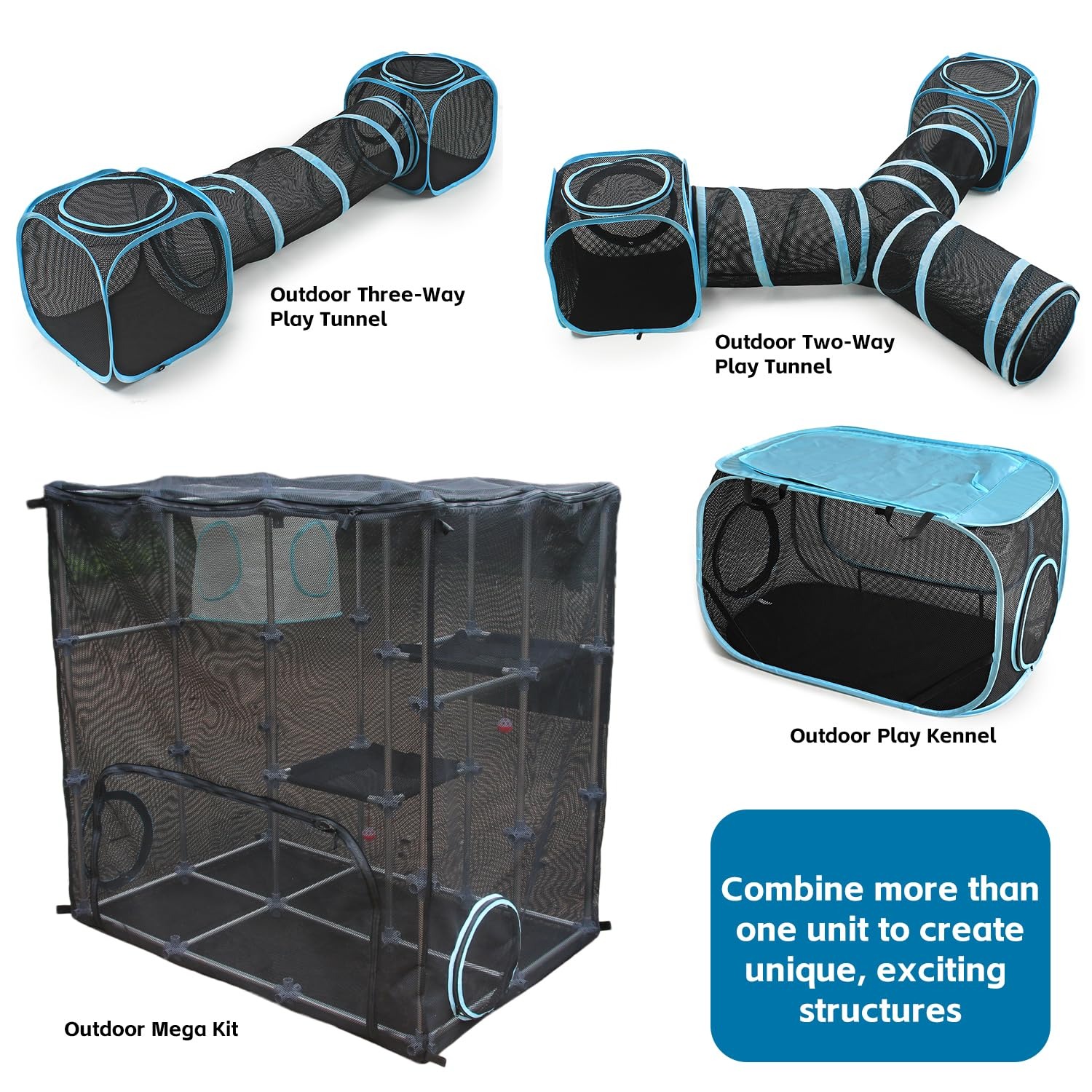
The reason to choose a modular catio over a simple cat tent enclosure is the path it opens. The zip doors on both sides are compatible connection points for other INTURN items, so your build can evolve.
Tunnels are usually the first addition. A tunnel links one enclosure to another, or extends the run so the cat has a lap to do. Cats love a route with a beginning and an end rather than a single room.
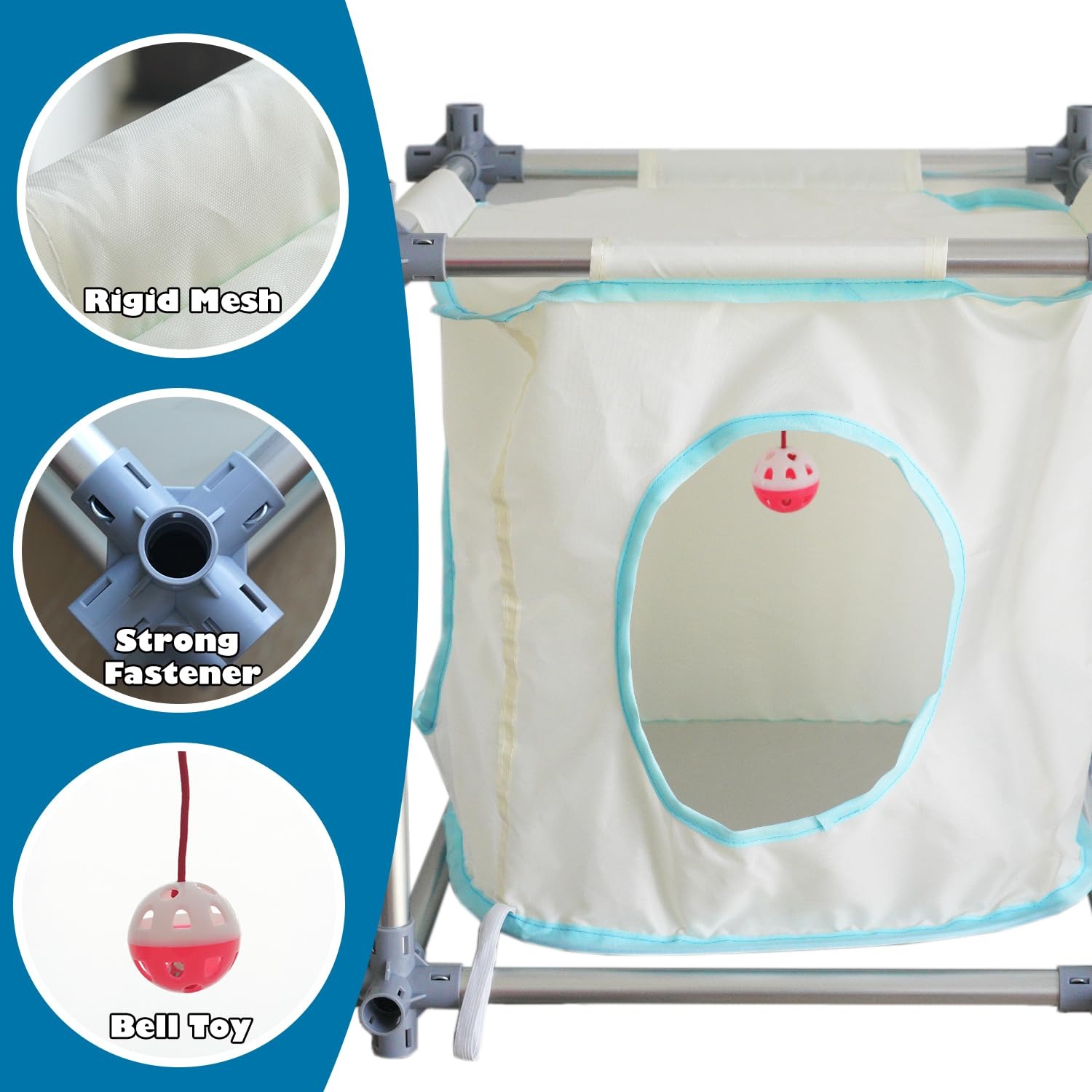
Vertical gear comes next. Hammocks and tents let you use the height inside instead of just the floor. Cats choose levels based on mood, so giving them a high perch and a covered corner means one cat uses the same space in two different ways across a day. Adjustable hammocks let you set the height to suit a younger cat who jumps or an older cat who prefers a shorter hop.
Extra panels grow the footprint itself. That is the sensible move if you add a second cat or find your first one has simply outgrown the original square.
Introducing your cat to it
Do not expect your cat to walk straight in and love it. Set the enclosure up, leave the zips open and let the cat investigate on its own terms. Put a blanket that already smells like home inside, plus a few treats. Sit nearby and ignore the cat. Curiosity does the rest.
Once the cat goes in willingly, close the zips for a few minutes while you stay beside it. Extend the time slowly. Most cats settle within a week or two, and then it becomes the place they ask to go.
Water goes in the enclosure every single session. A shallow bowl in the shade is enough. Food is optional and often better kept inside, so the catio stays a place for sunbathing and bird watching.
Care and keeping it going
Clean the mesh with a damp cloth and mild soap, rinse lightly and let it dry completely before you fold anything. Trapped damp is how nylon picks up a smell. Brush off fur and leaves between uses so air keeps moving through the panels.
Check the frame each time you set up. Run a hand along the aluminium poles, confirm every locking point is seated and look for snags or pulled threads in the mesh. A small tear found early is a quick repair. The same tear found late is a hole.
Zips need the most attention. Grit in a zip is the usual cause of failure, so brush the teeth clean and avoid forcing a stuck slider. When you pack down for the season, store the kit dry, out of direct sun, with all the poles kept together in one bag.
The short version
This is an aluminium and nylon mesh enclosure measuring 119.4 by 119.4 by 78.7 cm, with zip closures, double doors on both sides and assembly required. It gives a cat real outdoor time without the risks that come with roaming. The light frame means you can move it or pack it away, and the connecting doors mean the space can grow with tunnels, panels and hammocks.
If you have a balcony, a courtyard or a patch of lawn and a cat who stares longingly out the window, this solves the problem you have been putting off. Start with one square, see how your cat uses it, then build from there.