
The complete guide
The Practical Guide to Choosing a Walk-In Catio
The problem with cats and the outdoors
Cats want to be outside. That is not a training failure or a behaviour problem, it is just what cats are. They want to feel wind, smell the neighbour's barbecue, watch a bird land on the fence and sit in a square of sun until they overheat.
The trouble is everything else out there. Cars. Dogs. Other cats who got to the territory first. Ticks and fleas. Snail bait in a tidy garden two doors down. And on the other side of the ledger, the birds and lizards that a well-fed house cat will still hunt out of instinct.
So owners compromise. Some let the cat out and worry. Some keep the cat in and watch it get restless, overweight and hard on the furniture. Neither feels great.
A walk-in catio solves the actual problem, which is that "outside" and "safe" were never meant to be a choice. It gives your cat a real outdoor space with a boundary around it. The cat gets fresh air and stimulation. You get to stop listening for a car every time it goes quiet.
How a walk-in catio works
The idea is simple. You build a secure enclosure outdoors, fill it with the things cats like (height, perches, a hiding spot, a view) and let the cat spend time in it.
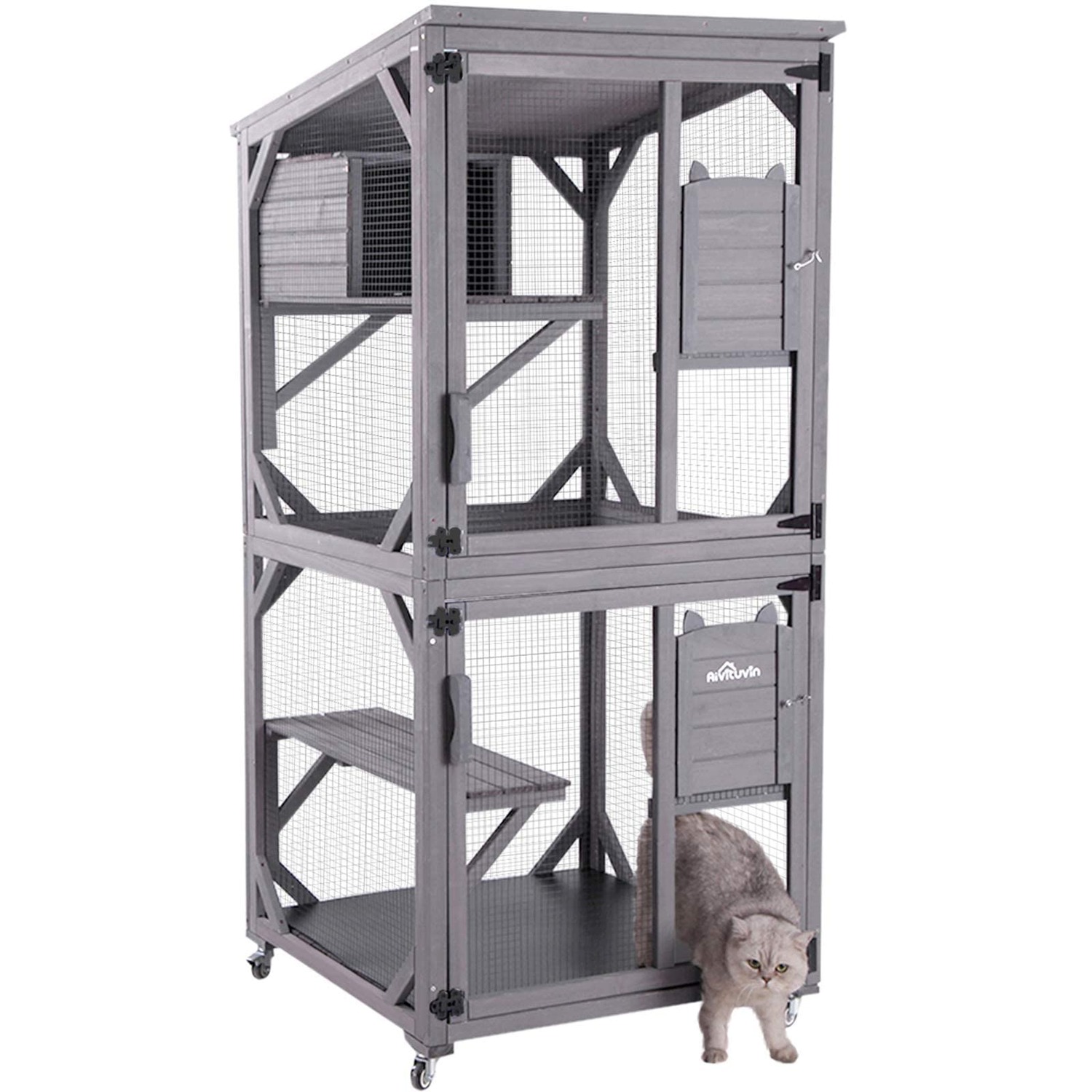
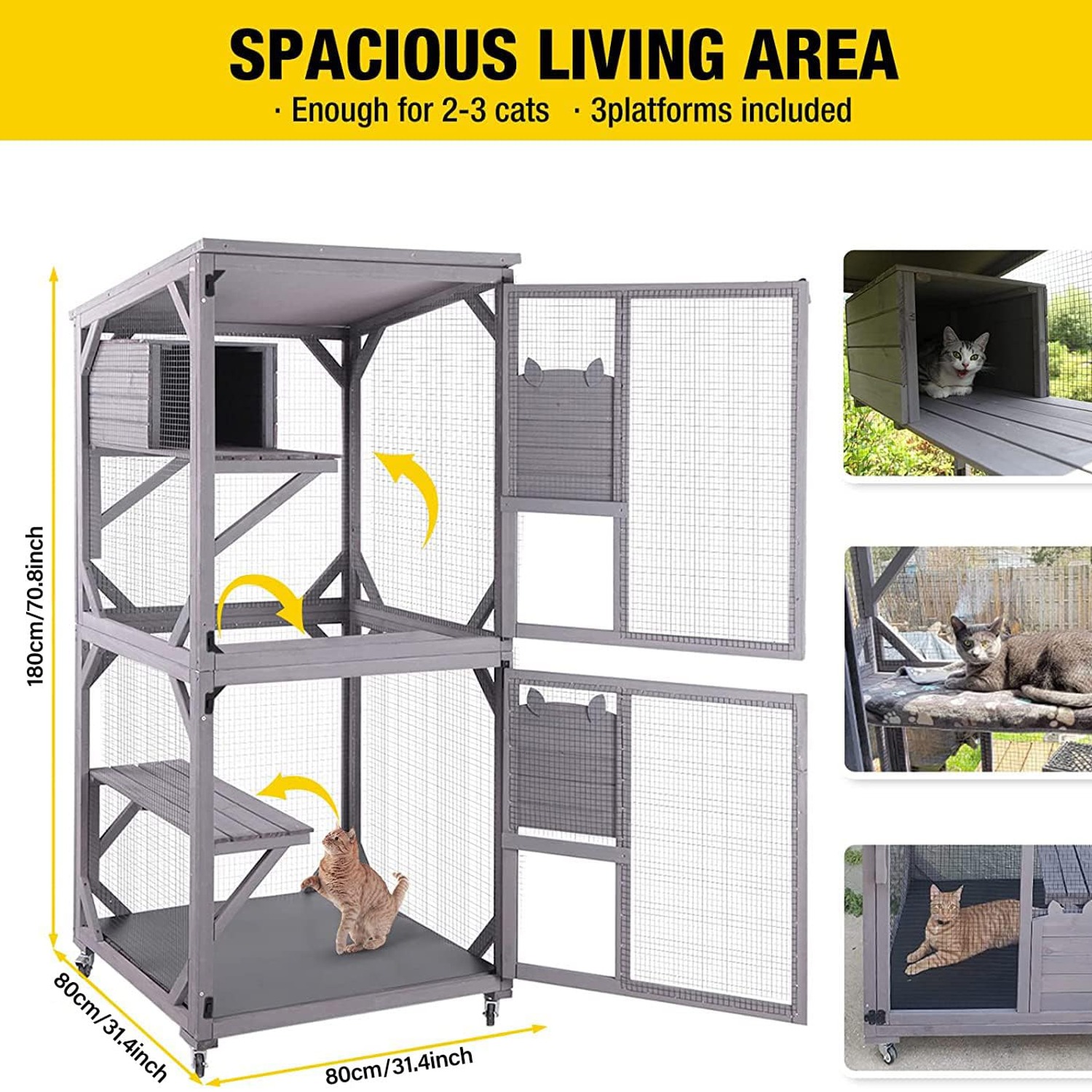
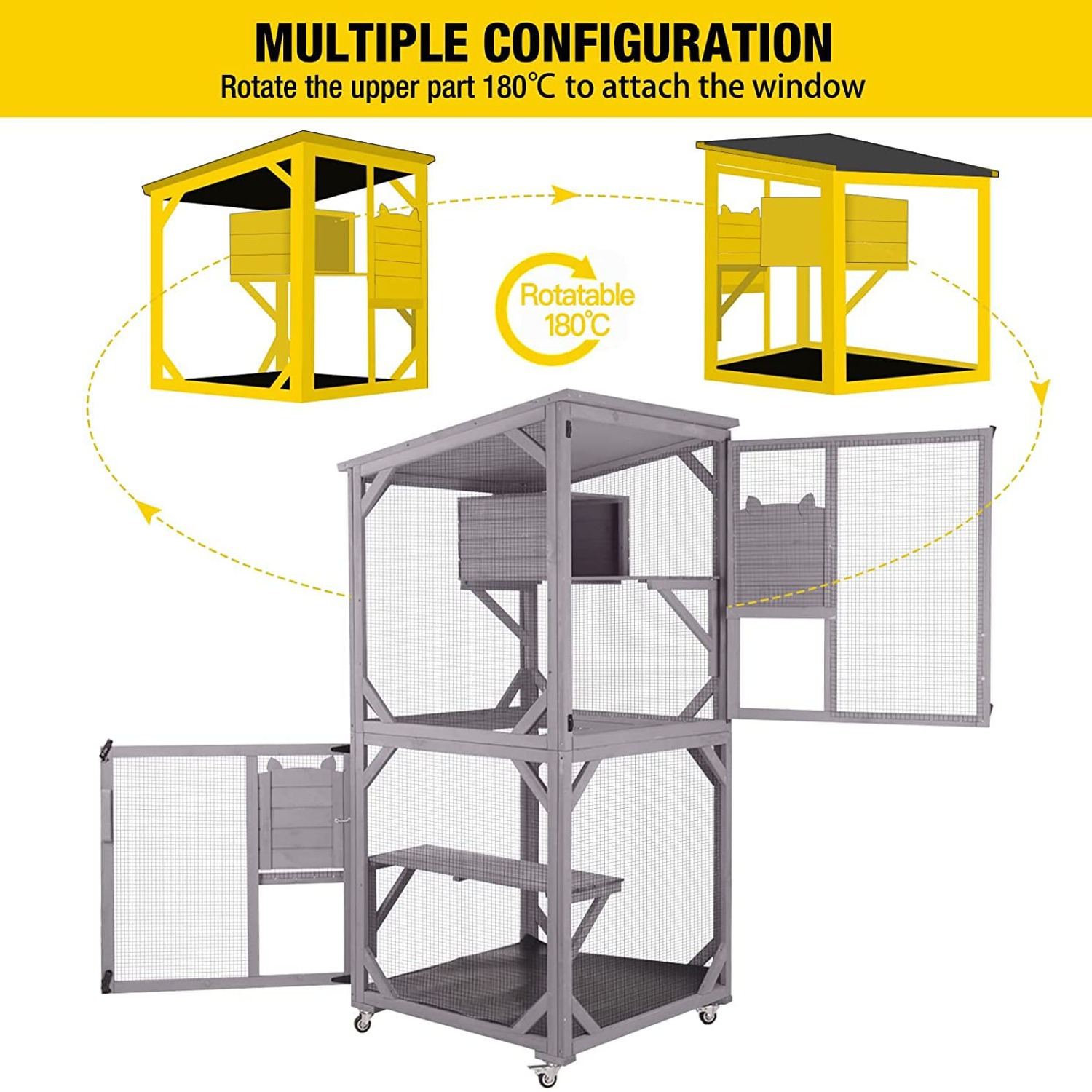
What makes a walk-in version different from a small outdoor cat cage is the height. At 180cm this one is tall enough to step into. That changes everything about living with it day to day. Cleaning is a two-minute job instead of an awkward crouch with your arm through a flap. You can sit in there with a coffee while your cat does its rounds. You can rearrange the inside without dismantling anything.
The vertical space also matters for the cat. Cats read safety in terms of height. A cat on an 80cm by 80cm floor feels exposed. The same cat on a platform 120cm up, with a solid wall behind it, feels like it owns the place. This enclosure has two levels plus a nesting box, so your cat can pick its mood: sunbathing on the open platform, or tucked into the box when the wind picks up.
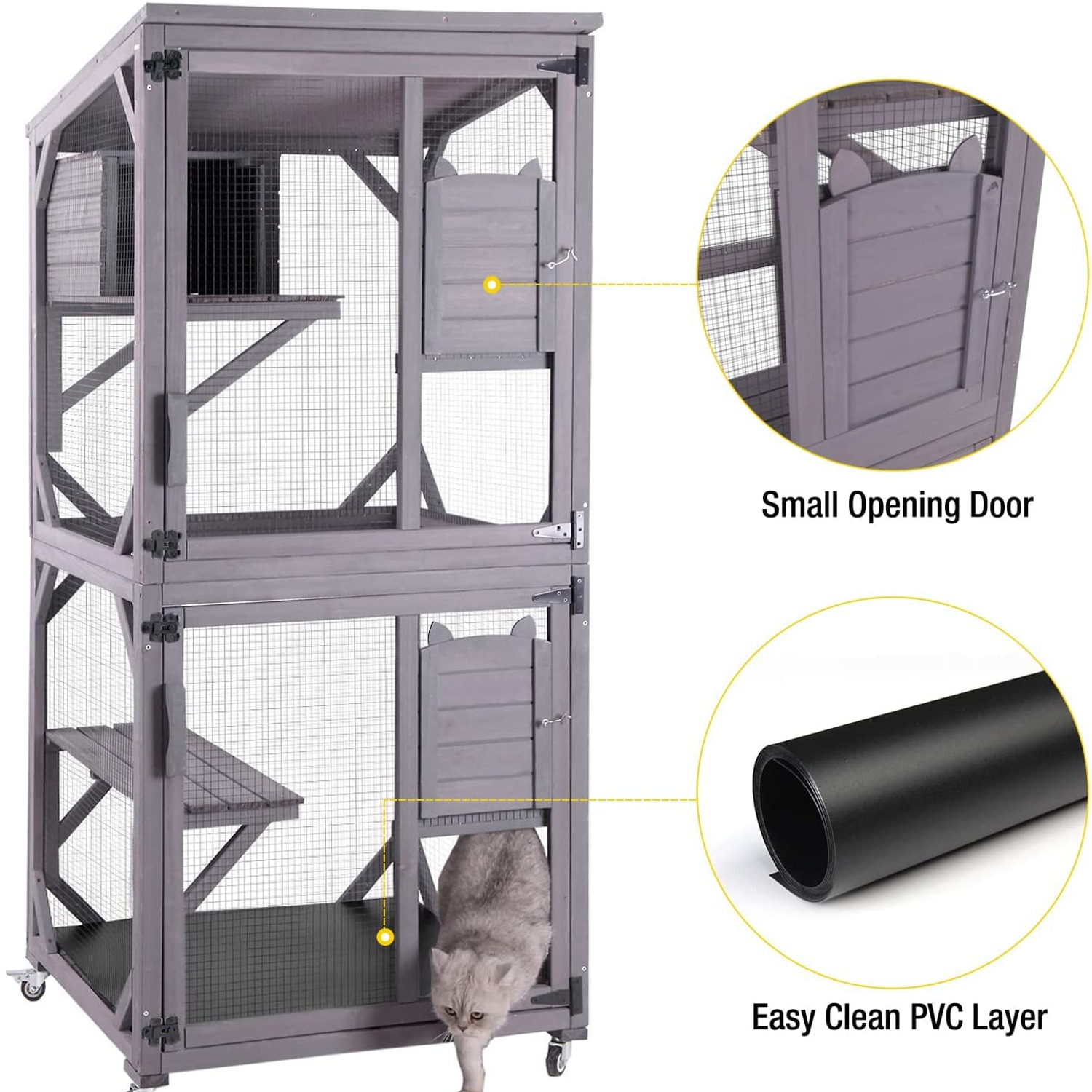
Underneath, a removable PVC cleaning board and a waterproof cloth catch what falls. That sounds minor until you have scrubbed hair and litter out of timber grooves. Being able to slide a tray out and hose it off is the difference between a catio you maintain and one you quietly stop using.
The wheels are not a gimmick
Plenty of people skim past the castors. They shouldn't.
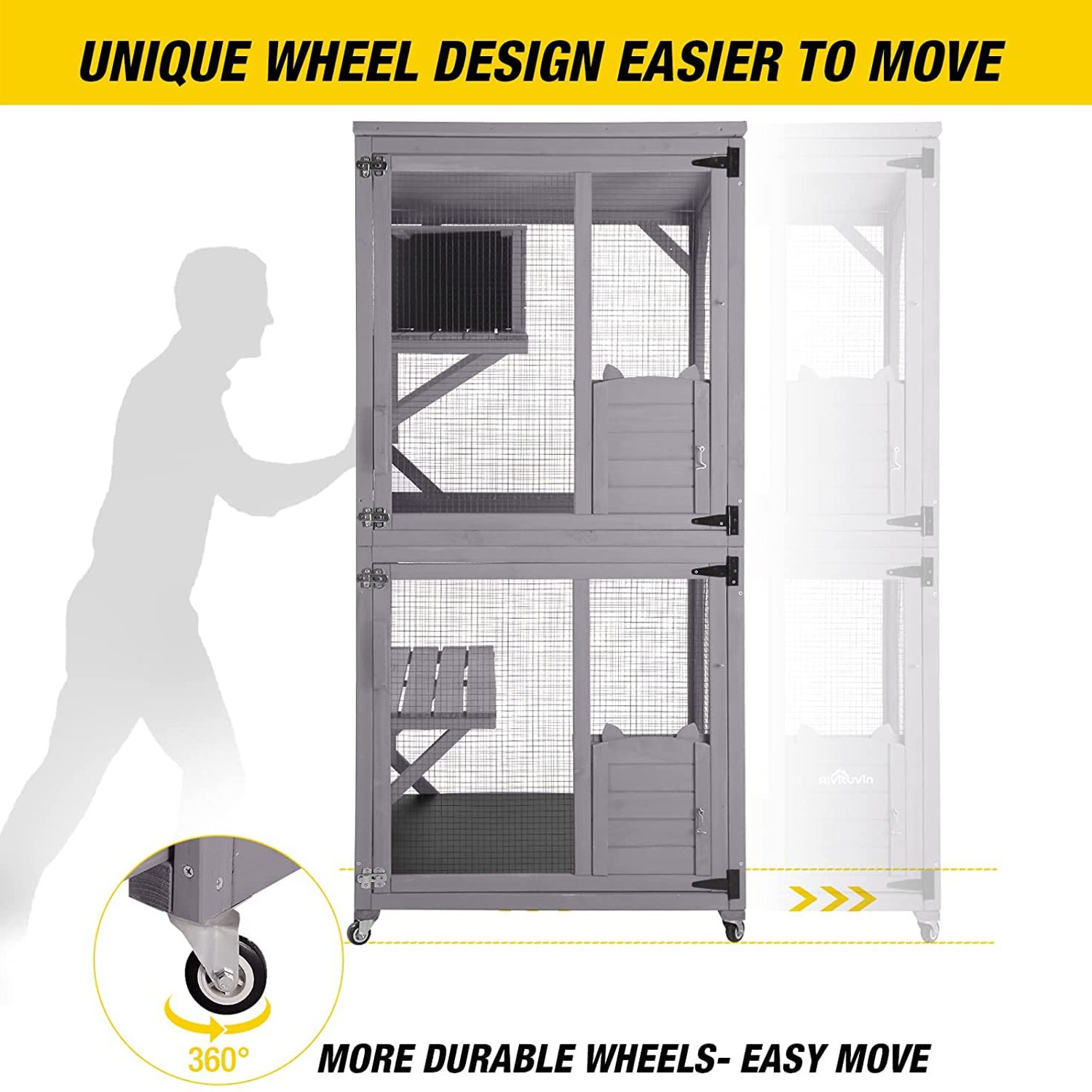
A fixed timber cat enclosure ends up wherever you first assembled it. In January that corner is a furnace. In July it catches every bit of wind-driven rain. The lawn under it dies. When you want to clean the paving you are out of luck.
Castor wheels with brakes mean you move it. Chase the shade through summer. Tuck it under the eaves when the forecast turns. Roll it aside to mow. On pavers or decking one person can shift it. On grass or over a step, grab a helper, because 26.8kg is real weight.
Lock the brakes once it is positioned. A cat landing hard on an upper platform will test whatever is holding the unit still.
Who this suits
This works well for an indoor cat in a house with a balcony, a courtyard or a patio. It is the right size for one cat, or two that get along. It is a strong option for a cat that has recently moved house and cannot be let out yet, or an older cat that no longer handles the neighbourhood but still wants sun.
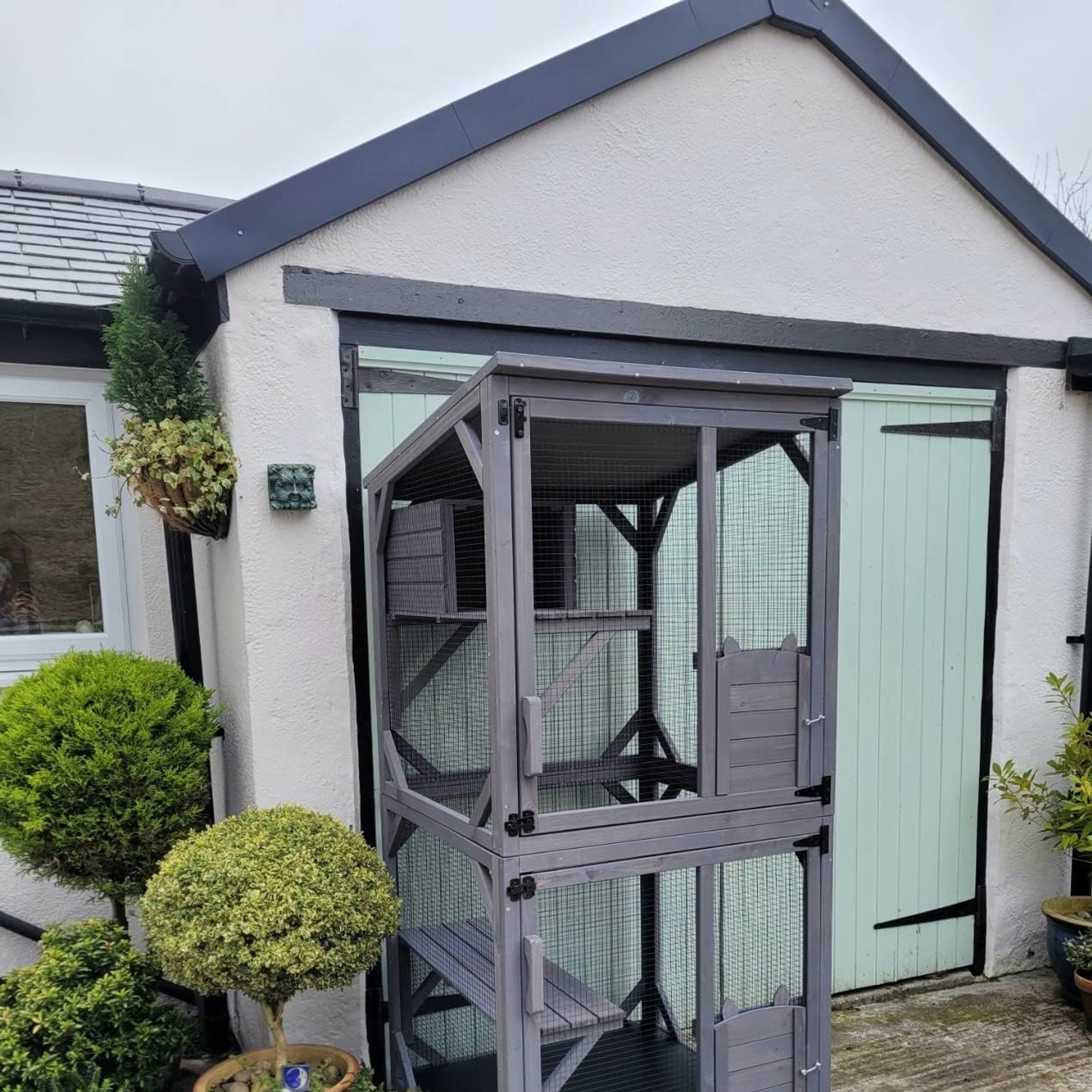
It suits renters too. Nothing is drilled into a wall. When you move, it rolls to the van.
It suits people who want a backyard catio but do not want to build one. Converting a pergola or fencing a side passage is a weekend of carpentry and a decision you cannot easily reverse. This is a product you assemble, position and use.
It is less suited to a household with four cats who all want space at once, where a larger cat enclosure or a built run makes more sense. It is also not permanent housing. It is an outdoor room your cat visits, not a place to leave a cat indefinitely.
How to choose and set it up
Start with the space. You need an 80cm by 80cm patch plus room to swing both doors open and room for you to walk in. Flat and firm beats soft and sloped. Pavers, concrete or solid decking are ideal.
Think about sun. Partial shade through the hottest part of the day is the single most important placement decision. Cats will stay in a hot spot longer than is good for them.
Think about backing. Cats relax faster when one side is against a wall or fence. An enclosure standing alone in the middle of a lawn feels exposed and gets less use.
Then think about weather over the long term. Timber outdoors lasts much longer under cover. Under an eave, a pergola or a shade sail, this will outlive the same unit sitting in open sun and rain. A cover for the wet months is cheap insurance.
For assembly, clear a space, lay the parts out, sort the fixings into groups before you start and get a second person if you can. Working alone is possible but slower, mostly because of holding panels square while you fix them.
Getting your cat to actually use it
Cats are suspicious of new furniture. Do not just put the cat in and close the door.
Open it up and let the cat investigate on its own terms. Put a blanket that already smells like home in the nesting box. Feed a meal inside. Drop a few treats on the platforms so the cat has a reason to climb. Sit in there yourself for a bit, because your presence tells the cat it is safe.
Short visits first. Five or ten minutes, then open the door. Build up over a week or two. Most cats go from hesitant to demanding access within a fortnight, especially once they work out that birds come close and cannot do anything about it.
Keep water in there. Add a scratching post or a hanging toy if you want more activity. The enclosure is the shell; what you put inside is what makes it interesting.
Care and keeping it good
Wipe the timber down with a damp cloth and a pet-safe cleaner, then dry it rather than letting water sit in the joints. Slide the PVC board and waterproof cloth out, wash them, dry them, put them back.
Every few weeks, run a hand over the bolts and hinges and tighten anything that has loosened. Outdoor timber moves with temperature and humidity, so fixings work loose. This takes two minutes and it is the main thing that keeps the structure solid.
Check the wheel brakes still hold. Check the door latches still catch properly, because a latch that half-closes is how a cat gets out.
If you live somewhere with hard sun or heavy rain, consider refinishing the exposed timber with a pet-safe exterior product every year or two. Let it cure fully before the cat goes back in.
The short version
An indoor cat with no outdoor access gets bored, and a free-roaming cat gets into trouble. A walk-in catio is the practical middle ground.
This one is 80cm by 80cm by 180cm, built from wood and PVC in grey, with two levels, two doors, a nesting box and castor wheels. It weighs 26.8kg assembled and carries a 6 month warranty. The height means you step in rather than reach in. The wheels mean you move it instead of regretting where you put it. The removable cleaning board means you will keep up with the maintenance instead of avoiding it.
Measure your space, pick a part-shaded spot with something solid behind it, and give your cat somewhere to be a cat without the risk.