
The complete guide
Cat Cube Tunnel Sets, A Practical Buyer's Guide
The problem with a cat who wants to go outside
There is a particular sound a cat makes at a closed back door. Most owners know it. The cat is not bored exactly, it just wants what is on the other side of the glass. Smells, movement, grass, insects. All the things a living room cannot offer.
The trouble is that the outside world is not kind to cats. Roads, dogs, territorial neighbours' cats, fences they cannot get back over. A lot of people split the difference by letting the cat out while they are in the garden, then spend the whole time watching for the moment it slips under the hedge.
A cat cube tunnel set is a middle path. It is a defined space on your lawn or deck with mesh walls, so your cat gets the air and the sights without the risk of disappearing. You put it up, your cat goes in, and you can actually drink your coffee.
How a cube and tunnel set works
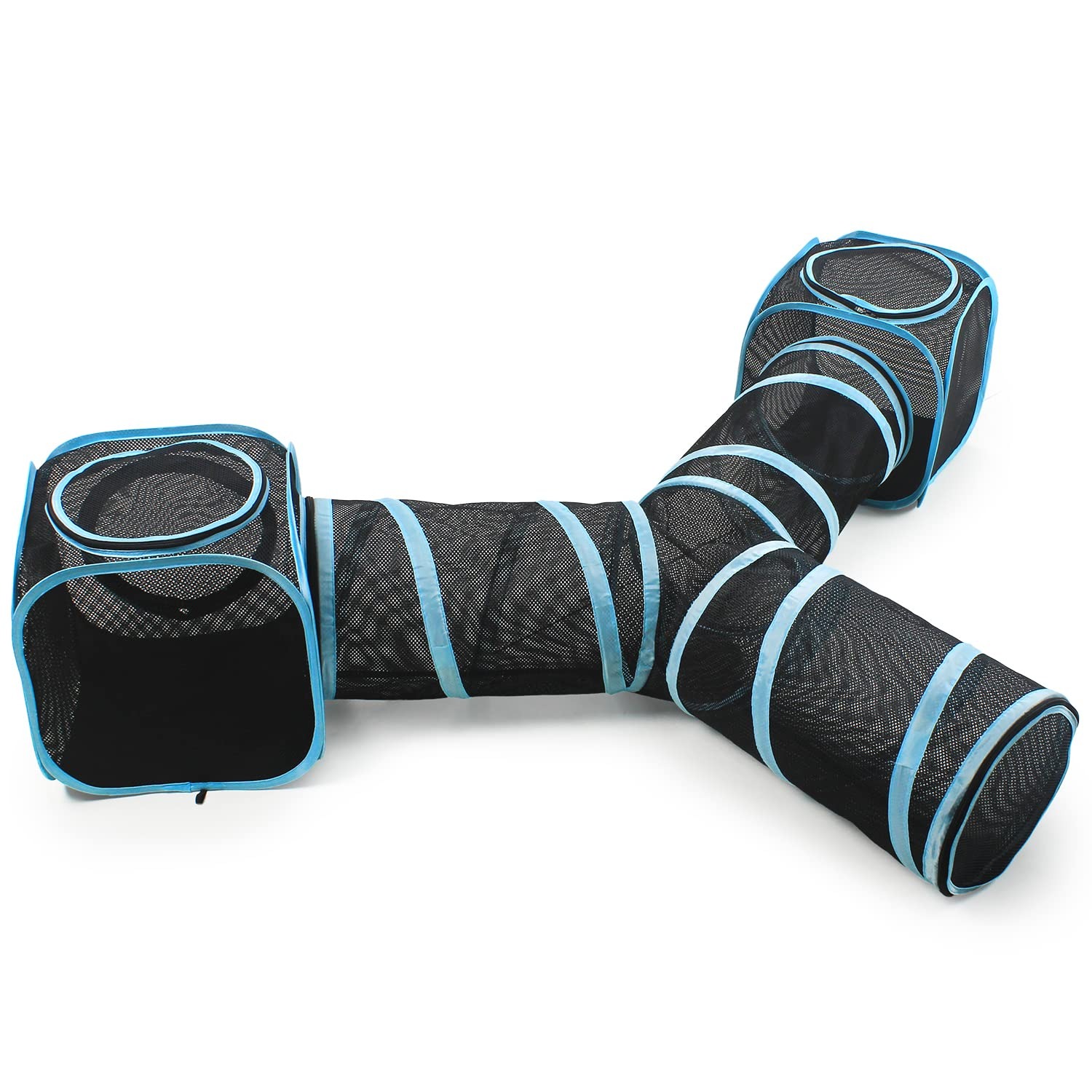
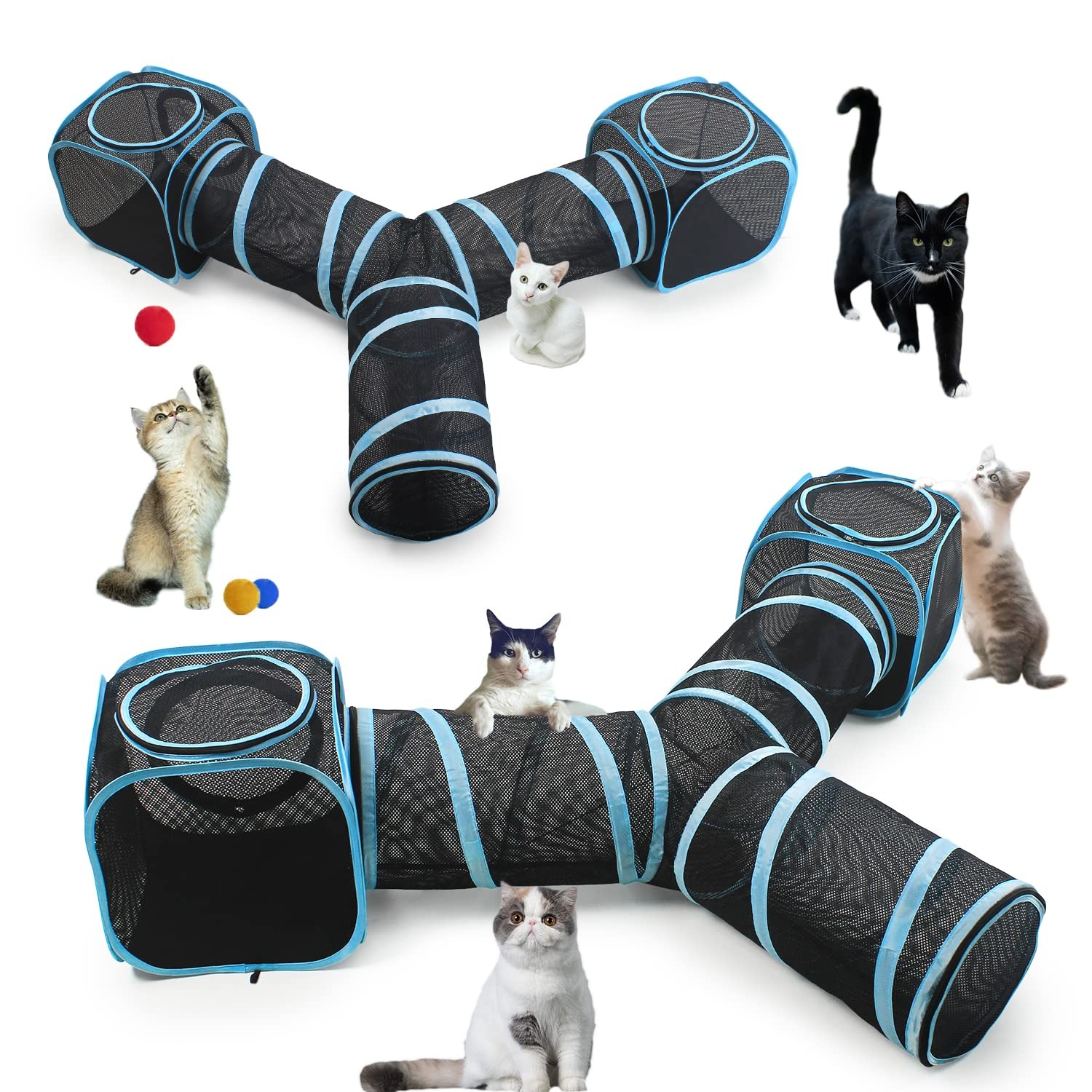
The basic idea is modular. You get cubes, which act as rooms, and tunnel arms that connect them. In this set the tunnel is a 3-way design, meaning three arms meet at a central junction rather than running in one straight line.
That junction matters more than it sounds. Cats are ambush animals by instinct. A straight tube gives them one route, which gets dull fast. A junction gives them choices, corners to peer round and more than one escape line if another cat comes charging through. It is the difference between a corridor and a small maze.
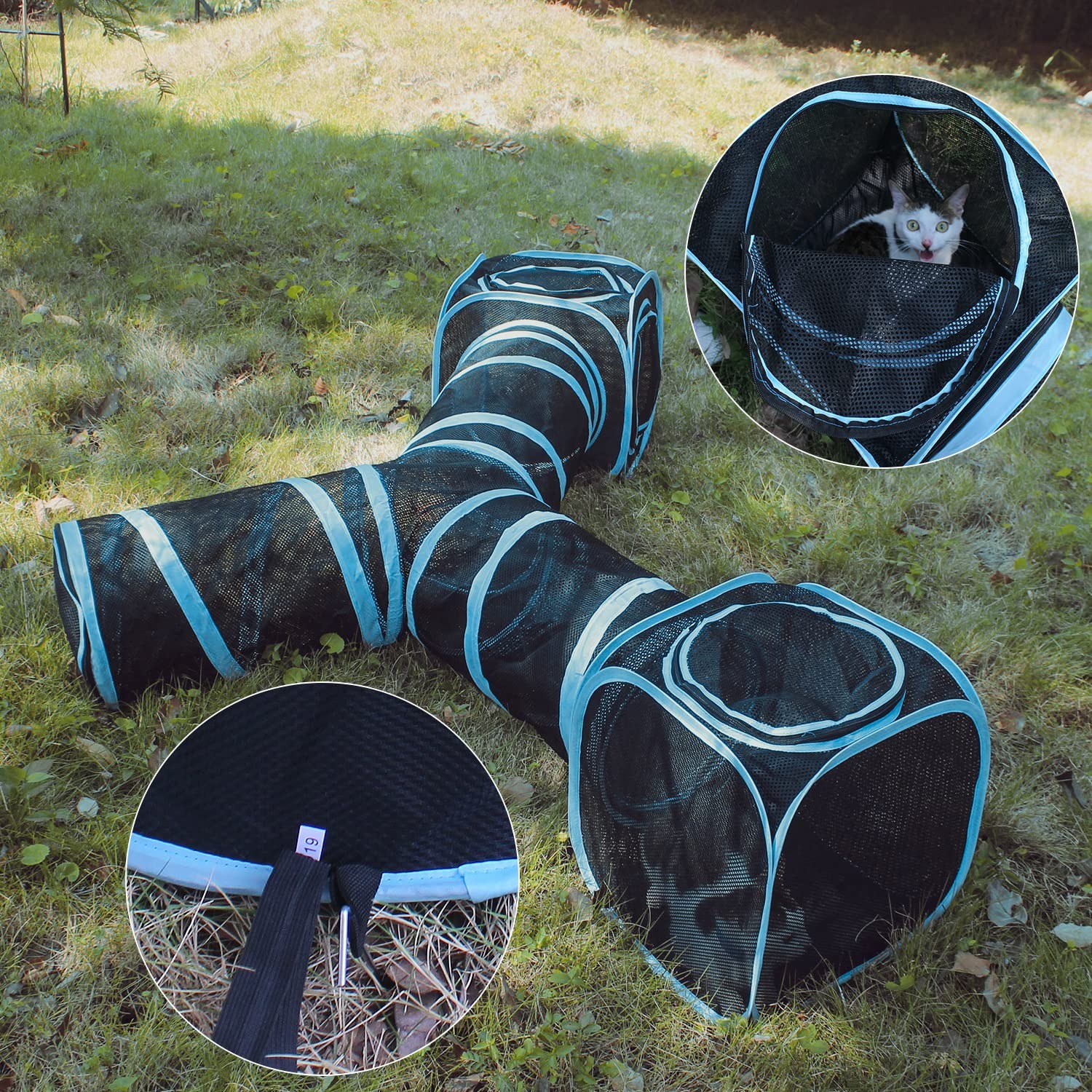
The sections join with zips. There are zipper doors on the top and on the sides, and they serve a few jobs at once. Side zips connect pieces and create entrances. Top zips let you reach in to retrieve a cat, drop in a toy or lift out a dropped treat without dismantling anything.
The panels are nylon mesh. Two benefits there. Airflow, so the inside does not get stuffy on a mild day, and visibility, so you can see your cat from the kitchen window without walking over to check. Mesh also means your cat can see out, which is really the whole point of the exercise.
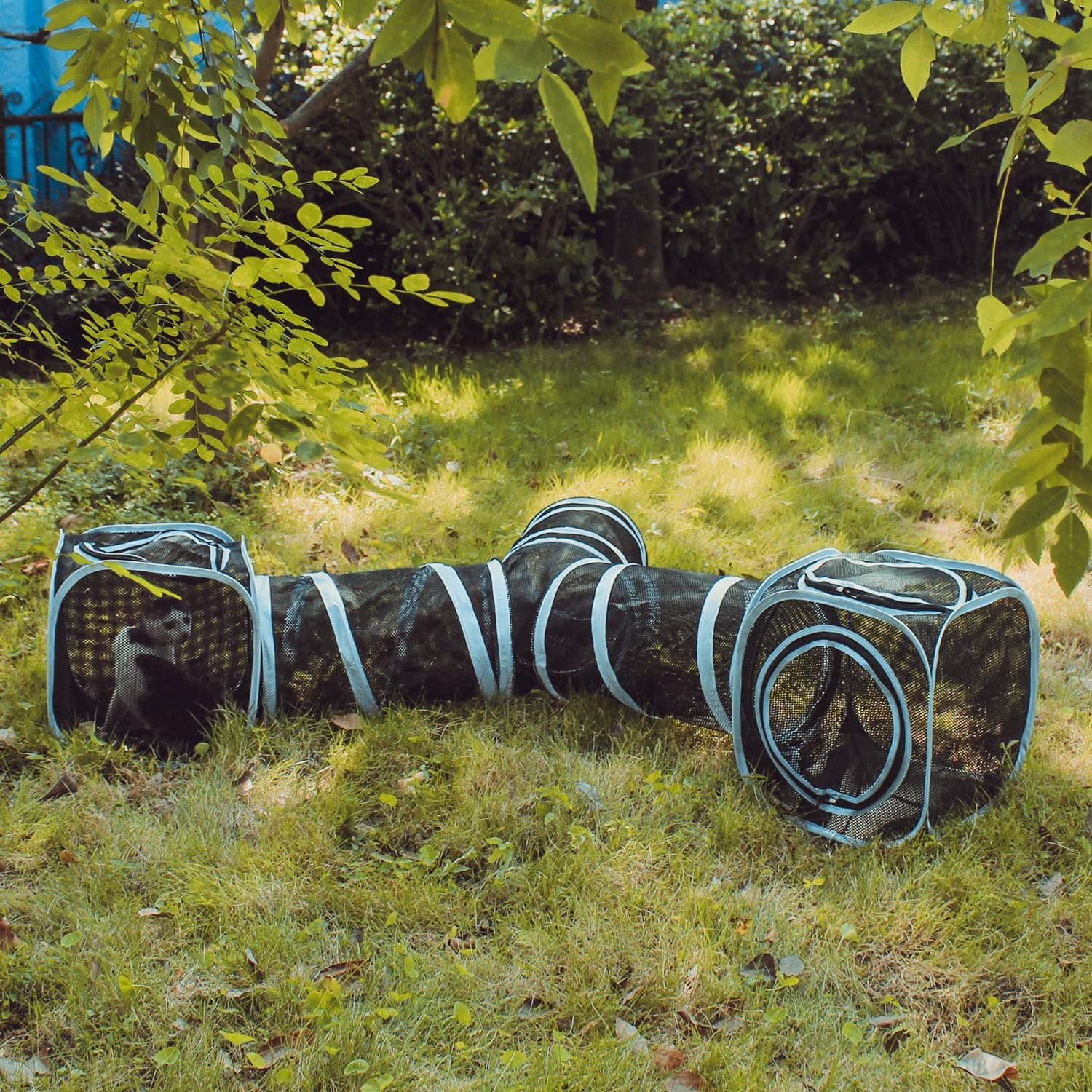
Ground pegs are included. Push them into lawn and the set stays put when a cat launches themselves into the side of a cube at full speed. On a hard surface you skip the pegs and use a wall or furniture to brace it.
Who this actually suits
Indoor cats who are curious about outside. This is the obvious fit. An indoor cat with no road sense gets fresh air in a controlled way. Start with short sessions and let them decide how much they want.
Apartment and balcony owners. A portable cat tunnel is one of the few ways to offer a balcony cat something new. As long as the balcony itself is safe, the set gives them a zone that feels like theirs.
Multi-cat homes. Several cats and one tunnel tends to go badly. Several cats, two cubes and three tunnel arms goes much better, because nobody gets trapped in a dead end. Watch the first couple of sessions to see how your particular group behaves.
People who travel with their cat. Caravans, holiday rentals, a week at a relative's place. A familiar cat tent and tunnel smells like home and gives a stressed cat somewhere to retreat to.
Small gardens. The footprint is modest, and it folds away when you want your lawn back. That makes it workable for courtyards and tiny back yards where a permanent enclosure is out of the question.
Who it is less suited to: cats that chew fabric obsessively, and anyone looking for a secure long-term enclosure. Mesh is not a cage. This is a supervised play product.
How to choose the right setup
Count your cats. One cat can be happy with a single cube and a short run. Two or more want junctions and multiple exits, which is exactly what a 3 way cat tunnel provides.
Look at your surface. Grass means you can peg it down, which is the most stable option. Decking, concrete or indoor floors mean you need to position it against something solid instead. Neither is wrong, it just changes how you set up.
Think about storage. If you plan to leave it out permanently, accept that sun and rain will age any fabric product faster. If you plan to pack it away between sessions, the collapsible design is a real advantage and you will get more years out of it.
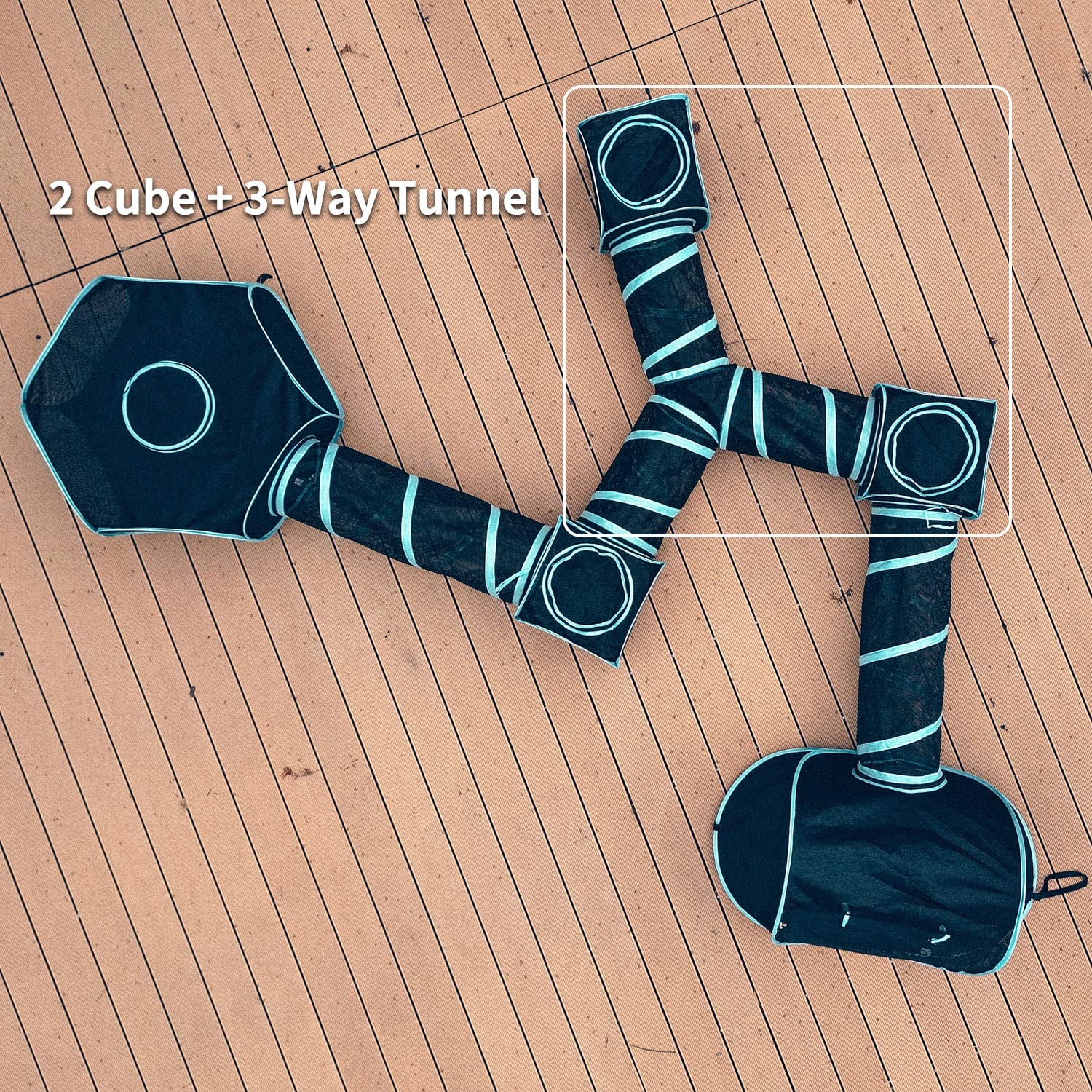
Consider expansion. Sets like this are built to connect with matching pieces. If you think you will want a bigger catio tunnel layout down the track, start with the base configuration and see how your cat uses it before buying more.
Check the shade. This is less about the product and more about where you put it. Mesh breathes but does not block sun. Pick a shaded spot, especially in summer, and always leave an open exit.
Getting your cat to use it
Do not expect instant enthusiasm. Cats are suspicious of new objects, and a large mesh structure appearing on the lawn is a fairly significant new object.
The approach that works best is to set it up indoors first, with every door unzipped so it reads as a shape rather than a trap. Throw a few treats inside. Put a blanket they already sleep on into one cube. Leave it alone for a day.
Once they are going in on their own, move it outside and repeat. A wand toy dragged through a tunnel arm will usually do the rest. Most cats work out the junction within one session and then start running laps.
Keep the first outdoor sessions short, ten or fifteen minutes, and stay with them. Build up from there.
Care that actually extends its life
Fabric and mesh products fail in predictable ways, and almost all of them are avoidable.
Spot clean rather than machine wash. Warm water, a mild pet-safe detergent and a cloth will handle fur, mud and the occasional accident. Machine washing stresses the seams and can warp the zips.
Dry it completely before folding. This is the big one. Folded damp fabric grows mildew, and mildew smells bad enough that cats will refuse to go back in. Prop the sections open somewhere breezy until there is no dampness left anywhere, including the seams.
Shake it out after every outdoor use. Grass clippings and grit work their way into zip teeth and that is how zips start failing.
Check the zips and seams every few weeks. A small split caught early is a quick repair. The same split ignored for a month becomes a hole your cat enlarges.
Store it indoors and dry. A shed that gets damp in winter is not a good home for it.
The short version
A cat cube tunnel set gives an indoor or balcony cat genuine outdoor time without the risks of free roaming. This one pairs two mesh cubes with a 3-way tunnel, so there are junctions, corners and more than one exit, which keeps cats interested far longer than a straight tube would.
Zipper doors on the top and sides let you rearrange the layout, open entries or close sections off. Ground pegs anchor it on lawn. No assembly is needed, and the whole thing folds down to store or take with you.
Use it supervised, set it up in shade, dry it fully before packing it away, and it will give your cat somewhere to be a cat for a long time.