
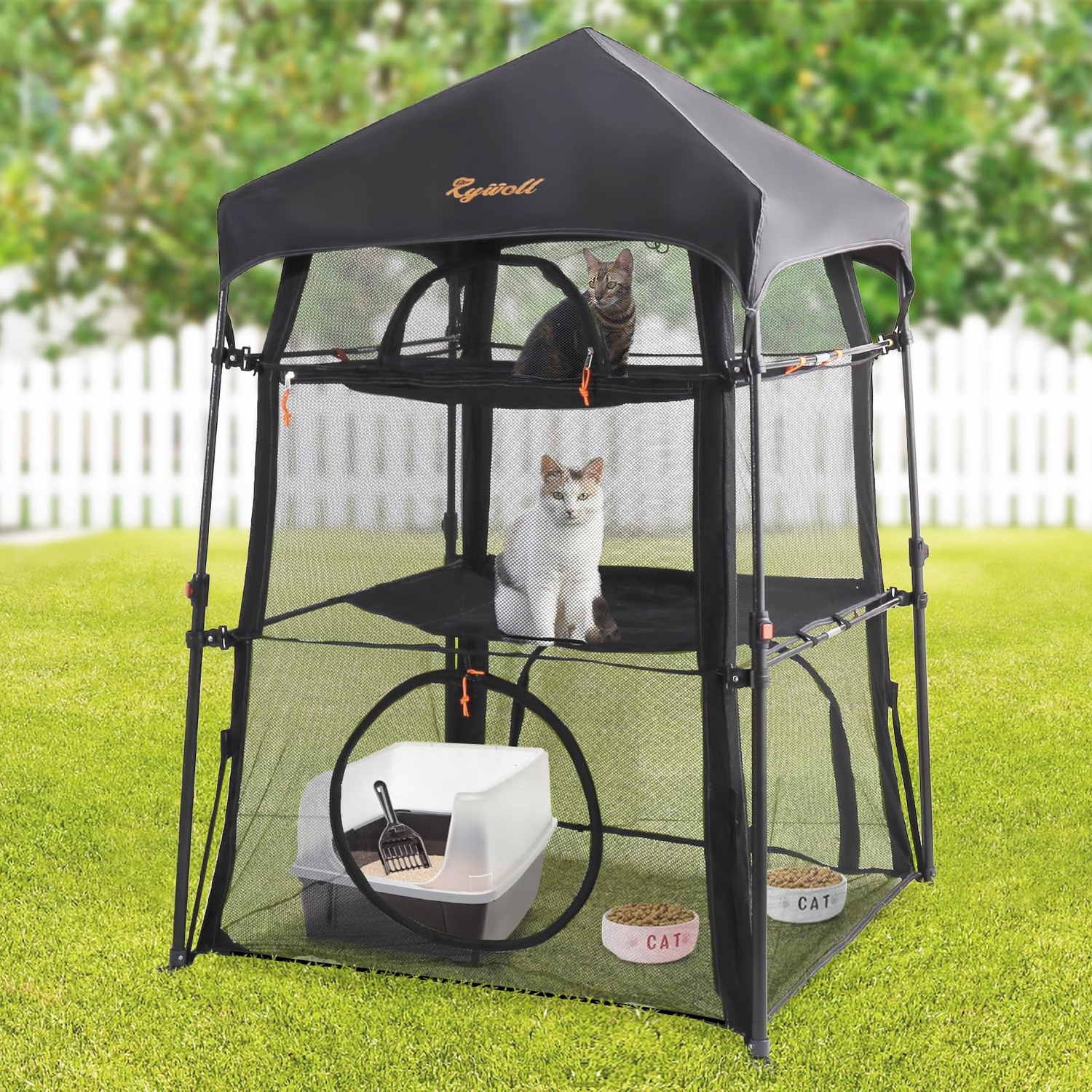
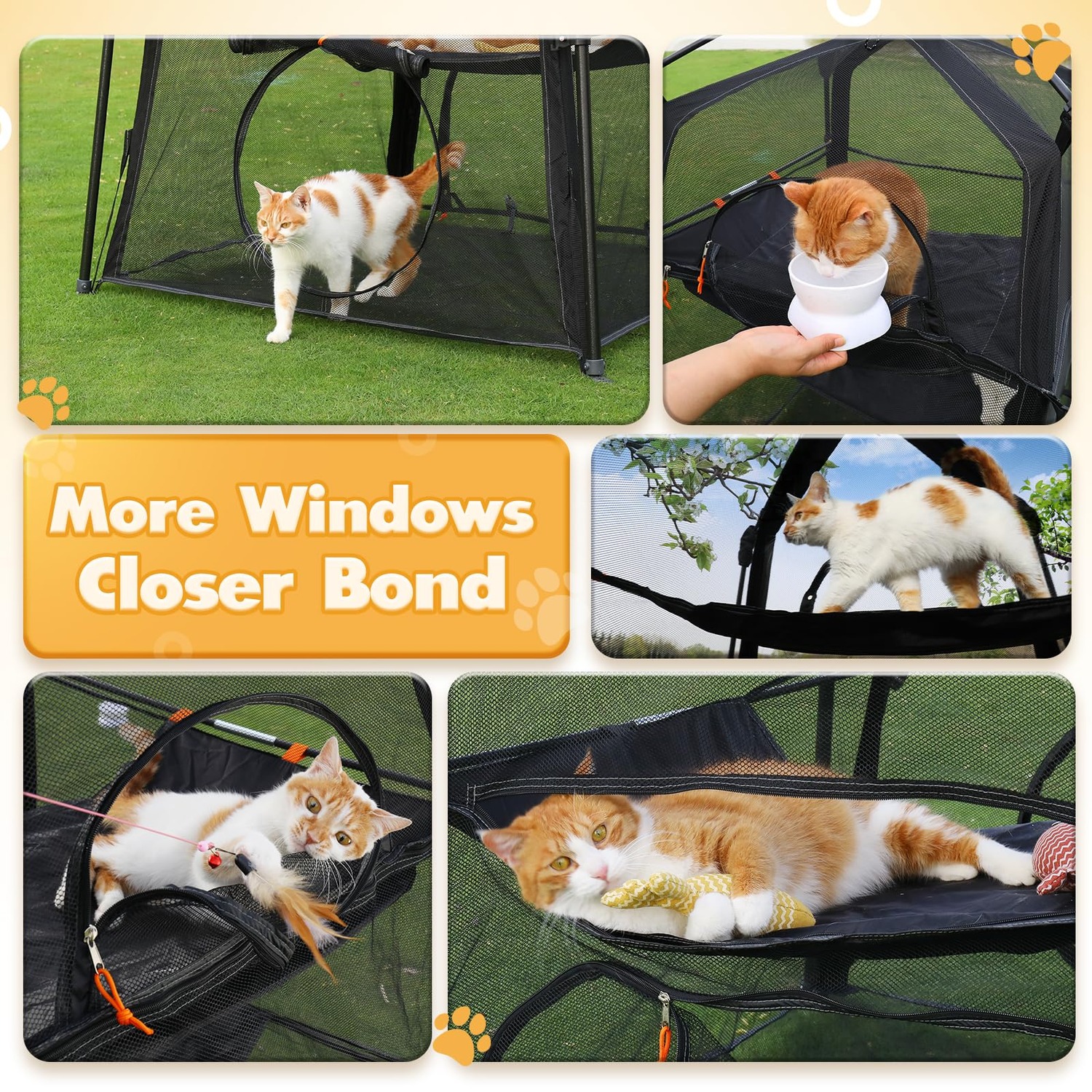
The complete guide
How to Choose a Pop-Up Cat Enclosure for Outdoor Time
The problem with letting a cat outside
Cats want outside. Almost every indoor cat spends part of the day sitting at a window, tail twitching, watching things they cannot reach. That urge does not go away because the front door stays shut.
The trouble is what is on the other side of that door. Roads, dogs, territorial neighbourhood cats, snakes in some parts of the country, and the simple risk that a cat gets distracted and keeps walking. Councils in many areas now have cat containment rules too, so letting a cat roam is not just risky, it can also be against the local law.
That leaves many owners stuck in the middle. A pop-up cat enclosure is a middle ground. Your cat gets grass, moving air, insects to watch and sun to roll in, all inside a mesh shell you can zip shut and keep an eye on.
How a pop-up enclosure actually works
The design here is a tent on a hub frame. Instead of threading poles through sleeves like a camping tent, the whole frame is linked to a central hub. You hold the base, press the top section into its slot, and the structure springs into shape. Folding it down is the reverse, pressing the bottom support rods inward with both hands until it collapses.
That matters more than it sounds. If an outdoor cat pen is a chore to set up, it tends to end up in the shed.
This one measures 110 cm square and 145 cm tall. The height gives room for three tiers inside. A flat pen lets a cat sit down. A tall mesh cat enclosure lets them climb, perch above ground and look out over everything.
Construction is alloy steel for the frame and Oxford cloth for the panels. Tent pegs are supplied for grass. Listed weight is 5.9 kg, and it comes with a carry bag.
Who this suits
Indoor cat households. If your cat has never been outside unsupervised and you want to keep it that way, a portable catio is one answer. Short supervised sessions give your cat time outside without opening the door.
Apartment and balcony owners. A cat enclosure for balcony use solves the problem of a cat who sits at the sliding door all day. You cannot peg into a balcony floor, so weight the four corners with sandbags or planters instead, and keep the setup away from the railing edge.
Multi-cat homes. Three tiers give more than one place to sit. The record does not give a number of cats, and sharing only works if your cats already tolerate each other. Cats who fight indoors will fight in a tent.
People who travel with pets. Folded into its bag, this works as a travel cat enclosure for camping, caravan trips or a weekend at a holiday house. It gives your cat a contained base in an unfamiliar place.
How to choose the right one
Start with your space. Measure the patch of lawn, deck or balcony where it will actually live. A 110 cm square footprint needs clear ground plus room for you to walk around and reach the zips. If your balcony is narrower than that, a smaller cat tent outdoor option will serve you better.
Then think about height. At 145 cm with three tiers, this one gives a climbing cat somewhere to go.
Check the surface you will set it on. Grass and dirt take pegs, which is the most stable option. Concrete, tiles and decking do not, and that is where people get caught out. A cat tent with stakes is only as stable as the thing it is staked into, so plan your weights before the first session.
Look at how it packs away. If you plan to leave an enclosure out permanently, you want a fixed catio, not a fabric one. Sun and weather wear fabric down. A foldable cat enclosure is built for setup and pack-down, and treating it that way is what makes it last.
Finally, be realistic about your cat. Some confident cats take to a new tent quickly. Timid cats may need a week of slow introduction, preferably indoors first with the door open and a familiar blanket inside. Treats help. Forcing them in does not.
Setting it up well
Pick a shaded spot or set it under a tree or awning. Mesh does not block much heat, and cats overheat faster than most owners expect. Put a bowl of water inside for anything longer than a quick session.
Peg all four corners, not just two. A properly pegged frame is less wobbly inside. That tension also pulls the shelves tighter, which makes the tiers feel more solid when a cat lands on one.
Expect a little bounce from the fabric shelves. That is normal in this style of triple cat tent, and many cats adjust within a few sessions. Guide them with a treat or a wand toy rather than lifting them onto a shelf they do not trust yet.
Clip a small carabiner or a cable tie through the zip pulls if your cat is a known problem solver. Some cats work out zips, and that is a cheap bit of insurance.
Stay nearby. This is a supervised space. Bring the enclosure and the cat indoors if wind picks up or rain sets in.
Looking after it
Cleaning is simple. Wipe the mesh and fabric with a damp cloth and a little mild soap, then let it air dry fully before folding. Fabric packed away damp grows mould, and mould on a cat enclosure is a problem you do not want.
Shake out fur, grass and dirt after each use. Check the zips and the stress points at the corners every few sessions. Wipe moisture off the steel frame before it goes in the bag.
Store the bag somewhere dry and out of direct sun. A tent that lives in a hot car boot all summer will not age well.
The short version
A pop-up cat enclosure gives an indoor cat outdoor time without free roaming. This one is 110 x 110 x 145 cm, built on an alloy steel frame with Oxford cloth and mesh, with three tiers inside for climbing. It pops open on its frame, folds back into the included carry bag, and comes with pegs for grass. Weight is 5.9 kg and the colour is black.
Peg it on soft ground, weight it on hard ground, set it in shade, and stay close while your cat is inside. Do that and your cat gets regular time outside with you close by.