
The complete guide
How to Choose an Outdoor Cat House That Your Cat Will Actually Use
The problem with "she'll find somewhere"
Most outdoor cats do find somewhere. The trouble is where. Under the deck, behind the shed, in the wheel arch of a parked car, on top of a warm engine. These spots are dry until they are not, and some of them are genuinely dangerous. A cat that has no decent option takes the best bad one available.
The other problem is cold. Cats handle cool weather fine when they are dry and out of the wind. Wet fur plus a breeze strips heat fast, and a small or older cat can get into trouble overnight. You do not need a heated building to fix this. You need walls, a roof, and a floor that is not sitting in a puddle.
That is what an outdoor cat house is for. It is a small, plain, functional box that gives a cat a covered place to go.
How an outdoor cat shelter works
There are only four things a shelter has to do, and understanding them makes choosing much easier.
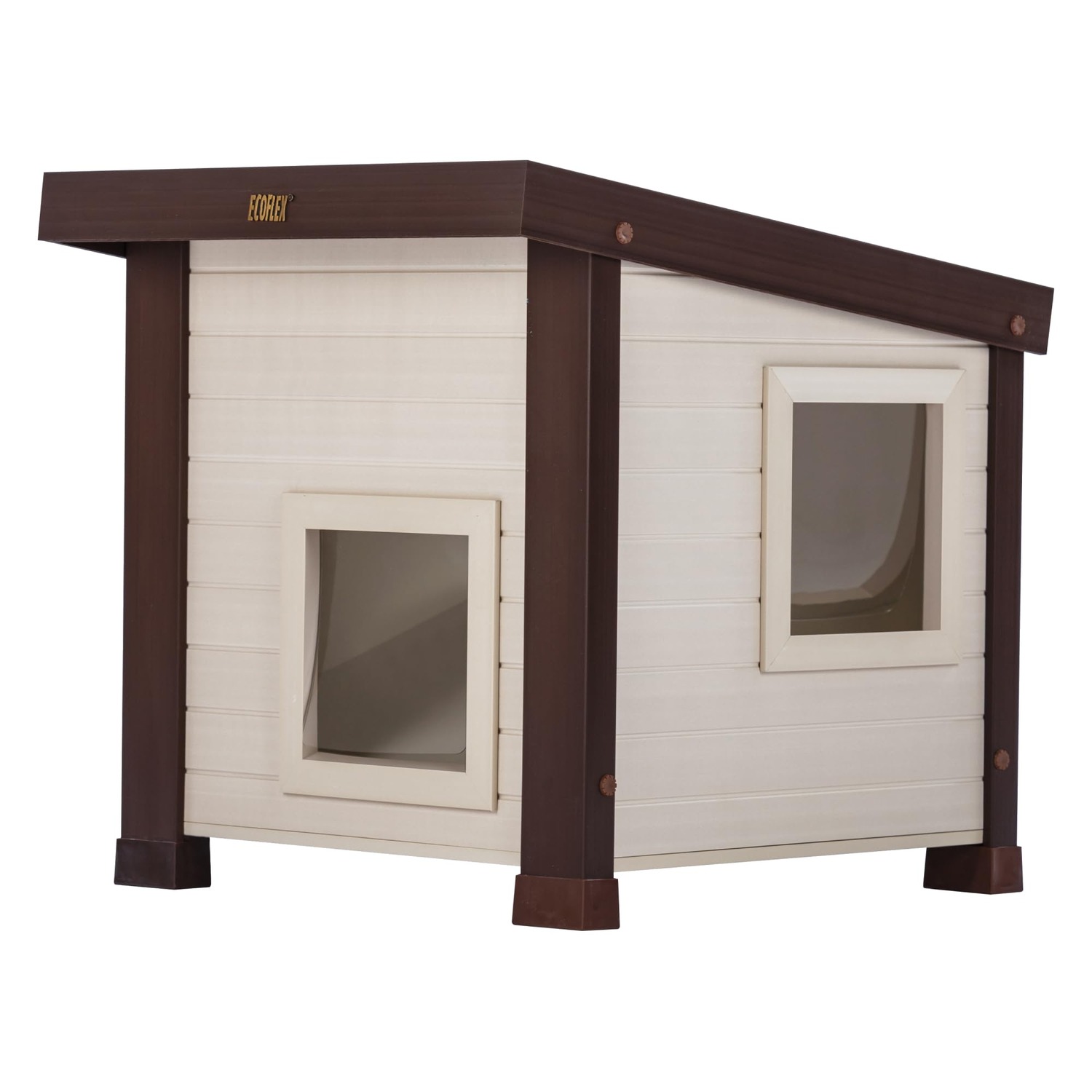
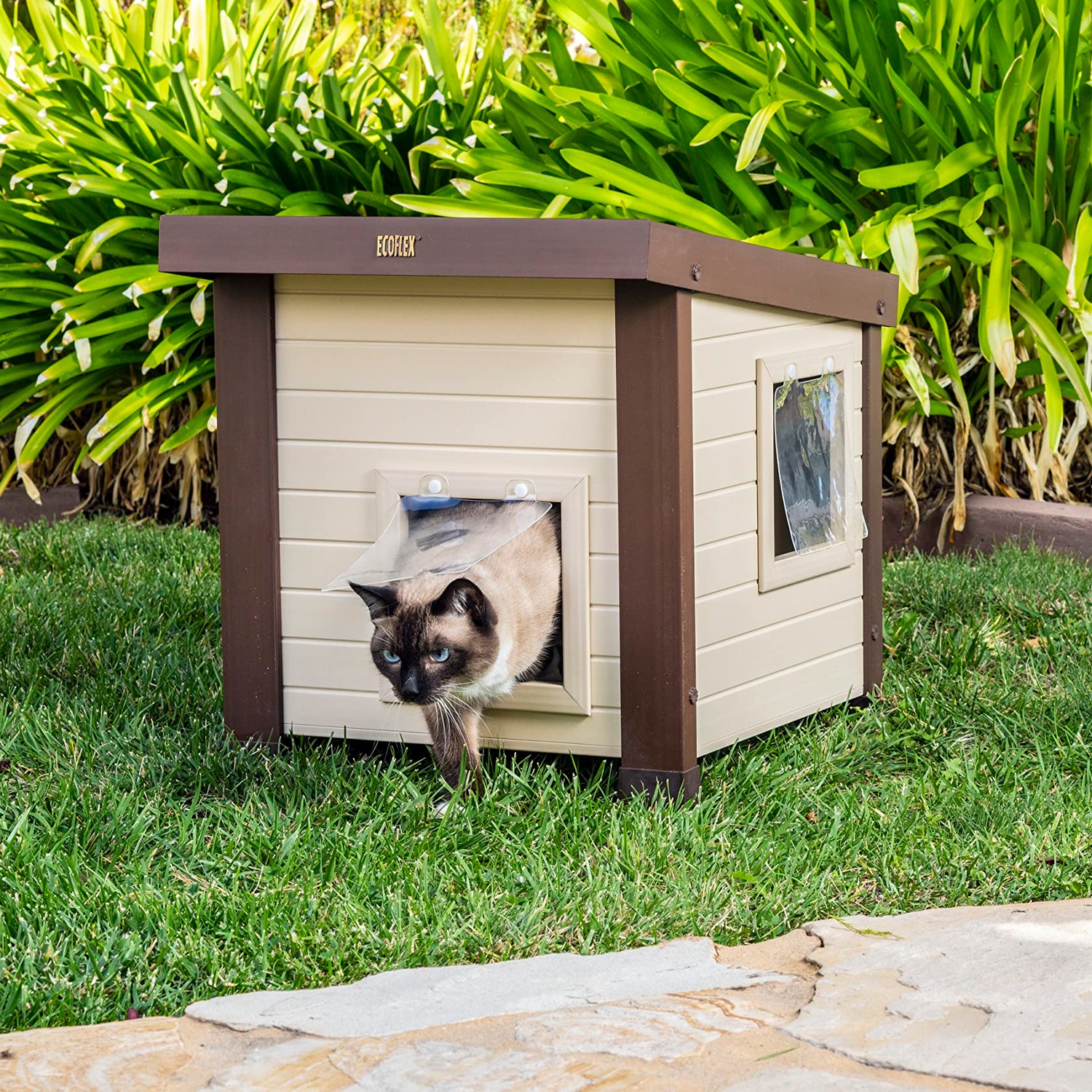
First, it keeps rain off. That is the roof, plus doorways that are not facing straight into the weather. Second, it blocks wind. Solid walls and a small entry opening do this. A big open front looks inviting to humans and performs badly for cats. Third, it lifts the cat off cold, damp ground. This is what the elevated floor on this model is doing, and it matters more than people expect. Concrete and wet soil pull heat out of a body all night long.
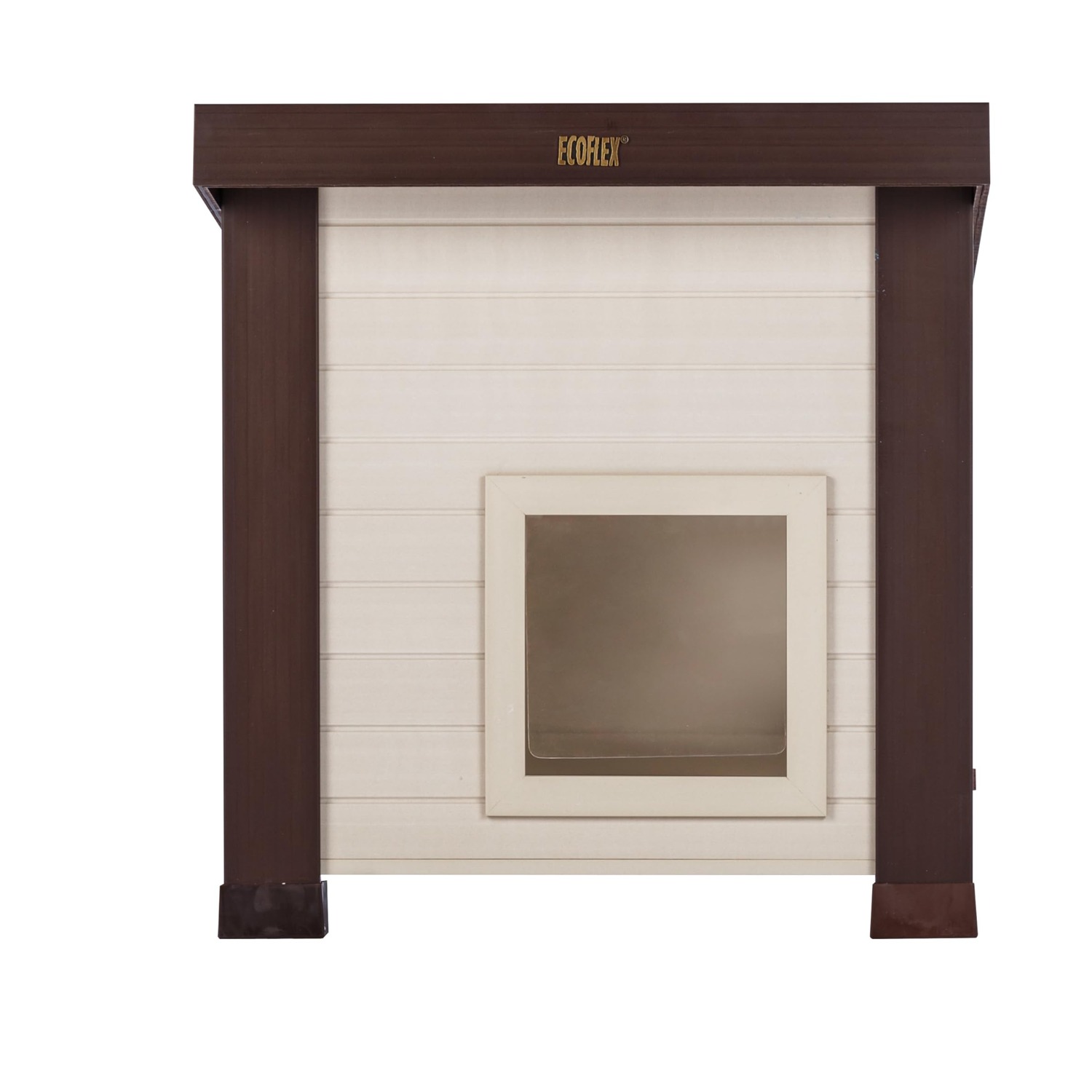
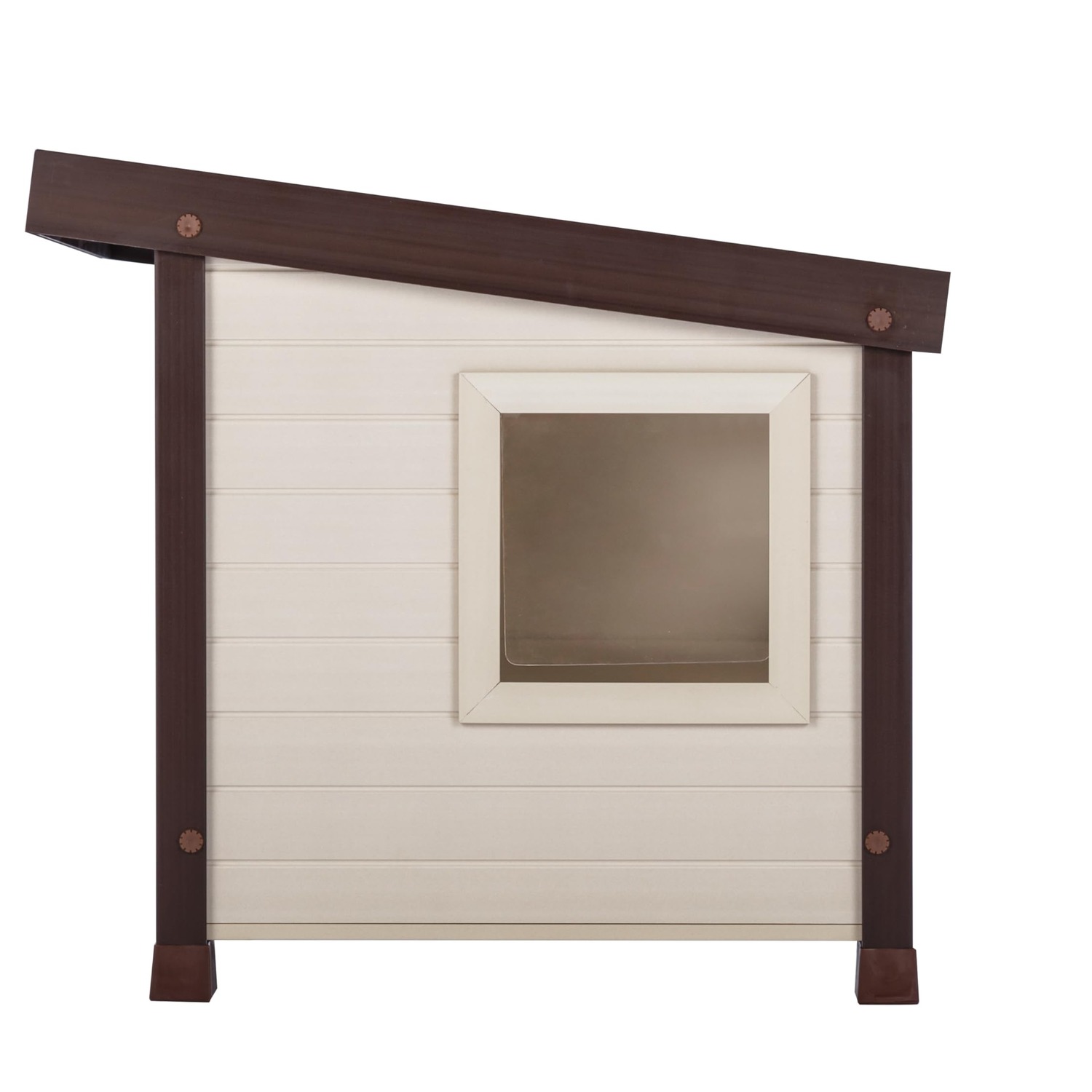
Fourth, it should not feel like a trap. A shelter with a single entrance is a dead end from a cat's point of view. If something comes to the door, there is nowhere to go. The two doorways on this house give a cat a way out.
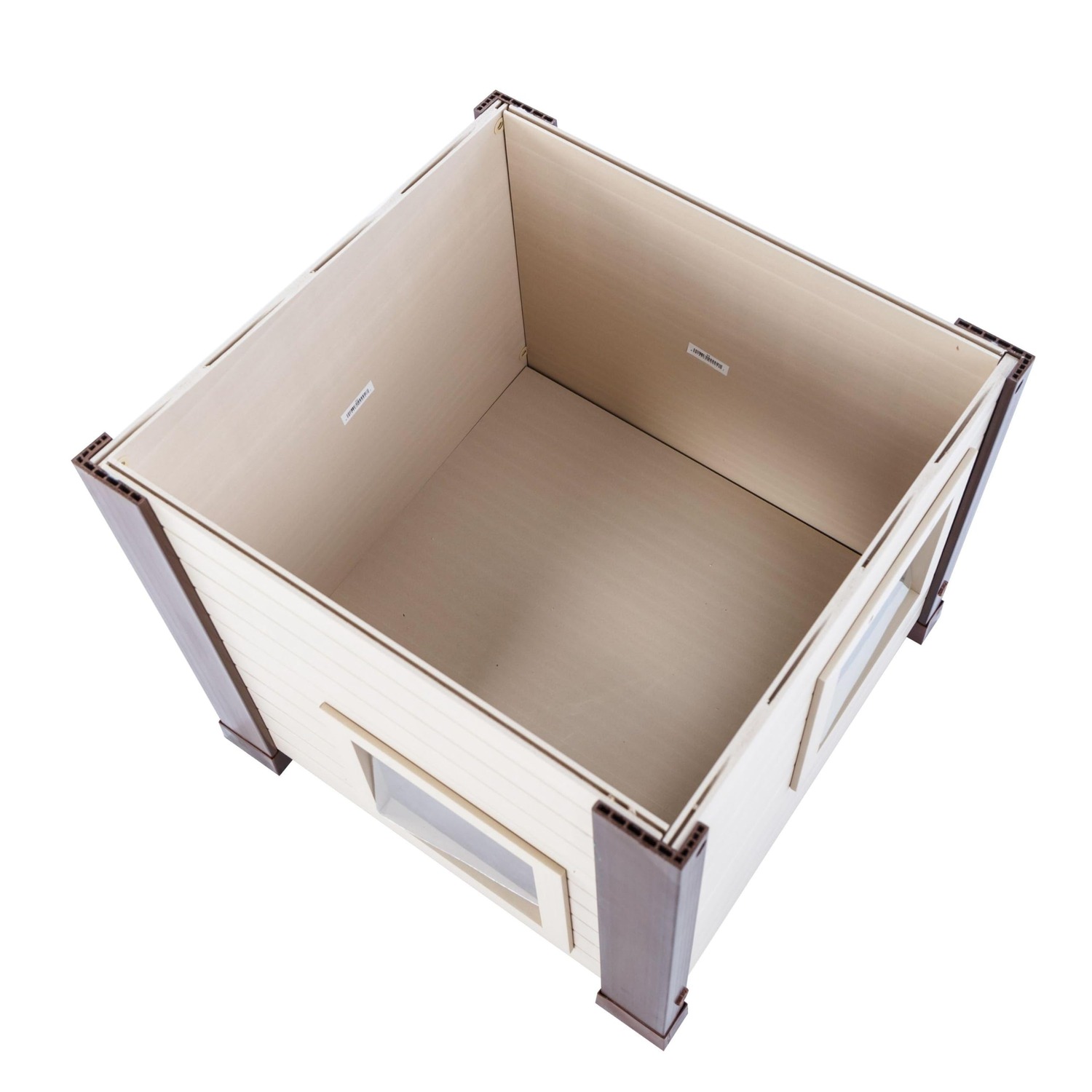
The resin construction wipes down when things get grubby. The house comes as panels that you assemble.
Who this suits
People with a catio. An enclosure gives a cat access to fresh air, but it rarely gives them a den. A cat house for catio use in one corner adds a covered spot, which catio owners often forget to plan for.
People with an indoor-outdoor cat. If your cat uses a cat flap but likes to stay out late, having a shelter in the garden means they are not scratching at a door at 3am or curling up somewhere soggy.
People feeding strays. A feral cat house near a feeding station gives strays a covered place to sleep. Feral and semi-feral cats are wary of enclosed spaces, so the second doorway matters even more here. Expect them to inspect it for a while before anyone commits to sleeping inside.
People in cold or wet climates. Combined with good bedding, this works as a cat shelter winter option. The house itself provides the structure, the bedding provides the warmth.
Who it does not suit: anyone needing to house several cats at once. This is a single-cat footprint. Two shelters beat one bigger one anyway, because cats that are not bonded will not share.
Reading the measurements honestly
The listed dimensions are 19.1 cm deep by 21.8 cm wide by 20.2 cm high. Measure your cat curled up, not stretched out, since that is how they sleep. Then look at the space you have in mind and make sure there is room to walk around it for cleaning.
Weight is 8.39 kg. In a very exposed spot, back it against a wall or fence rather than leaving it standing in the open.
A note on what is not listed here. Country of origin, insulation rating and warranty terms are not specified in this record, so we are not going to claim them. If any of those details are decisive for you, ask us before ordering and we will find out.
Where to put it
Placement matters as much as the shelter itself.
Put it against something solid. A wall, a fence line, the side of a shed. Cats dislike having open ground behind them. Point the doorways away from the direction your weather usually comes from, and away from the main path people and dogs use.
Keep it level. A house that rocks slightly will never be trusted. If the ground puddles after rain, set the shelter on a paver or a flat piece of timber so water runs past rather than around the base.
For a stray cat shelter, add distance. Put it somewhere the cats already feel comfortable, typically near where they eat, and then leave it alone. Resist checking on it constantly. Scent and quiet do more to attract a wary cat than anything else.
Bedding, and why it matters more than the box
The shelter keeps weather out. Bedding keeps warmth in. Those are separate jobs.
Straw is the traditional answer for outdoor use because it traps air and sheds moisture. It is not the same as hay, which holds water and goes mouldy. If you prefer something washable, a fleece pad dries faster than a cotton blanket and does not turn into a cold wet slab after a storm.
Whatever you use, check it weekly. Press your hand into the middle. If it feels damp, swap it. Damp bedding is worse than no bedding because it draws heat away from the cat.
Keeping it clean
Resin makes this easy. Warm water, a mild pet-safe detergent, a cloth, then a rinse. Let it dry fully before the bedding goes back in. Skip solvents and keep the pressure washer away from the panel joins.
Once a month is a reasonable rhythm, more often in wet weather or if a few different cats are using it. While you are in there, look at the joins and the entry edges for grit or damage, so you catch problems early.
If you are cleaning a shelter used by strays, wear gloves and keep the cleaning gear separate from anything you use indoors.
The short version
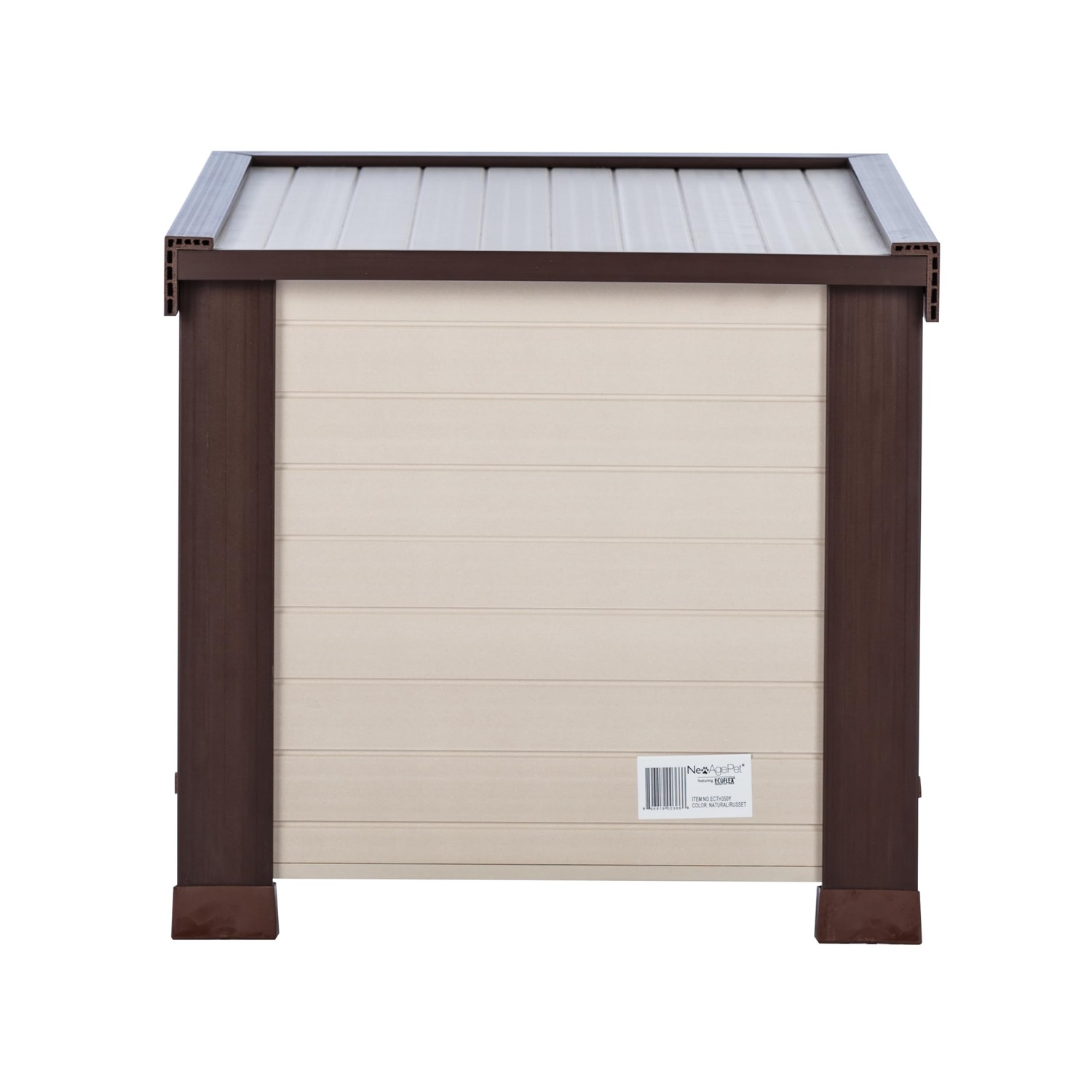
An outdoor cat house works best when it keeps rain and wind off, sits off the ground, and has more than one way out. This one has a roof, a raised floor and two doorways, in moulded resin, in a quiet tan that does not shout from the garden. It comes as panels you assemble, and it comes apart again when it is time for a proper clean.
Add good bedding, put it against a wall with the doorways out of the wind, and then be patient. Cats decide on their own schedule. Some move in within days, and some take weeks.