
The complete guide
How to Choose a Catio Kit That Your Cat Will Actually Use
The problem with an indoor cat and an outdoor world
Plenty of us keep our cats indoors. The trouble is that cats do not understand the reasoning. They sit at the window. They bolt for the door when the groceries come in. They get bored, and a bored cat finds creative ways to tell you about it, usually around three in the morning.
A catio kit is a middle ground. It gives your cat grass under their paws, moving air, bird noise and sun, inside a mesh space you can see into.
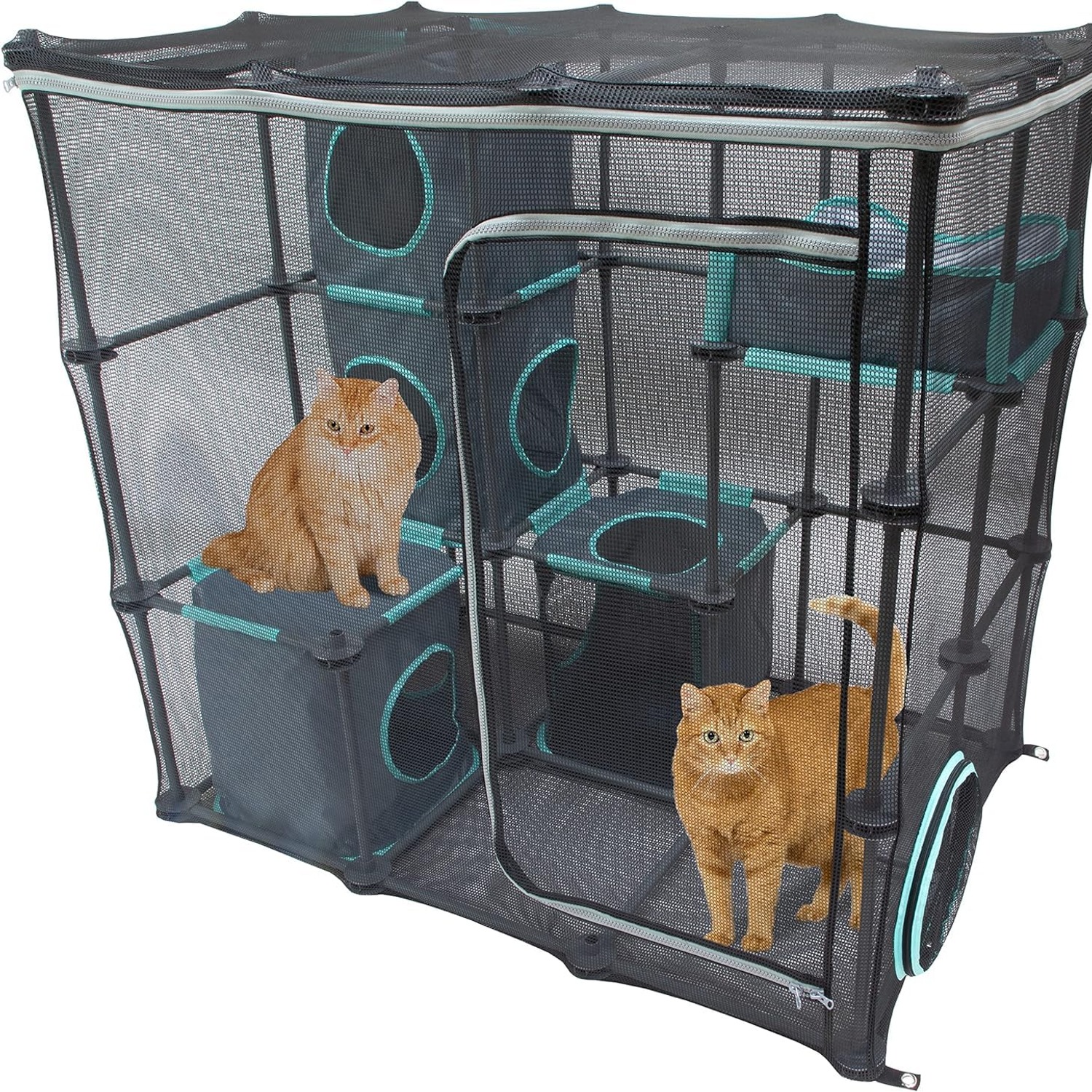
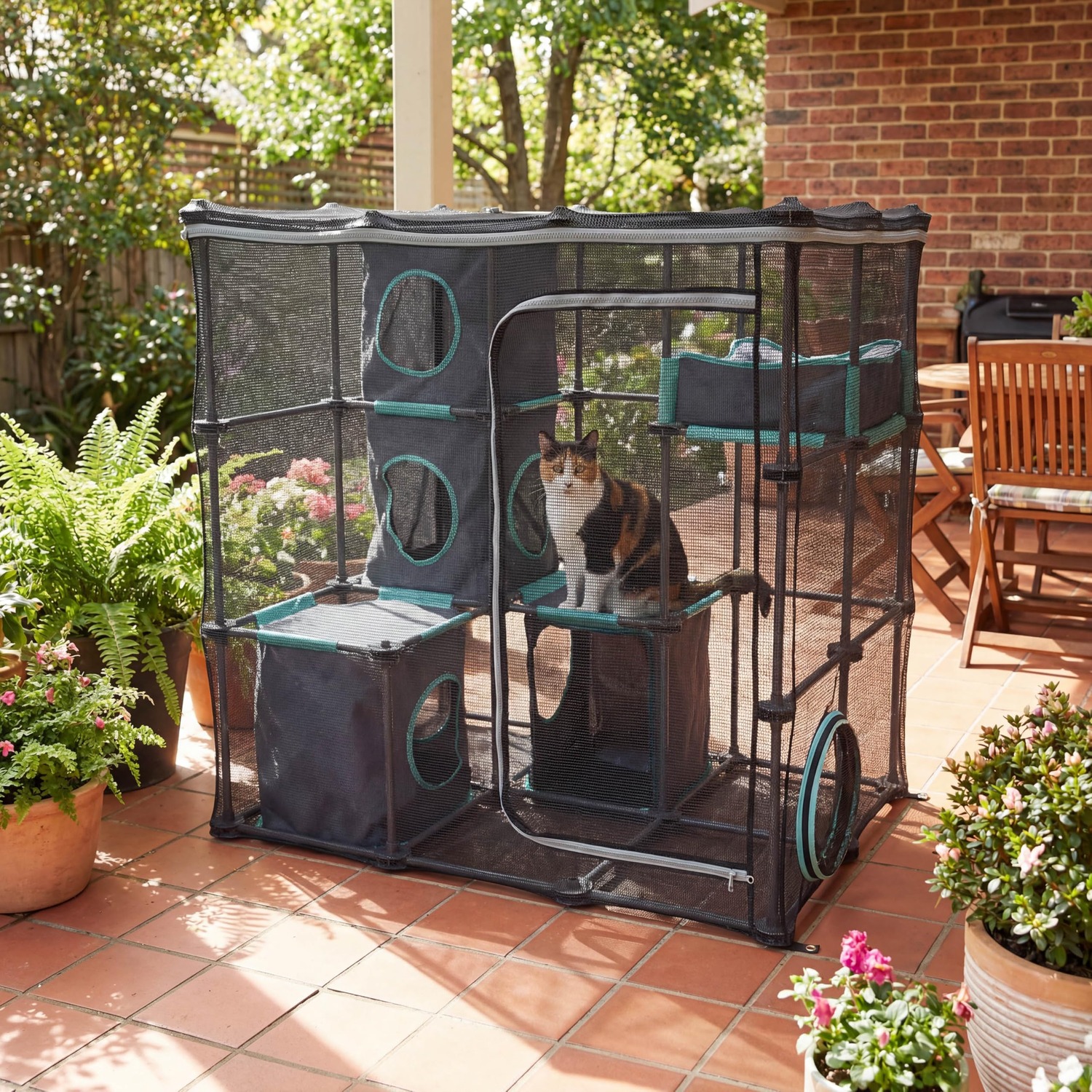
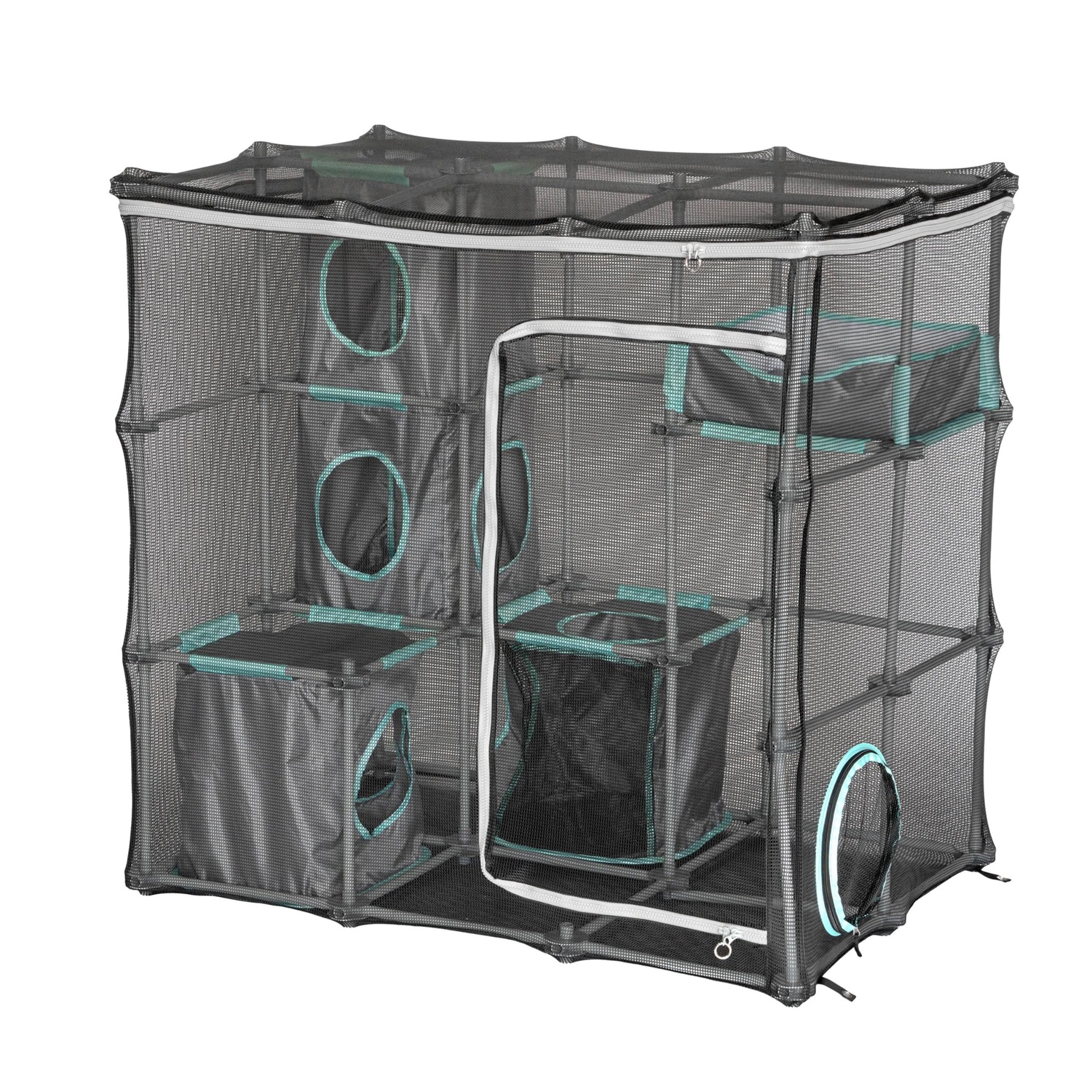
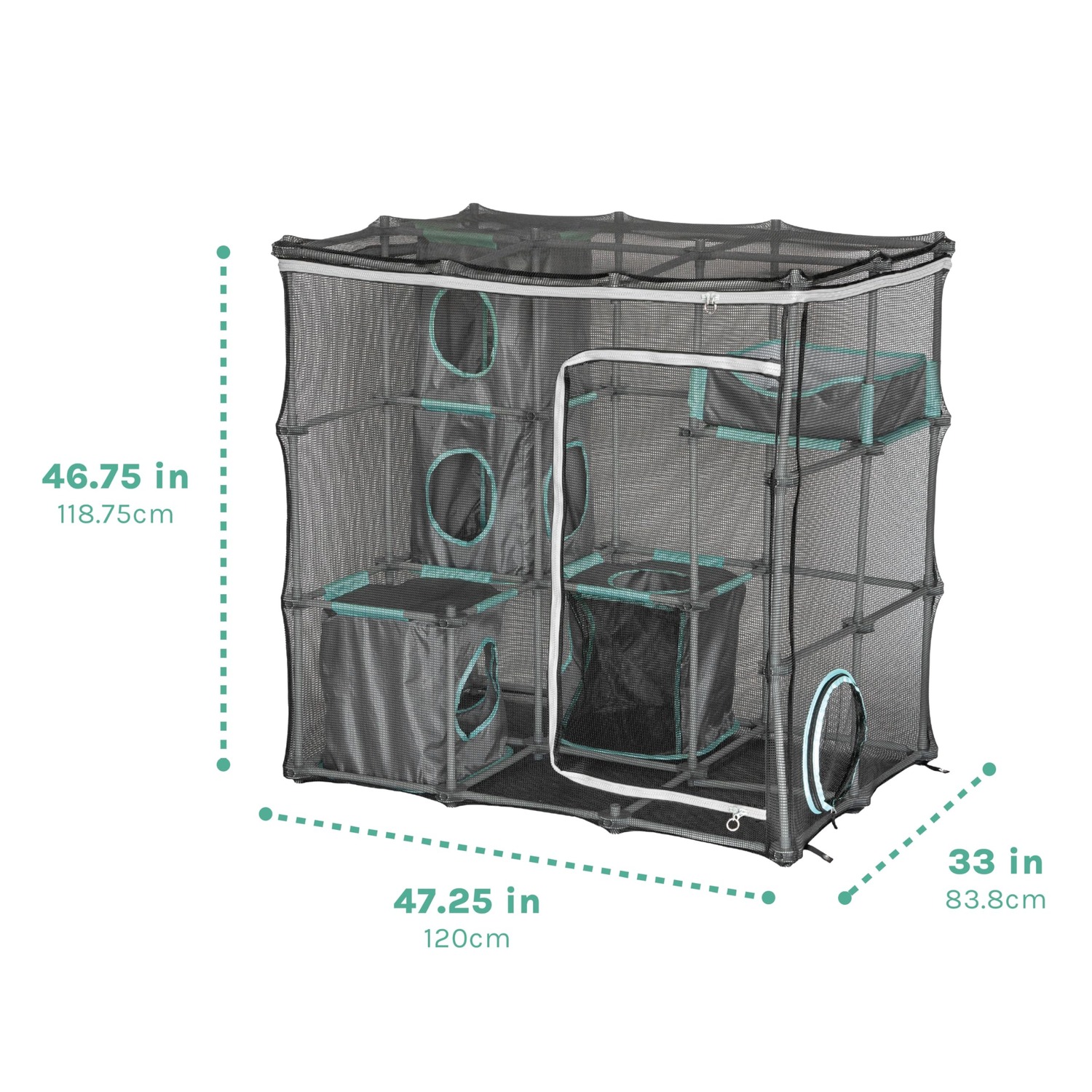
The version covered here is the Kitty City Outdoor Mega Kit. It is a nylon mesh enclosure measuring 120 cm long, 83.8 cm wide and 118.7 cm high, weighing 5.35 kg, with three internal levels, cubby cubes inside, a side zip door and a tunnel port.
How a mesh catio actually works
The idea is simple. A light frame holds a shell of woven nylon mesh. Air passes straight through, and you can see your cat from anywhere in the yard. Your cat can see out too, which turns out to matter a great deal. Half of what cats enjoy outdoors is surveillance.
Inside, the three levels change the space from a floor into a structure. Cats are climbers. Given a flat pen they pace the edges, but given height they go up, settle, and watch. Many cats head for the upper levels once they have done a lap of the perimeter.
The cubby cubes are the other half of the design. They are soft hideaways you can move around. Cats like a dark corner to duck into, especially in a new space. Being able to rearrange them is quietly useful. Shift the layout every few weeks and your cat re-explores the whole thing.
The zip door in the side is for you. It sounds minor until the first time your cat climbs to the top level ten minutes before you need to leave the house.
Who this kind of enclosure suits
Apartment and balcony owners. If your outdoor space is a slab of concrete two floors up, a mesh cat enclosure makes it usable. Set it flat, weight the corners, and supervise.
Renters. You cannot build a permanent catio into a property you do not own. A portable cat run is not a fixed build, and it comes with you when you move.
Multi-cat households. The three levels and the separate hiding spots give cats more than one place to be. The record does not give a number of cats, so start small and watch how yours share it.
New kitten homes. A kitten who is not yet ready for unsupervised outdoor time can still get sunlight and smells. Keep sessions short and supervised at first.
Older cats. An older cat may mostly stay on the ground level in a cubby, and that is fine.
Choosing the right setup for your space
Start by measuring. You need a flat area a bit larger than 120 by 84 cm, plus room to walk around one side so you can reach the zip door. Grass, pavers, decking and balcony tiles all work. A slope does not, because the frame will sit unevenly and the mesh will sag.
Next, think about shade. Mesh is breathable but it is not a sunshade. The ideal spot for a catio for backyard use gets morning sun and afternoon shade, or sits under a tree, pergola or shade sail. Always put water inside, even for a short session.
Then think about wind. At 5.35 kg this is a light structure. On lawn, peg the base. On hard ground, use weights at the corners. This is the single most common setup mistake people make with any pop up catio, and it is easy to avoid.
Finally, if you already own a tunnel that fits the port, position this unit so the tunnel port faces open space.
Getting your cat to use it
Do not pick your cat up and post them through the door. That is the fastest way to teach them the enclosure is a trap.
Instead, set it up and leave the zip door open for a day. Put something that smells like home inside, a blanket from their bed is perfect. Add one familiar toy. Let them walk in and out on their own terms.
Once they have been in a few times, feed a meal inside. Food in a space often helps a cat feel at home in it.
Early sessions should be short and supervised, fifteen or twenty minutes. Build up from there. Never leave a cat in any fabric enclosure unattended for long stretches, and bring them in before weather turns.
About the tunnel port
The tunnel port is a connection point for a tunnel. We sell this unit on its own, and we do not sell tunnels or other playsets for it.
If you already own a tunnel that fits the port, you could run it toward a doorway. Plan it carefully and supervise, since no setup is escape-proof.
Looking after the mesh
Care is hand wash only. Spot clean with warm water and a mild, pet-safe detergent, then let it air dry completely before folding it away. Damp storage is what causes mildew and smell, and it is almost always avoidable.
Shake out fur, grass clippings and leaves after each use. Grit in a zip is what kills zips. Run a quick eye over the mesh panels and seams now and then, looking for pulls or thinning where a cat has been climbing the same patch repeatedly.
Keep it out of permanent weather. Months of rain and sun will fade and weaken any fabric. Packing it away between sessions will help it last longer.
The short version
If your cat wants outside and free roaming is not an option, this is a practical answer. The dimensions give real room, the three levels give a cat height, and the cubby cubes give cats somewhere to hide. The zip door makes your life easier, and there is a tunnel port if you own a tunnel that fits.
Measure your space, plan for shade and wind, let your cat approach it in their own time, and store it dry. Do those four things and your cat gets plenty of sunny afternoons outside.